BHARAT TAXI & THE RISE OF CO OPERATIVE PLATFORMS IN INDIA

Bharat Taxi is a government-backed cooperative ride-hailing platform operated by Sahakar Taxi Cooperative Ltd (STCL), designed to provide a zero-commission, driver-owned alternative to private aggregators. The platform allows bookings for cars, auto-rickshaws, and two-wheelers, while enabling drivers to become co-owners through share participation and benefit from future profits. It focuses on fair, transparent pricing and aims to improve driver earnings and welfare within the gig economy. Currently operational in select cities with around 4 lakh drivers onboarded and about 10,000 daily rides, the initiative faces early challenges such as low demand and operational issues, but targets nationwide expansion by 2029, positioning itself as a potential large-scale cooperative model in India’s digital platform economy.
Description

Copyright infringement not intended

Picture Courtesy: Indian Express

Context:

Bharat Taxi is a government-backed, cooperative ride-hailing platform launched, by Union Home and Cooperation Minister Amit Shah. Designed as a “for drivers, by drivers” model, it aims to challenge private aggregators like Uber and Rapido by offering zero commission, fair pricing, and driver ownership. 

What is Bharat Taxi?

Bharat Taxi is a government-backed, multi-modal ride-hailing platform that allows users to book cars, auto-rickshaws, and two-wheelers through a single application. It is operated by Sahakar Taxi Cooperative Ltd (STCL), a multi-state cooperative society, and functions on the principle of driver ownership and participation. The platform is supported by major national institutions such as the National Cooperative Development Corporation (NCDC), NABARD, and Amul. Built on the cooperative movement model, Bharat Taxi treats drivers as stakeholders and partners rather than merely service providers. 

Key features of Bharat Taxi:

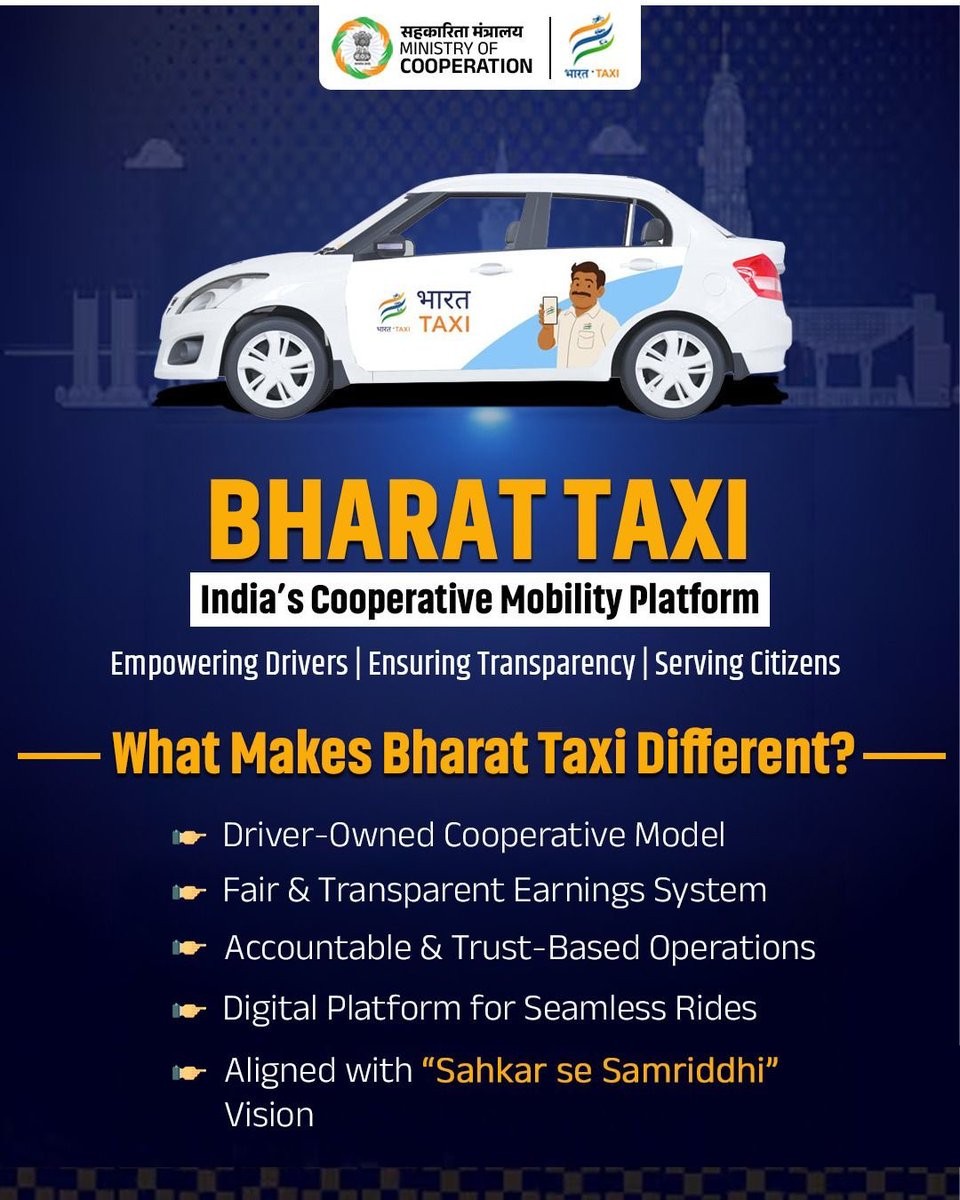
Zero commission model: Bharat Taxi follows a driver-friendly structure with zero commission at present, unlike private aggregators that charge 30–40% commission from driver earnings. In the future, the platform plans to introduce a nominal daily subscription fee of approximately ₹30 per day for taxis and ₹18 per day for auto-rickshaws.

Driver ownership and participation: Drivers can become co-owners by purchasing shares in the cooperative, with a minimum investment of ₹500 (five shares). As members, they will be eligible to receive dividends once the platform becomes financially profitable, ensuring long-term income participation.

Fair and transparent pricing: Bharat Taxi aims to ensure reasonable, predictable, and transparent fares for customers by avoiding extreme surge pricing and opaque rate mechanisms. The platform seeks to maintain a balance between driver earnings and customer affordability, and its pricing algorithms will improve over time based on operational data and demand patterns.
Source: Ministry of Co-operation

Business model of Bharat Taxi:

  • Cooperative ownership model: Bharat Taxi operates on a cooperative business structure under Sahakar Taxi Cooperative Ltd (STCL), where drivers are members and stakeholders rather than independent contractors. Drivers participate in ownership by purchasing shares, ensuring that the platform functions as a “driver-owned, driver-governed” mobility system. 
  • Share-based membership: Drivers become co-owners by investing a minimum of ₹500 (five shares) in the cooperative. This structure enables them to receive dividends from future profits, aligning the platform’s success directly with driver welfare and long-term income security. 
  • Zero-commission revenue approach: Unlike private aggregators that charge 30–40% commission per ride, Bharat Taxi follows a zero-commission model, allowing drivers to retain 100% of their fare earnings. This improves take-home income and reduces dependency on high platform deductions. 
  • Subscription based earnings model: Instead of commission, the platform plans to generate revenue through a nominal daily subscription fee, estimated at ₹30 per day for taxi drivers and ₹18 per day for auto-rickshaw drivers, ensuring predictable and low operational costs for drivers. 
  • Institutional support and ecosystem linkages: The platform receives operational and promotional support from institutions such as NCDC, NABARD, and cooperative networks like Amul, enabling low-cost expansion, marketing, insurance linkages, and financial support without heavy private capital dependence. 
  • Demand generation and public interface strategy: Bharat Taxi is building demand through government-backed visibility, including presence at airports, railway stations, metro hubs, and government offices. Institutional usage and official promotion are expected to create a stable customer base during the early growth phase. 
  • Fair pricing and market positioning: The platform follows a fair and transparent pricing strategy rather than aggressive discounting or surge pricing. Its business positioning focuses on sustainable fares, balancing driver income viability and customer affordability. 

Current status of Bharat Taxi:

  • Bharat Taxi was formally launched and is currently operational in pilot and select cities, including Delhi-NCR, Rajkot, and Ahmedabad, with gradual expansion planned to other urban centres. 
  • The platform has onboarded around 4 lakh drivers nationwide and is currently facilitating approximately 10,000 rides per day. 
  • Early response has been notable in certain regions, with about 6,000 drivers registered in Rajkot within two months and around 30,000 taxi and auto drivers joining in Ahmedabad within a week of launch. 
  • The government aims to expand Bharat Taxi across the country within three years and make it operational nationwide by 2029.  

Early concerns:

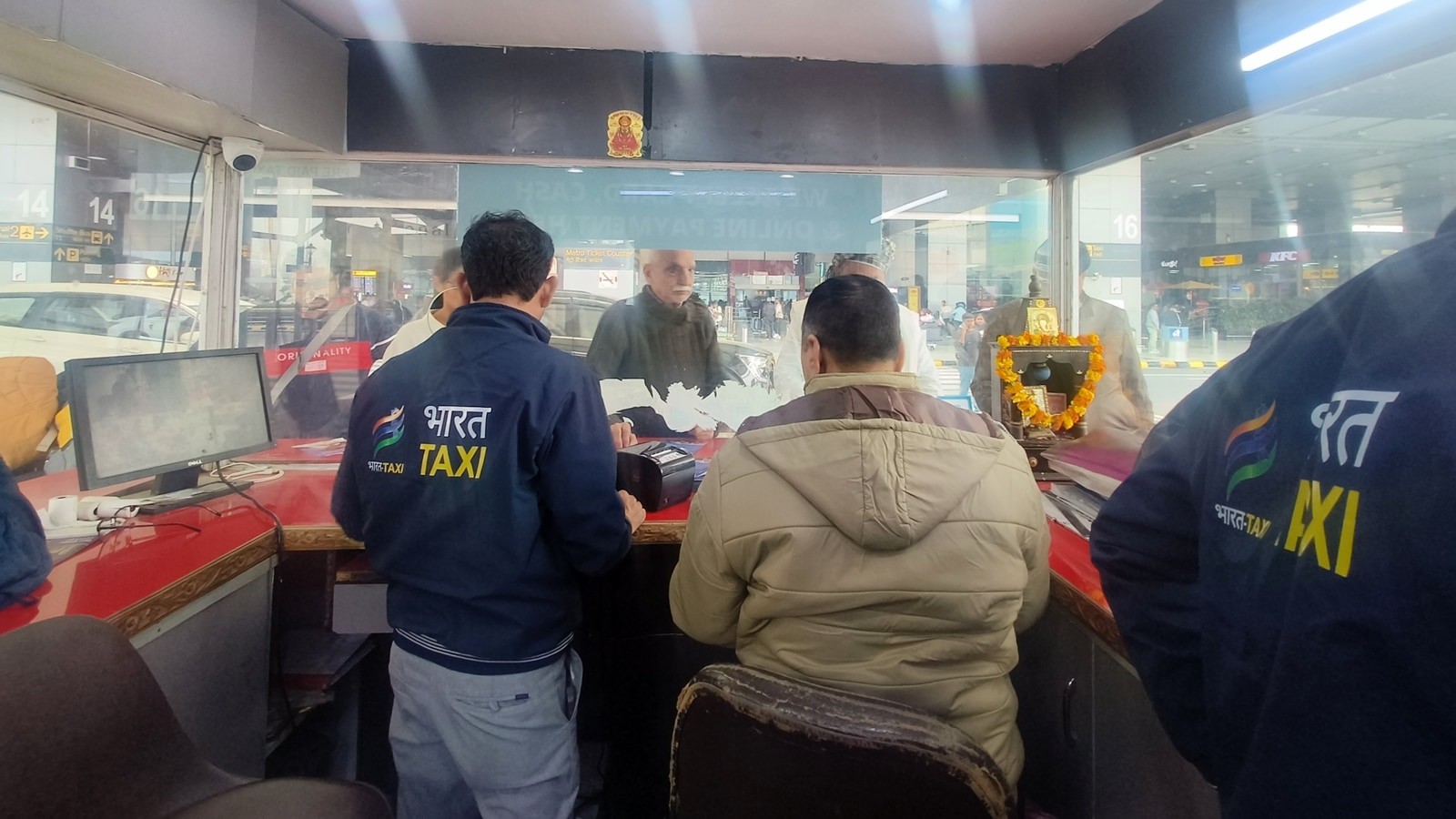
In its initial phase, Bharat Taxi is facing low booking volumes in some cities, which has affected driver incomes and early confidence in the platform. There are also pricing competitiveness concerns, as fares may not always match market expectations shaped by private aggregators. Operational issues such as software handling difficulties, staff unfamiliarity, and queues at physical booking points indicate early-stage teething problems. Going forward, the platform will need strong customer adoption, consistent service quality, and robust technological scaling to establish credibility and sustainability. 

Measures to enhance effectiveness of Bharat Taxi:

  • Strengthening customer adoption: Bharat Taxi should focus on aggressive user outreach and awareness campaigns through digital platforms, public institutions, and high-footfall locations. Partnerships with government offices, PSUs, airports, and metro networks can help build a stable and recurring customer base. 
  • Ensuring competitive and rational pricing: The platform must maintain a balance between driver income viability and customer affordability. Regular fare revisions based on fuel costs, inflation, and market trends, along with transparent pricing mechanisms, will improve both driver satisfaction and user trust. 
  • Improving technology and service quality: Investment in robust app infrastructure, real-time tracking, efficient algorithms, and seamless payment systems is essential. Continuous driver training, customer support, and service standardisation will enhance reliability and user experience. 
  • Building strong network effects: To compete with established aggregators, Bharat Taxi needs to achieve simultaneous growth in both drivers and passengers. Incentives for early adopters, referral programs, and assured minimum ride opportunities in initial phases can help build scale quickly. 
  • Ensuring financial sustainability: The cooperative should gradually develop diversified revenue streams, such as subscriptions, institutional contracts, insurance partnerships, and value-added services, to ensure long-term financial stability without compromising the low-cost driver-centric model. 

Conclusion:

Bharat Taxi represents a bold attempt to democratize the ride-hailing sector through a cooperative, driver-owned model. While early operational challenges remain, its zero-commission structure and government backing could reshape India’s gig economy if adoption scales successfully.

 Source: Indian Express 

Practice Question

Q. Bharat Taxi represents a cooperative alternative in India’s platform-based gig economy.
Discuss its significance for driver welfare and urban mobility. Also examine the challenges it may face in competing with private ride-hailing platforms. (250 words)

Frequently Asked Questions (FAQs)

Bharat Taxi is a government-backed cooperative ride-hailing platform that allows users to book cars, auto-rickshaws, and two-wheelers, while enabling drivers to function as members and stakeholders in the system.


The platform is operated by Sahakar Taxi Cooperative Ltd (STCL), a multi-state cooperative society, with support from institutions such as NCDC, NABARD, and cooperative networks like Amul.

Unlike private platforms that charge 30–40% commission, Bharat Taxi follows a zero-commission model (currently) and operates on a driver-owned cooperative structure with fair and transparent pricing.


Free access to e-paper and WhatsApp updates

Let's Get In Touch!