The Parliamentary reports highlight critical execution gaps in internal security, specifically noting severe CAPF vacancies and disaster management deficits despite technology-driven initiatives like the Digital Census 2027. They urge a shift from outlay-centric to outcome-centric approaches, emphasizing real-time monitoring and improved operational readiness.
Copyright infringement not intended
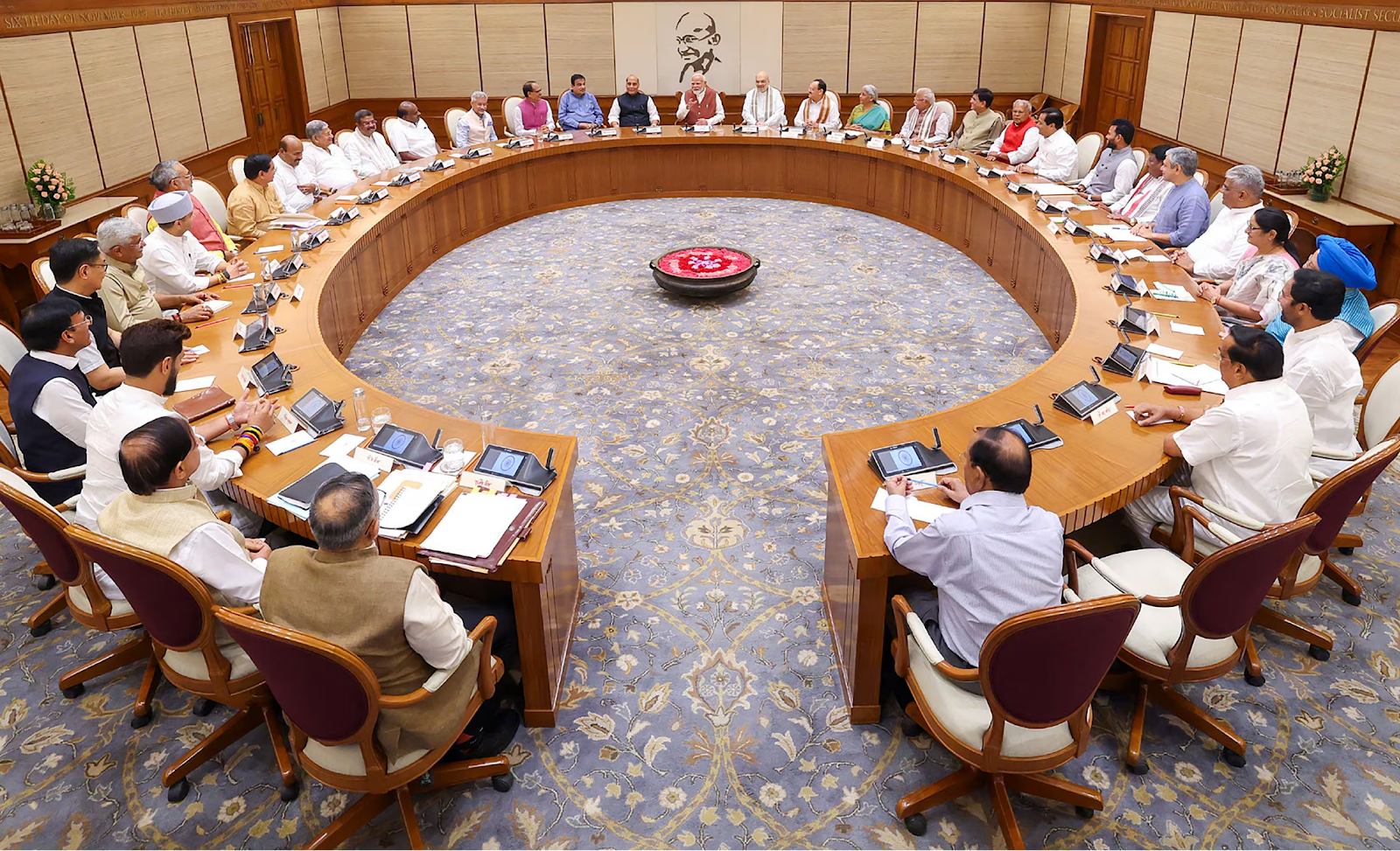
Picture Courtesy: livemint
Context
The Parliamentary Standing Committee on Home Affairs recently tabled 257th Report on the Ministry of Home Affairs (MHA).
|
Read all about: PARLIAMENTARY COMMITTEES |
What Is the Parliamentary Standing Committee?
It is a permanent and regular committee composed of Members of Parliament (MPs) that is constituted periodically (usually every year) to handle the work of the legislature.
They draw their authority from Article 105 (privileges of MPs) and Article 118 (Parliament's authority to make rules for its procedure) of the Indian Constitution.
Major Types of Standing Committees
Financial Committees: These include the Public Accounts Committee, Estimates Committee, and the Committee on Public Undertakings, which monitor government expenditure and performance.
Departmentally Related Standing Committees (DRSCs): There are currently 24 DRSCs that oversee specific ministries or departments. Each consists of 31 members (21 from Lok Sabha and 10 from Rajya Sabha).
Committees to Inquire: Such as the Committee on Petitions, Committee of Privileges, and the Ethics Committee.
Committees to Scrutinize and Control: These include committees on Government Assurances and Subordinate Legislation.
Administrative/Service Committees: These manage the day-to-day business of the House, such as the Business Advisory Committee and the Rules Committee.
Functions
Detailed Scrutiny: Parliament has limited time, therefore, these "mini-parliaments" provide a specialized forum for in-depth examination of bills and budget proposals.
Expert Input: Committees often seek advice from experts and stakeholders, ensuring better-informed policy decisions.
Consensus Building: Meetings are held behind closed doors, allowing MPs to discuss issues freely away from party posturing and media attention, which helps in reaching a consensus.
Executive Accountability: They hold the government accountable by scrutinizing public spending and tracking the implementation of government assurances.
Highlights of the Parliamentary Committee Reports on MHA
Manpower & Operational Readiness
Huge Vacancies: 93,139 vacancies across Central Armed Police Forces (CAPFs),leading to severe operational stress on existing personnel.
Poor Welfare: Housing satisfaction for CAPF personnel is extremely low at just 50.14%, which negatively impacts morale and efficiency.
Judicial Mandate: The Supreme Court's directives in the Prakash Singh vs Union of India (2006) case for improving police working conditions remain partially implemented.
Technology & Modernization
Counter-Drone Capability: Acquiring Unmanned Aerial Vehicles (UAVs) and anti-drone systems to tackle the rising threat of smuggling via drones on the Indo-Pakistan and Indo-Myanmar borders.
Global Best Practice: Success of the United States' Tethered Aerostat Radar Systems (TARS) on the US-Mexico border as a model for creating a comprehensive aerial surveillance system.
Gender-Sensitive Policing
Directed the Delhi Police to achieve 33% female representation in higher rank, to increase the reporting rates for crimes against women and improve police-community relations.
Overhaul of the Criminal Justice System
Implementation of new criminal laws—Bharatiya Nyaya Sanhita (BNS), Bharatiya Nagarik Suraksha Sanhita (BNSS), and Bharatiya Sakshya Adhiniyam (BSA)—requires upgrade of scientific and digital infrastructure.
Key Reforms and Challenges
Forensic Infrastructure: The budget for Criminology and Forensic Science was increased to ₹132.89 crores to establish eight new Central Forensic Science Laboratories (CFSLs).
Reducing Court Backlogs: The Committee recommends aggressive use of plea bargaining provisions under the BNSS. In the US, over 90% of federal cases are resolved this way, saving time and resources (Source: US Bureau of Justice Statistics).
Victim-Centric Justice: The Inter-operable Criminal Justice System (ICJS 2.0) provides victims with a secure digital portal to track their case progress, enhancing transparency and accessibility.
Disaster Preparedness Gaps
NDRF Manpower Shortage: The National Disaster Response Force (NDRF) is operating with only 14,837 personnel against a sanctioned strength of 18,581, with no new battalions raised in the last three years.
Domestic Best Practice: During Cyclone Yaas, the Odisha Disaster Rapid Action Force (ODRAF) achieved near-zero casualties by using the Common Alerting Protocol (CAP) and community-level volunteers (like those under the Aapda Mitra scheme). The MHA is urged to integrate such models nationwide.
India's First Digital Census
Allocation: ₹6,000 crore has been allocated for the Census 2027 operations, which will be India's first fully digital census.
Data Privacy Concerns: Committee stressed the need to adhere to the data privacy principles established by the Supreme Court in the K.S. Puttaswamy v. Union of India (2017) judgment.
Source: PIB
|
PRACTICE QUESTION Q. The Supreme Court judgement in Prakash Singh vs Union of India (2006) is primarily related to: a) Right to Privacy and Data Protection against State surveillance. b) Structural Police Reforms and improving police working conditions. c) Environmental Protection and Ecological Carrying Capacity. d) Decriminalization of specific colonial-era offences. Answer: b Explanation: The Supreme Court's 2006 decision in Prakash Singh vs Union of India is a landmark judgment that issued seven binding directives to central and state governments to kick-start comprehensive police reforms. These directives were designed to insulate the police from political interference and ensure they remain accountable to the rule of law. |
It is a permanent committee consisting of Members of Parliament (MPs) that is constituted periodically (usually every year) to perform continuous oversight of government functioning. Unlike ad hoc committees, which dissolve after completing a specific task, standing committees work on a continuous basis.
Members are typically appointed or elected by the respective House or nominated by the Speaker of Lok Sabha or the Chairman of Rajya Sabha. The composition generally reflects the proportional strength of political parties in Parliament to ensure balanced deliberations.
DRSCs are specialized committees that oversee specific ministries or departments. There are currently 24 DRSCs (16 under Lok Sabha and 8 under Rajya Sabha). Each committee has 31 members—21 from the Lok Sabha and 10 from the Rajya Sabha.





© 2026 iasgyan. All right reserved