National Energy Conservation Day, observed on 14 December, underscores the importance of efficient and responsible energy use in India’s development journey. Through initiatives such as CCTS, PAT, UJALA, PM Surya Ghar, energy-efficient building codes, and behavioural programmes like LiFE, India is reducing energy wastage, strengthening energy security, and advancing its clean-energy and climate goals.
Copyright infringement not intended
Picture Courtesy: Jagran Josh
Context:
India observes National Energy Conservation Day on 14 December to promote awareness, recognise best practices, and embed efficiency into national development strategies.
|
Must Read: NATIONAL ENERGY CONSERVATION DAY | National energy conservation award | |
Current Status of Energy Conservation:
Picture Courtesy: PIB
National Energy Conservation Day:
National Energy Conservation Day is observed every year on 14 December since 1991 to promote awareness about efficient and responsible use of energy across sectors. Its institutional foundation was strengthened after the enactment of the Energy Conservation Act, 2001, which provided a statutory framework for energy-efficiency governance in India. The day and its associated initiatives are spearheaded by the Bureau of Energy Efficiency (BEE) under the Ministry of Power, which coordinates policy implementation, capacity building, and nationwide outreach. Through public awareness campaigns, behavioural-change initiatives, promotion of innovation, and recognition via national energy conservation awards, the observance reinforces efficiency-oriented practices. Over time, energy conservation in India has evolved from being viewed merely as a demand-management tool to becoming a core strategic pillar of the country’s clean-energy transition and sustainable development agenda.

Picture Courtesy: PIB
What are the challenges in Energy conservation in India?
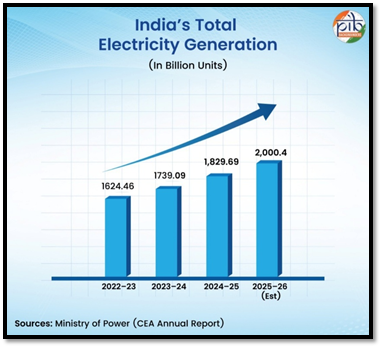
Rising energy demand due to rapid growth: India’s fast economic growth, urbanisation, and rising incomes are driving electricity demand upward, making absolute energy savings difficult despite efficiency gains; for instance, electricity generation increased from 1,739 BU in 2023–24 to 1,829 BU in 2024–25, illustrating how demand growth often offsets conservation benefits.
Industrial Lock-in and Legacy technologies: Many energy-intensive industries such as steel, cement, and textiles continue to operate with older, inefficient technologies because retrofitting involves high upfront costs and production downtime; a BEE review of PAT sectors showed that smaller designated consumers lag behind large firms in adopting best-available technologies despite proven savings.
Limited Access to Credit: Households, MSMEs, and small industries often lack affordable finance for energy-efficient appliances and upgrades, even when lifecycle savings are high; for example, MSMEs remain hesitant to invest in efficient motors or boilers despite payback periods of 2–3 years due to liquidity constraints and risk aversion.
Behavioural Barriers: Energy wastage persists due to limited consumer awareness and habitual behaviour, as seen in continued use of inefficient appliances and poor building design, despite the availability of star-labelling and Eco Niwas Samhita guidelines, especially in smaller towns and rural areas.
Affordability concerns: Energy-efficient technologies often have higher upfront costs, which can exclude poorer households; for example, rooftop solar adoption under PM Surya Ghar has progressed faster in urban and higher-income households, highlighting the need for deeper subsidies and financing support for vulnerable groups.
Climate stress: Rising heatwaves increase cooling demand, eroding efficiency gains, as seen during recent summers when peak electricity demand crossed 240 GW, demonstrating how climate change itself is emerging as a structural challenge to long-term energy conservation.
What are the major energy conservation initiatives in India?
Industrial energy efficiency: Industry is the largest energy consumer, making efficiency central to decarbonisation and cost reduction.
Household and consumer energy efficiency:
Power distribution reforms: The Revamped Distribution Sector Scheme (RDSS) seeks to improve DISCOM efficiency through loss reduction, smart metering, and operational reforms, with over 4.7 crore smart meters installed by December 2025, strengthening demand-side management.
Energy-efficient buildings:
Digital and behavioural interventions:
|
International Solar Alliance: Key Highlights · India hosted the 8th ISA Assembly in New Delhi, bringing together 125+ Member and Signatory countries, 550 delegates, and 30+ ministers, reinforcing ISA’s growing global influence. · ISA launched several new global solar initiatives, including:
· ISA advanced its “Towards 1000” strategy, which aims to mobilise USD 1 trillion in solar investments by 2030 and support deployment of 1,000 GW of solar capacity across member countries. |
Conclusion:
National Energy Conservation Day highlights that saving energy is not just a technical or policy challenge but a shared national responsibility. As India advances towards its climate commitments, clean-energy transition, and the vision of Viksit Bharat, energy conservation remains the most cost-effective and inclusive pathway to ensure energy security, economic resilience, and environmental sustainability. Every unit of energy saved strengthens the nation’s future.
Source: PIB
|
Practice Question With reference to energy conservation initiatives in India, consider the following statements: 1. The Carbon Credit Trading Scheme focuses on reducing greenhouse gas emission intensity rather than absolute emissions. 2. Eco Niwas Samhita applies only to commercial buildings. 3. The UJALA scheme primarily targets industrial lighting efficiency. Which of the statements given above is/are correct? Answer: A Explanation Statement 1 is correct: The Carbon Credit Trading Scheme focuses on reducing greenhouse gas emission intensity rather than absolute emissions. Statement 2 is incorrect: Eco Niwas Samhita applies only to commercial buildings. Statement 3 is incorrect: The UJALA scheme primarily targets industrial lighting efficiency. |
National Energy Conservation Day is observed every year on 14 December to promote awareness about efficient use of energy and to encourage conservation practices across all sectors of society.
The day is led by the Bureau of Energy Efficiency (BEE) under the Ministry of Power, which coordinates awareness programmes, policy implementation, and national awards.
The primary objective is to reduce energy wastage, promote energy-efficient technologies, encourage behavioural change, and strengthen India’s energy security and climate commitments.


© 2026 iasgyan. All right reserved