MoSPI’s MCP-driven e-Sankhyiki portal integrates real-time macroeconomic data with AI to eliminate hallucinations and democratize official statistics. Guided by the DPDP Act, this DPDP-compliant initiative transforms digital infrastructure into an interactive policy ecosystem, balancing AI innovation with human oversight.
Copyright infringement not intended
Picture Courtesy: THESTATESMAN
The Ministry of Statistics and Programme Implementation (MoSPI) launched Model Context Protocol (MCP) Server for its e-Sankhyiki portal.
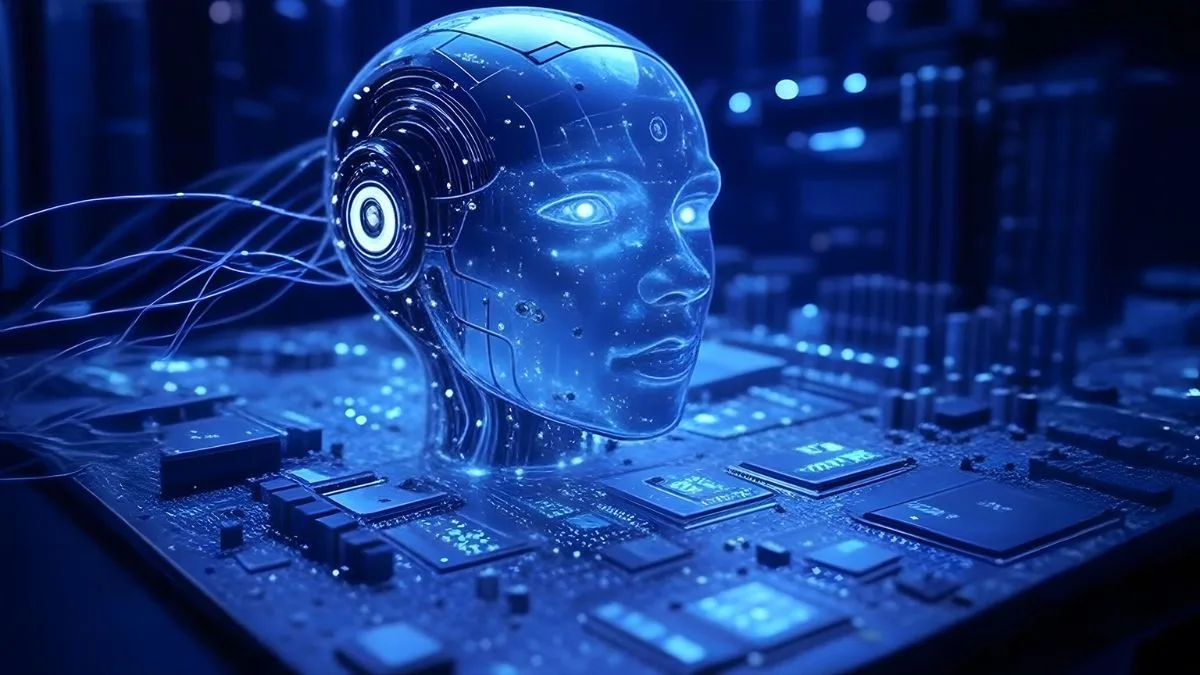
The Model Context Protocol (MCP) is an open-source standard. It allows AI models, such as GPT-4, Claude, or Gemini, to connect to external data sources and tools securely.
MCP is like the USB-C port for Artificial Intelligence. Before USB-C, various devices needed different cables.
The e-Sankhyiki Portal is a centralized digital platform launched by the Ministry of Statistics and Programme Implementation (MoSPI) to provide easy access to official statistics.
The government has integrated a Model Context Protocol (MCP) Server with the national data portal, e-Sankhyiki.
How Does It Work?
The system is built on the Client-Host-Server architecture of the Model Context Protocol.
Significance
Eliminating "Hallucinations" in AI: AI models often "make up" numbers when they don't have access to facts. By linking them directly to MoSPI’s verified database, the AI is grounded in truth. It cites the official government source rather than guessing.
Democratization of Data: It lowers the barrier to entry for data analysis. A journalist or student doesn't need to know SQL or Python to analyze the Census or ASI data; they can just ask questions in natural language.
Real-Time Policy Monitoring: Policymakers can set up AI dashboards that auto-update the moment new data is released on e-Sankhyiki, reducing the "time-to-insight" lag.
Source: THESTATESMAN
|
PRACTICE QUESTION Q. With reference to the 'Model Context Protocol (MCP)', recently seen in the news, consider the following statements: 1. It is an open-source standard designed to connect Artificial Intelligence models with external datasets securely. 2. Its application in Indian public infrastructure eliminates the need to apply data minimization principles under the DPDP Act, 2023. Which of the statements given above is/are correct? (a) 1 only (b) 2 only (c) Both 1 and 2 (d) Neither 1 nor 2 Answer: a Explanation: Statement 1 is correct: The Model Context Protocol (MCP) is an open-source standard that enables Artificial Intelligence (AI) models to securely and seamlessly connect with external data sources (like Google Drive, Slack, or government databases) and tools. It acts as a universal interface, allowing different AI models to "plug in" to various data repositories without needing custom-built integrations for each connection. Statement 2 is incorrect: No technological protocol, including MCP, eliminates the requirement to comply with the Digital Personal Data Protection (DPDP) Act, 2023. In fact, the DPDP Act mandates strict adherence to the "Data Minimisation" principle—collecting only the data necessary for a specific purpose. Any AI application using an MCP server to access personal data must still ensure that it only fetches the minimum required information and processes it legally and securely. |
The Model Context Protocol (MCP) is an open-source standard introduced by Anthropic that acts like a "USB-C for AI." It allows AI assistants to securely connect to and extract information from external data sources without requiring custom-built codes for every database.
It allows AI chatbots to securely access live, verified macroeconomic statistics from the e-Sankhyiki portal. This eliminates "AI hallucinations," simplifies complex data access for ordinary citizens and MSMEs, and provides policymakers with real-time data for agile economic planning.
AI hallucination occurs when an AI model invents fake or incorrect information because it relies on static or outdated training data. MCP solves this by allowing the AI to act as a client that queries a live, verified server (like e-Sankhyiki) to ground its answers in factual, real-time data.




© 2026 iasgyan. All right reserved