Japan’s deep-sea extraction of rare earth elements breaks China’s monopoly on critical minerals. This breakthrough secures vital supply chains for electric vehicles and defense, shifting the geopolitical landscape of the global green industrial revolution and resource security.
Copyright infringement not intended
Picture Courtesy: DAILYGALAXY
Why In News?
Japan discovered a massive, high-grade Rare Earth Elements (REE) deposit within its Exclusive Economic Zone (EEZ).
|
Read all about: Rare Earth l Rare Earth Elements In India |
Details about the Discovery
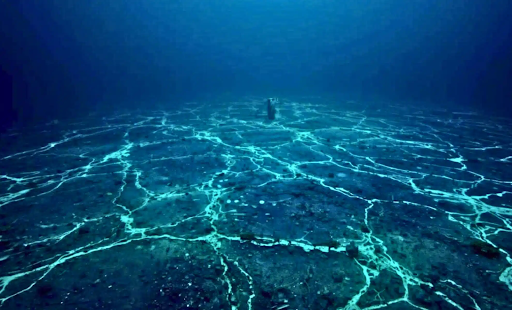
Location: The deposit is situated on the seabed around Minami-Torishima (Marcus Island), a remote Japanese coral atoll in the Pacific Ocean.
Scale: Researchers suggest the deposit contains enough Yttrium to meet global demand for 780 years, Dysprosium for 730 years, Europium for 620 years, and Terbium for 420 years.
What are Rare Earth Elements (REEs) ?
Despite their name, REEs are relatively abundant in the Earth's crust. However, they are "rare" because they are seldom found in high enough concentrations to make extraction economically viable.
Strategic Significance of the Discovery
Breaking China’s Dominance: Currently, China controls nearly 60% of global REE production and over 85% of processing capacity. (Source: US Geological Survey)
Weaponization of Resources: Japan’s urgency stems from the 2010 incident where China restricted REE exports to Japan following a maritime dispute. This new find provides Japan with Resource Sovereignty.
Economic Security: For the QUAD (India, US, Japan, Australia), this discovery is a pillar for the "Supply Chain Resilience Initiative" to de-risk from single-source dependencies.
Source: DAILYGALAXY
|
PRACTICE QUESTION Q. The 'Minamitorishima Island', frequently seen in news, is known for its vast deep-sea Rare Earth Element (REE) deposits, is located in the Exclusive Economic Zone (EEZ) of which country? a) China b) United States c) Japan d) Philippines Answer: c) Japan Explanation: Minamitorishima is a Japanese coral atoll in the Pacific Ocean. The Japanese drilling vessel Chikyu successfully recovered REE-rich sediment from a depth of nearly 6,000 meters near this island. |
REEs are a group of 17 chemically similar metallic elements comprising the 15 lanthanides (lanthanum to lutetium), plus scandium and yttrium. They are classified into Light Rare Earth Elements (LREEs) and Heavy Rare Earth Elements (HREEs).
Despite their name, REEs are relatively abundant in the Earth's crust, with some (like cerium, lanthanum, and neodymium) more plentiful than lead. They are considered "rare" because they are rarely found in large, concentrated, and economically viable deposits.
China currently dominates the REE market, producing around 60% of mined production and 90% of processed rare earths. Other significant, though smaller, producers include Australia, the United States, Russia, and Vietnam.


© 2026 iasgyan. All right reserved