Botanists discovered Melanoseris pendryi, a rare flowering plant in the Sikkim Himalayas above 4,000m. Proposed as Critically Endangered due to climate change and tourism, this discovery highlights the fragile alpine ecosystem's rich biodiversity and its vulnerability to warming.
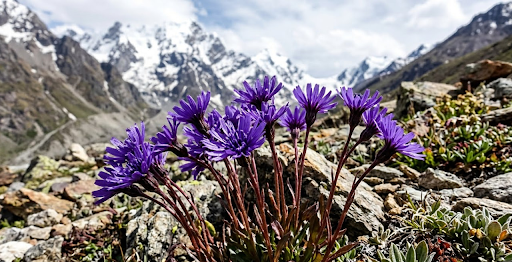
Researchers discovered Melanoseris pendryi, a rare purple-petaled alpine plant, in the Sikkim Himalayas.
Botanists from the University of Calcutta and the University of Kashmir discover a new rare purple herb, Melanoseris pendryi, in the Sikkim Himalayas.
They locate the species at altitudes above 4,000 meters in the alpine grasslands of northern Sikkim, near the Tibetan Plateau.
The plant belongs to the Asteraceae family, commonly known as the daisy family, and falls under the genus Melanoseris. The genus extends its native range from Iran to southern China, Indo-China, and Java in Southeast Asia.
Features
Conservation Status & Population: Researchers propose classifying the species as Critically Endangered.
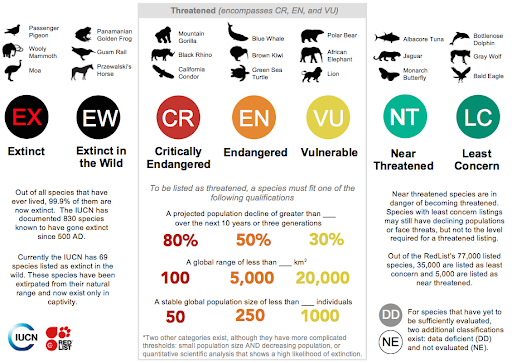
Major Threats: The species faces severe threats from climate change, which alters alpine temperature and moisture levels.
Source: RESEARCHMATTERS
|
PRACTICE QUESTION Q. Consider the following statements regarding 'Melanoseris pendryi':
Which of the statements given above is/are correct? A) 1 only B) 2 only C) Both 1 and 2 D) Neither 1 nor 2 Answer: C Explanation: Statement 1 is CORRECT: Melanoseris pendryi is a newly discovered flowering plant species belonging to the Asteraceae (daisy) family. It was identified by a team of Indian botanists during a floristic survey in the remote high-altitude (above 4,000 meters) alpine grasslands of eastern Sikkim. The species is highly distinctive for its lavender-purple petals covered in unique long white hairs on their undersides. Statement 2 is CORRECT: Due to its highly restricted distribution, extremely low population size (only around 32 mature individuals observed), and immediate environmental pressures from regional tourism and livestock overgrazing, the discovering botanists have formally proposed classifying it as 'Critically Endangered' under the IUCN guidelines to prompt urgent conservation efforts. |
It is a newly discovered rare flowering plant species found in the alpine grasslands of the Sikkim Himalayas at altitudes above 4,000 meters.
It belongs to the Asteraceae family, which is commonly known as the daisy family.
It features lavender-purple petals covered with long white hairs on their undersides, possesses a fleshy branching root system, and grows close to the ground among cushion-like shrubs to withstand cold winds.





© 2026 iasgyan. All right reserved