India’s Water Resources Secretary visited Bhutan in February 2026, shifting focus from hydropower to holistic river basin management. Both sides advanced Punatsangchhu projects and strengthened Brahmaputra River flood forecasting. They addressed geological risks and GLOFs, promoting BBIN energy integration and diversified renewable cooperation.
Copyright infringement not intended
Picture Courtesy: PIB
Context
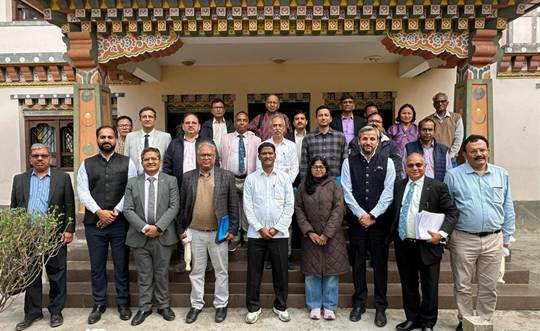
The Indian delegation, led by the Secretary of the Department of Water Resources, visited Bhutan to discuss cooperation on trans-boundary rivers and review the Punatsangchhu-I Hydro Electric Project.
|
Read all about: India-Bhutan Relationship Explained l India Bhutan Relations: A Strategic Partnership l India-Bhutan Hydropower Partnership |
What are the Key Outcomes of the India-Bhutan Delegation Review?
Hydropower Cooperation
Flood Management and Data Sharing (Non-Power Water Cooperation)
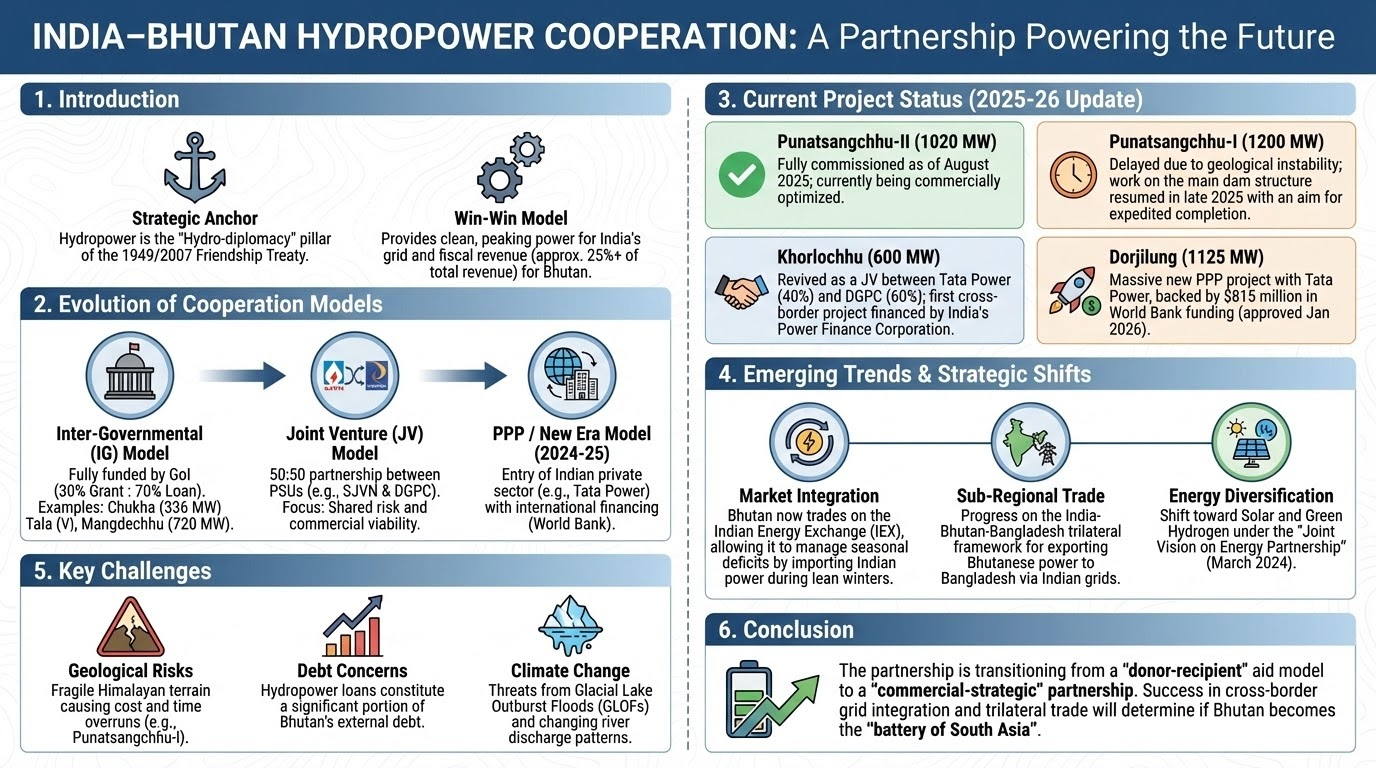
How the India-Bhutan Hydropower Model Evolved?
Hydropower cooperation is based on two main agreements: the 1949 Treaty of Friendship (updated in 2007) and the 2006 Agreement on Cooperation in Hydropower.
Hydropower development has shifted from direct government aid to joint ventures and public-private partnerships.
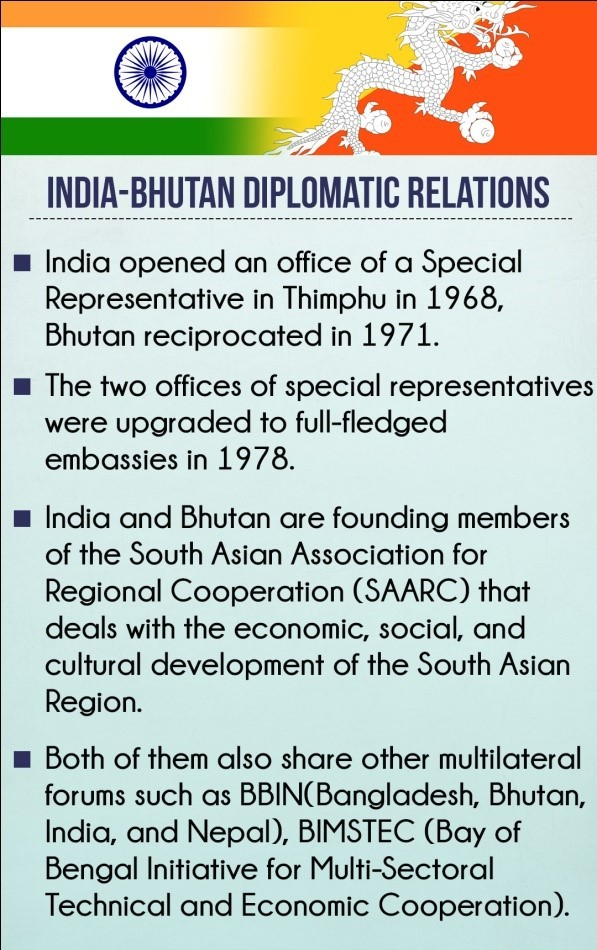
What is the Strategic Significance of Water Cooperation?
Geopolitical Importance
India and Bhutan share trans-boundary Brahmaputra tributaries like Manas, Sankosh, and Torsa. Coordinated management is vital for flood control in downstream Indian states such as Assam and West Bengal.
Economic Lifeline for Bhutan
Hydropower is Bhutan's economic backbone, contributing 14% to GDP and 26% to government revenue, with power exports to India as the main income source. (Source: Asian Development Bank)
Climate Change Imperative
Faster Himalayan warming escalates the risk of Glacial Lake Outburst Floods (GLOFs). Joint early warning systems are crucial for disaster risk reduction.
What are the Challenges in the Partnership?
Geological Fragility
The Himalayas are a young and tectonically active mountain range. The delays and cost escalations in the Punatsangchhu-I project highlight the challenge of unexpected geological issues.
Climate Change Impact
Erratic monsoon patterns and receding glaciers pose a long-term threat to the viability of hydropower. A ICIMOD study warns that river flows in the Hindu Kush Himalayas may peak around 2050 and then decline, affecting energy generation.
Bhutan's Macroeconomic Concerns
While hydropower loans are self-liquidating, Bhutan’s high debt-to-GDP ratio (around 120%) has prompted it to seek more favorable financing terms for future projects like Dorjilung.
The Geopolitical Angle
China's increasing engagement with Bhutan through boundary talks and economic aid requires India to ensure timely and efficient delivery of its projects to remain Bhutan's "partner of choice."
Way Forward
Diversify the Energy Basket
Complement hydropower with solar and wind energy. The International Solar Alliance (ISA) can help develop floating solar projects on existing reservoirs.
Promote Sub-Regional Cooperation
Fully operationalize the BBIN (Bangladesh, Bhutan, India, Nepal) framework for trilateral power trade. Bangladesh's interest in investing in Bhutan's Dorjilung project is a positive step.
Institutionalize Flood Management
Upgrade the existing Joint Group of Experts (JGE) into a permanent "India-Bhutan River Basin Commission" with the authority to make real-time decisions on water management during monsoon floods.
Align with Bhutan’s Vision
India must ensure that its infrastructure and energy support for Bhutan's Gelephu Mindfulness City (GMC) project provides the reliable power and water connectivity required for it to succeed as a regional economic hub.
Conclusion
Water is the bedrock of the India-Bhutan relationship, but in an era of climate change and shifting geopolitics, the partnership must evolve. By reinforcing traditional hydropower with disaster resilience, sub-regional energy trade, and integrated river basin management, both nations can ensure a sustainable, prosperous shared future.
Source: PI
|
PRACTICE QUESTION Q. "India’s cooperation with Bhutan has evolved from a donor-recipient dynamic to a partnership of mutual economic and strategic interest." Discuss. 150 words |
GLOFs occur when water dammed by a glacier acts as a reservoir and is suddenly released. Bhutan has 17 "potentially dangerous" glacial lakes. A breach can cause massive flash floods downstream in Bhutan and Indian states like Assam and West Bengal, threatening life and infrastructure.
Bhutan shares real-time hydro-meteorological data with India. During the 2026 talks, it was agreed to install Automated Water Level Stations (AWLS) in upper basins (Mo Chhu and Pho Chhu) to provide early warnings to downstream Indian states.
GMC is a major new economic hub planned in southern Bhutan. India aims to align its infrastructure projects to support GMC by ensuring reliable power and water connectivity, reinforcing its role as Bhutan's development partner.



© 2026 iasgyan. All right reserved