

India and the Netherlands elevated their bilateral relationship to a strategic partnership by signing 17 agreements focused on semiconductors, defense, and green energy.
Diplomatic Relations: India and the Netherlands established diplomatic relations in 1947.
High-Level Engagements: Prime Minister Narendra Modi visits the Netherlands in 2017 and 2026, while Dutch King Willem-Alexander and Queen Maxima visit India in 2019.
Strategic Water Partnership: Launched the 'Strategic Water Partnership' in 2021, elevating the Joint Working Group on water to the ministerial level.
Strategic Partnership Elevation: In May 2026, both countries elevated their relationship to a "Strategic Partnership" and adopted the comprehensive 2026–2030 Strategic Roadmap.
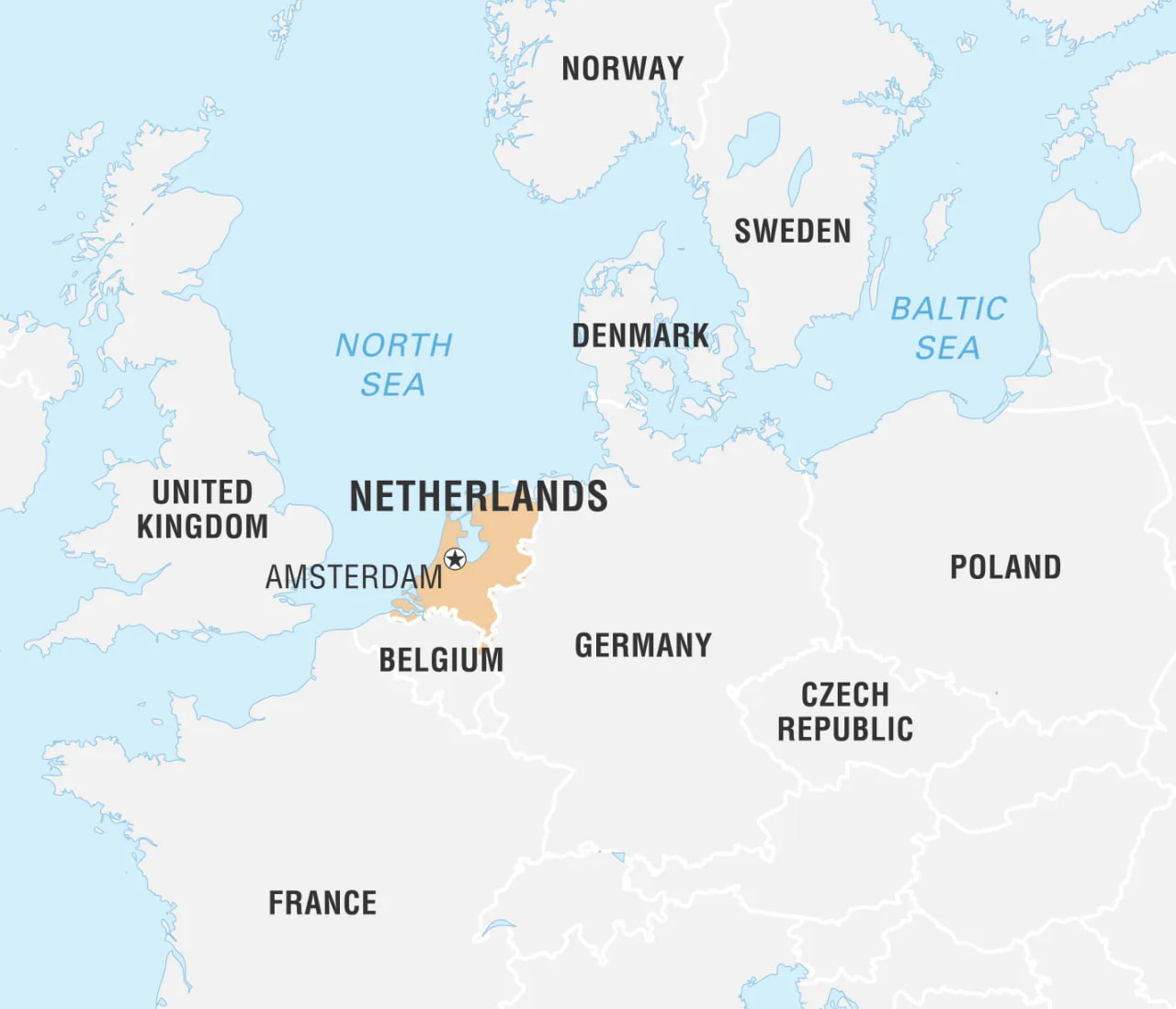 Roadmap of India-Netherlands Strategic Partnership (2026-2030)
Strategic & Defence Cooperation
Both nations sign a Letter of Intent on Defence Cooperation to coordinate joint tri-services interactions and draft a Defence Industrial Roadmap for the co-development and co-production of military equipment.
The Netherlands joins the Indo-Pacific Oceans Initiative (IPOI) to co-lead the Capacity Building & Resource Sharing pillar.
Semiconductors & Deep Tech
Tata Electronics and Dutch equipment giant ASML sign an MoU to support India's front-end semiconductor fabrication facility in Dholera, Gujarat.
The governments integrate the Dutch Semicon Competence Centre directly with the Indian Semiconductor Mission (ISM) to scale deep-tech startups and industry suppliers.
Six leading Indian Institutes of Technology (IITs), IISc Bangalore, and Dutch universities adopt a Memorandum of Cooperation to establish a semiconductor "brain bridge" for advanced R&D and talent exchange.
Green Energy & Critical Minerals
The leaders launch the India-Netherlands Roadmap on Green Hydrogen to accelerate domestic production, utilization, and exports of clean energy to European markets.
India's Ministry of Mines and the Dutch Ministry of Foreign Affairs sign a specialized MoU on Critical Minerals to secure essential raw material value chains, promote joint exploration, and enhance circularity.
The partners initiate plans for a 'Green and Digital Sea Corridor' to connect Indian ports with the Port of Rotterdam, facilitating environmentally sustainable maritime trade.
Water, Agriculture & Health (WAH)
The two nations renewed the Strategic Partnership on Water and signed a Letter of Intent applying Dutch technical expertise to Gujarat's multipurpose Kalpasar Project.
The Indian Council of Medical Research (ICMR) and the Dutch National Institute for Public Health and the Environment (RIVM) signed a Letter of Intent to jointly combat infectious diseases and Anti-Microbial Resistance (AMR).
The partners establish an Indo-Dutch Center of Excellence on Dairy Training in Bengaluru and sign an MoU for Clean Plant Centres (CPCs) to modernize agricultural inputs and ensure food security.
Mobility & Cultural Heritage
The countries sign a pivotal MoU on Migration and Mobility to guarantee the fair and lawful movement of highly skilled tech professionals, doctoral students, and researchers.
In a major act of cultural restitution, Leiden University returns 11th-century Chola-era copper plates to Indian authorities.
The respective maritime ministries sign an MoU to co-develop the National Maritime Heritage Complex (NMHC) in Lothal, Gujarat.
Economic Anchor and Top Investor
The Netherlands ranks as India’s 3rd largest export destination globally and the 4th largest source of Foreign Direct Investment (FDI), contributing cumulative investments of USD 55.6 billion.
Strategic Gateway to Europe
With world-class logistics infrastructure, the Port of Rotterdam serves as a primary commercial entry point for Indian goods into the broader European Union market.
Water Management Expertise
Dutch mastery in coastal and delta management directly supports major Indian initiatives, including the Namami Gange Mission, urban flood resilience, and Gujarat's Kalpasar Project.
Agricultural Modernization (WAH Agenda)
The Netherlands assists India’s agricultural sector through the establishment of 25 Centres of Excellence (CoEs) targeting climate-resilient farming, floriculture, and dairy training.
Multilateral and Counter-Terrorism Support
The Netherlands supports India’s bid for a permanent seat in a reformed UN Security Council and backs India's push for the UN Comprehensive Convention on International Terrorism (CCIT).
Asymmetric Trade Composition
India primarily exports low-value raw materials and refined petroleum, while the Netherlands exports high-value machinery, which exposes India to global commodity price fluctuations compared to high-margin Dutch tech imports.
Regulatory and Standards Disconnect
Rigid EU environmental and phytosanitary barriers choke Indian agricultural and textile exports. For example, authorities frequently reject Indian marine and food shipments at the Rotterdam port due to stringent maximum residue limits (MRLs) for chemicals.
Geopolitical Balancing Act
Contrasting approaches to global security conflicts strain diplomatic alignments. The Netherlands aligns strictly with Western geopolitical stances, which forces India to carefully navigate its strategic autonomy regarding nations like Russia and Iran.
Implementation Complexity in Defence
Co-developing and co-producing military equipment requires the complex task of harmonizing regulations and standards between the defence frameworks of both nations.
Energy Transition Challenges
Scaling green hydrogen ecosystems and water resilience projects demands massive infrastructure investment, sustained funding, and tight policy alignment.
Supply Chain Vulnerabilities
Expanding alliances in semiconductors and critical minerals forces both nations to actively address and mitigate global supply chain disruptions.
Geopolitical Conflicts and Trade Disruptions
Ongoing conflicts in West Asia and Ukraine threaten regional stability, causing severe disruptions to global energy supplies and choking maritime trade networks like the Strait of Hormuz.
Way Forward for India–Netherlands Relations
Accelerate the India-EU Free Trade Agreement (FTA) to secure greater market access, double bilateral trade, and harmonize regulatory standards.
Leverage the Fast Track Mechanism (FTM) to resolve institutional bottlenecks and attract deeper Dutch investments into India's Production Linked Incentive (PLI) schemes.
Strengthen the Academic 'Brain Bridge' between premier Indian institutes (IITs/IISc) and Dutch technical universities to drive joint research in Artificial Intelligence (AI), Photonics, and Quantum Computing.
Execute the Green Hydrogen Roadmap and operationalize the "Green and Digital Sea Corridor" linking Indian ports to the Port of Rotterdam to transform India into a premier global exporter of clean energy.
Maximize the Global Biofuels Alliance (GBA) and the International Solar Alliance (ISA) to co-develop sustainable waste-to-energy projects and battery storage solutions.
Deepen the Strategic Partnership on Water to build disaster-resilient urban infrastructure, advance the National Mission for Clean Ganga, and execute the Kalpasar Project in Gujarat.
Formulate a Defence Industrial Roadmap to connect the Society of Indian Defence Manufacturers (SIDM) with Dutch counterparts for the co-development and technology transfer of military equipment.
Finalize the Mutual Logistic Support Agreement (MLSA) to enhance the interoperability of armed forces during joint exercises and Indo-Pacific deployments.
Advocate for the UN Comprehensive Convention on International Terrorism (CCIT) to establish a unified global front to disrupt terrorist financing networks and eliminate safe havens.
The India-Netherlands Strategic Partnership concludes as a geopolitical alliance that secures global supply chains and drives the clean energy transition by uniting Dutch technological innovation with Indian industrial scale.
Source: INDIANEXPRESS
|
PRACTICE QUESTION Q. The 'WAH' agenda, frequently mentioned in the context of the India-Netherlands Strategic Partnership, refers to cooperation in which of the following sectors? A) Weapons, Artificial Intelligence, and Highways B) Water, Agriculture, and Health C) Women Empowerment, Aerospace, and Hydrogen D) Wind Energy, Automation, and Horticulture Answer: B Explanation: The 'WAH' agenda represents a combined focus on Water, Agriculture, and Health, which serve as the foundation of the India-Netherlands bilateral relationship. |
It is a comprehensive five-year blueprint adopted to institutionalize long-term collaboration across political, economic, technological, and security sectors, formally elevating bilateral ties to a 'Strategic Partnership'.
The countries are integrating the Dutch Semicon Competence Centre with the Indian Semiconductor Mission (ISM). A major MoU was signed between Tata Electronics and ASML for a semiconductor fab in Gujarat, alongside a 'Brain Bridge' connecting Dutch and Indian technical institutes for R&D.
The WAH agenda stands for Water, Agriculture, and Health. It focuses on sustainable development through initiatives like flood resilience, agricultural Centres of Excellence (CoEs), and joint public health research on infectious diseases.
© 2026 iasgyan. All right reserved