Description
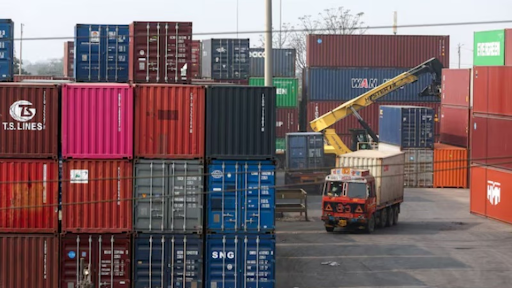
In March 2026, when one of the key sea routes was disrupted due to the West Asia conflict, engineering goods exports recorded a marginal growth of 1.1%.
Why in News?
According to the latest data released by the Ministry of Commerce and Industry, India’s goods trade deficit eased to 21 billion dollars in March 2026. For the full financial year 2025-26 (FY26), goods exports managed to grow by 1%, a feat considered significant given the persistent disruptions in the Red Sea and the broader West Asian region.
Key Trade Statistics for FY26
- Export Growth: Goods exports saw a modest increase of 1% over the previous fiscal year. This growth was driven by sectors such as engineering goods, electronics, and pharmaceuticals.
- Trade Deficit: The monthly trade deficit for March narrowed to 21 billion dollars, down from higher levels earlier in the fiscal year. This was largely due to a strategic dip in non-essential imports and steady demand for Indian manufactured goods.
- Sectoral Performance: While traditional sectors faced challenges due to high freight costs, the electronics sector emerged as a major contributor, benefiting from the Production Linked Incentive (PLI) schemes.
- Impact of West Asia: The conflict in West Asia and the resulting security threats in the Red Sea have led to higher shipping rates and longer turnaround times, which acted as a major headwind for exporters throughout the year.
Factors Influencing the Trade Balance
- Resilient Service Exports: While goods trade faced hurdles, India’s services exports remained a strong pillar, helping to offset the overall current account pressures.
- Import Management: A slight cooling in global commodity prices and strategic management of gold and electronic imports helped in keeping the deficit under control in the final month of the fiscal year.
- Global Demand Shifts: Despite fears of a slowdown in Western markets, demand for Indian agricultural products and value-added engineering items remained stable.
- Logistical Workarounds: Indian exporters have increasingly adapted to the Red Sea crisis by utilizing alternative routes and renegotiating contracts to manage the surge in freight insurance.
Significance for the Economy
The marginal easing of the trade deficit is a positive signal for India’s macroeconomic stability. A controlled deficit helps maintain the value of the Indian Rupee and keeps the Current Account Deficit (CAD) within manageable limits. The 1% growth in exports, though small, indicates that Indian products remain competitive in the global market despite significant logistical disadvantages.
Way Forward
- Market Diversification: To reduce the impact of the West Asian crisis, India must further diversify its export destinations, focusing more on Latin America, Africa, and Southeast Asia.
- Infrastructure Support: Reducing domestic logistic costs through the National Logistics Policy will be crucial to compensate for the high international shipping rates.
- Strengthening Trade Agreements: Expediting Free Trade Agreements (FTAs) with major partners like the UK and the EU could provide a necessary boost to export volumes in the coming fiscal year.
- Energy Transition: Reducing the import bill through increased domestic energy production and a faster transition to electric mobility will be key to long-term trade deficit management.
Conclusion
India’s trade performance in FY26 reflects a story of endurance. Easing the trade deficit to 21 billion dollars in March amid one of the most challenging geopolitical periods in recent history is a testament to the country’s diversified export base.
Source: Indian Express
|
PRACTICE QUESTION
Q. Analyze the structural vulnerabilities of India’s trade basket in the light of the recent West Asia crisis. To what extent does a narrowing trade deficit reflect economic resilience versus external supply-side disruptions? (250 words, 15 marks)
|