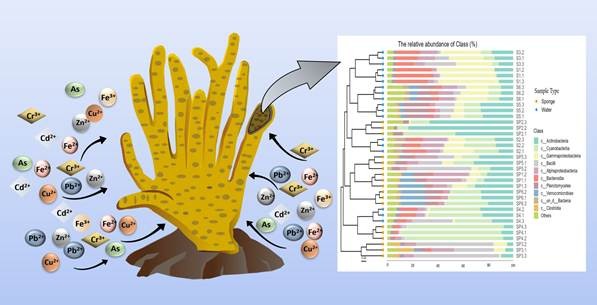
Freshwater sponges, particularly those found in the Sundarban delta, have been shown to effectively accumulate and indicate the presence of heavy metals such as arsenic, cadmium, and lead. Their high filtration capacity and close association with specialized microbes enable them to both monitor and help remediate metal pollution in aquatic ecosystems. These sponge-associated microbes possess adaptations for metal resistance and detoxification, making the sponge–microbe system a promising nature-based solution for assessing and mitigating heavy-metal contamination in freshwater environments.
Copyright infringement not intended
Picture Courtesy: PIB
Freshwater sponges which host diverse microbial communities vital for ecosystem health, have been found to have the potential to act both as bioindicators and absorbents of toxic metals like arsenic, lead, and cadmium and can be a promising solution for bioremediation.
|
Must Read: SPONGE FARMING | BIOREMEDIATION | |
Freshwater sponges are simple multicellular organisms belonging to the phylum Porifera. They are commonly found attached to rocks, vegetation, or submerged surfaces in lakes, ponds, calm river stretches, and canals.
They are filter feeders, continuously pumping water through their bodies and trapping:
This constant filtration not only helps in feeding but also makes them excellent natural monitors of water quality.
Freshwater sponges display several unique biological features:
Sponges maintain a continuous flow of water through their bodies:
Water entry: Water enters through small pores called ostia.
Filtration: Specialized cells called choanocytes capture food particles.
Water exit: Cleaned water exits through larger openings called oscula.
A single sponge can filter several litres of water daily, thereby improving the clarity of its environment.
The sponge–microbe relationship is mutualistic:
This cooperation enhances the ability of sponges to survive in contaminated habitats
Effective bioindicators: Freshwater sponges were found to accumulate high concentrations of arsenic, lead, and cadmium, much higher than the surrounding water, making them reliable indicators of metal pollution.
High bioaccumulation capacity: Sponges function as natural absorbents, storing toxic metals within their tissues—highly relevant for heavy-metal-affected regions of the Gangetic plain.
Distinct microbial communities: Microbes living inside sponges differ significantly from those
present in surrounding water and are influenced by sponge species and habitat characteristics.0
Metal-adapted microbes: Sponge-associated bacteria possess genes linked to:
These features enable microbes not only to tolerate contamination but also to assist in detoxifying polluted aquatic systems.
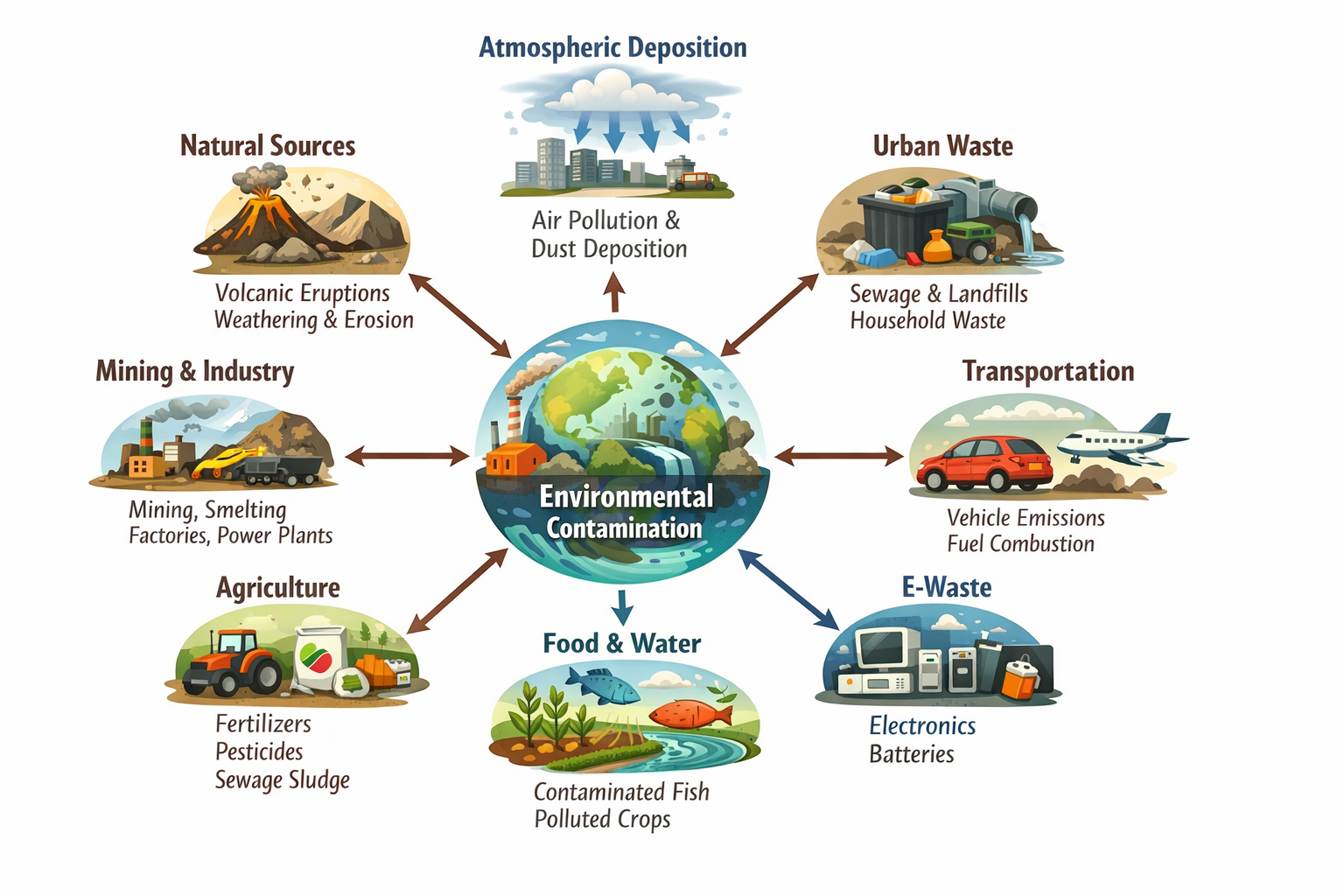
HEAVY METALSHeavy metals are a group of metallic or metalloid elements that have relatively high atomic weight and high density (typically greater than 5 g/cm³) and are toxic to living organisms even at low concentrations. Their toxicity arises because they can bioaccumulate in organisms and biomagnify through food chains, interfering with enzymes, cellular structures, and vital biochemical processes. Common examples: Lead (Pb), Mercury (Hg), Cadmium (Cd), Arsenic (As) – metalloid, often grouped with heavy metals, Chromium (Cr), Nickel (Ni), Copper (Cu), Zinc (Zn) — essential in trace amounts but harmful in excess Key characteristics
Sources of heavy metals
|
Source: PIB
|
Practice Question Q. Discuss the role of freshwater sponges and their associated microbes in monitoring and remediation of heavy metal pollution in aquatic ecosystems. (150 words) |
Because they filter large volumes of water and bioaccumulate heavy metals such as arsenic, cadmium, and lead in their tissues, reflecting the contamination level of their habitat.
Microbes living within sponges possess genes for metal resistance, metal ion transport, and detoxification, enabling them to transform or immobilize toxic metals in water.
Primarily from water through filtration, but settled metals associated with suspended particles may also be removed indirectly.




© 2026 iasgyan. All right reserved