🔔Join APTI PLUS Prelims Mirror 2026 | All India Open Mock Test Series on 12th April, 26th April & 3rd May 2026 |Register Now!

FORMER RBI GOVERNOR SUBBARAO WARNS OF THE TRIPLE WHAMMY FACING THE INDIAN ECONOMY

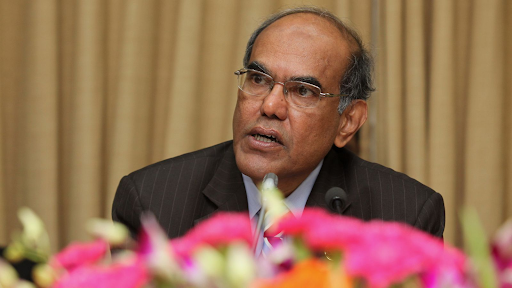
Former Reserve Bank of India (RBI) Governor Duvvuri Subbarao has provided a cautious outlook on India’s monetary policy, highlighting a complex triple whammy of challenges: a volatile rupee, stubborn inflation, and the looming threat of external oil shocks. 
Description

His warnings come at a time when the Indian rupee is testing new lows against the dollar and global crude prices are fluctuating due to instability in West Asia. 

Why in News?

As the RBI's Monetary Policy Committee (MPC) prepares for its next review, former Governor Subbarao’s warnings come at a time when the Indian rupee is testing new lows against the dollar and global crude prices are fluctuating due to instability in West Asia. 

The Three Pillars of the Policy Challenge

  • The Rupee Pressure: The widening interest rate differential between the US and India has led to capital outflows from emerging markets. 
  • Inflation Persistence: While headline inflation has moderated, core inflation—which excludes volatile food and fuel prices—remains sticky.
  • The Oil Shock Variable: As a major oil importer, India’s fiscal and monetary health is tied to crude prices. 

Subbarao’s Critique of the Neutral Stance

  • He suggests that the RBI might need to rethink its ‘withdrawal of accommodation; stance.
  •  He argues that in a world of persistent supply shocks, the concept of a neutral rate (where the economy is neither overheating nor slowing down) is shifting. 
  • If the RBI stays too restrictive for too long, it risks stifling the post-pandemic recovery in private consumption. 

Implications for the Banking Sector

  • Liquidity Management: The RBI will likely continue to use Variable Reverse Repo (VRR) and repo auctions to manage fine-tuned liquidity, ensuring that short-term market rates stay aligned with the policy repo rate.
  • Credit Growth vs. Deposit Growth: Subbarao points out the growing gap between credit expansion and deposit mobilization. Banks may be forced to raise deposit rates further, which could squeeze their Net Interest Margins (NIMs) in the coming quarters.

Way Forward

  • Enhanced Communication: Clearly signaling to the markets that the RBI is prepared to act on either side of the inflation-growth trade-off.
  • Forex Intervention: Utilizing India’s substantial foreign exchange reserves judiciously to prevent disorderly movements in the rupee. 
  • Fiscal-Monetary Coordination: Ensuring that the government’s infrastructure spending does not lead to an overheated economy that forces the RBI into a corner.

Conclusion

Duvvuri Subbarao’s outlook serves as a sobering reminder that the ‘Goldilocks’ scenario—low inflation and high growth—is becoming harder to maintain in a fragmented global economy. As the RBI navigates the mid-2026 policy cycle, the focus will remain squarely on the 'impossible trinity’—maintaining an independent monetary policy, a stable exchange rate, and open capital flows. e.

Source: Indian Express

PRACTICE QUESTION

Q. "External shocks in a globalized economy act as a 'supply shock' that simultaneously dampens growth and fuels inflation." In light of the recent West Asia conflict, discuss the macroeconomic challenges facing the Reserve Bank of India (RBI). (250 words)

Key Insights

The neutral stance of the Reserve Bank of India indicates that the central bank is prepared to move interest rates in either direction based on evolving macroeconomic conditions. This posture implies that the MPC is neither strictly committed to lowering rates to support growth nor raising them to curb inflation. By adopting this flexible approach, the regulator can respond dynamically to shifts in liquidity, global headwinds, or domestic price volatility. It essentially serves as a middle ground that allows the monetary authority to prioritize price stability while remaining supportive of economic expansion as needed. 

Free access to e-paper and WhatsApp updates

Let's Get In Touch!