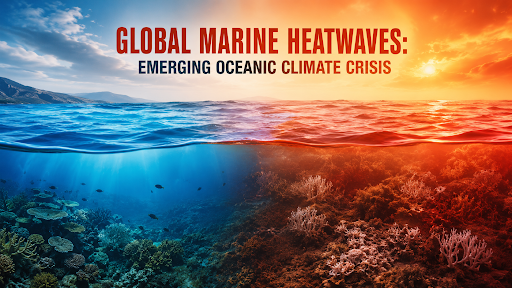
Air pollution is now one of the world’s deadliest environmental threats, contributing to nearly nine million premature deaths each year—largely from heart disease, stroke, lung infections, cancer and chronic respiratory conditions. Most of these deaths occur in low- and middle-income countries where exposure to fine particulate matter, toxic gases and waste emissions is persistently high. The latest assessments show that ninety-nine percent of the global population breathes air that exceeds health guidelines, with climate change, wildfires, unmanaged waste and urban congestion intensifying the crisis. This enormous health burden underscores the urgent need for stronger pollution control, cleaner energy transitions and more effective global cooperation.
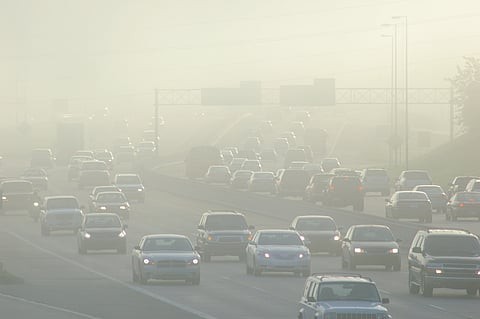
Air pollution contributes to 9 million deaths
Copyright infringement not intended
Picture Courtesy: Down to Earth
Context:
UNEP’s Global Environment Outlook-7 (2025) finds that air pollution causes 9 million deaths every year, with 99% of the global population exposed to unhealthy air.
|
Must Read: AIR POLLUTION INDIA | NO INDIAN CITY MEETS WHO AIR QUALITY STANDARDS | |
According to Global Environment Outlook report:
|
United Nations Environment Programme (UNEP) · UNEP was created in 1972 after the Stockholm Conference to lead global environmental governance and scientific assessment. · It is headquartered in Nairobi, Kenya, and governed by the UN Environment Assembly with 193 member states. · It provides environmental data, supports global treaties (Montreal Protocol, Minamata Convention) and publishes key reports like the Global Environment Outlook, the Emissions Gap Report and the Adaptation Gap Report. Global Environment Outlook (GEO) · The GEO Report is UNEP’s flagship environmental assessment, released every 5–7 years, with the first in 1997. · It evaluates global trends in pollution, climate change, biodiversity loss and land degradation, and provides policy recommendations for sustainable development. · GEO-7 (2025) warns that pollution causes 9 million deaths annually and 99 percent of the world’s population is exposed to unhealthy air. · It notes a 20 percent rise in methane emissions (2000–2020), high waste-related emissions, and escalating climate–pollution feedback loops. |
What are the multidimensional implications?
Human health: Air pollution today contributes not only to respiratory diseases but also to dementia, cognitive decline in children and Type-2 diabetes, as shown by a Lancet Planetary Health study which links long-term exposure to fine particulate matter with nearly 2 million diabetes cases annually, shifting India’s and the world’s policy discourse toward chronic non-communicable diseases.
Socio-Economic losses: The combined burden of pollution, climate change and biodiversity loss costs the world several trillion dollars every year, evidenced by the World Bank’s estimate that air pollution alone reduces global GDP by over 5 trillion dollars due to lost labour income and health expenditure, threatening Sustainable Development Goal progress and destabilising fiscal capacity in developing economies.
Ecological Implications: Persistent air pollution damages forests, accelerates soil degradation and disrupts nutrient cycles, as seen in the Western Himalayan region, where black carbon deposition has accelerated glacier melt.
Agricultural implications: Ozone pollution reduces crop yields, with the Indian Council of Agricultural Research estimating wheat and rice yield losses up to fifteen percent in northern India due to tropospheric ozone.
Governance Implications: Megacities like Delhi, Tehran and Lagos face chronic air quality emergencies that expose gaps in urban planning such as inadequate public transport, poor waste management and lack of airshed-based coordination. Cases such as the Ghazipur and Brahmapuram landfill fires show how mismanaged urban waste becomes a recurring environmental hazard.
Geopolitical Implications: Conflict zones experience severe deterioration in air quality, as seen in the Russia–Ukraine conflict, where particulate matter levels rose almost ten percent, demonstrating how war exacerbates environmental risks.
Equity and Justice Implications: 90% of pollution-related deaths occur in low and middle income countries, highlighting deep environmental inequities where vulnerable populations shoulder disproportionate health and economic burdens.
What are the challenges that need to be tackle?
Waste and methane challenges: India is among the world’s largest solid waste generators, producing more than 100 and 60,000 tonnes per day, and case studies such as the Ghazipur landfill fire in 2022 and the Brahmapuram fire in Kerala in 2023 show how unmanaged dump sites release massive quantities of methane and fine particulate matter, worsening air quality across entire urban airsheds.
Governance challenges: Air quality governance remains fragmented across agencies such as the Ministry of Environment, Forest and Climate Change, the Central Pollution Control Board, State Pollution Control Boards and municipal bodies, leading to overlapping mandates and poor accountability.
Weak compliance with climate agreements: The failure of major economies to meet their commitments under the Paris Climate Agreement has prolonged dependence on fossil fuels, indirectly worsening pollution levels, as seen in the United Nations Emissions Gap Report, which warns of a catastrophic 2.5-to-2.9-degree Celsius warming trajectory.
Need for strong regulation of short-lived climate pollutants: Short-lived climate pollutants such as methane require tighter global frameworks, illustrated by the limited progress under the Global Methane Pledge, where many large emitters have yet to establish national methane abatement strategies.
Absence of protocols for airborne microplastics: No dedicated multilateral treaty regulates microplastic air pollution, even though studies such as the 2023 Himalayan atmospheric deposition survey show microplastics being transported across continents and depositing in fragile ecosystems.
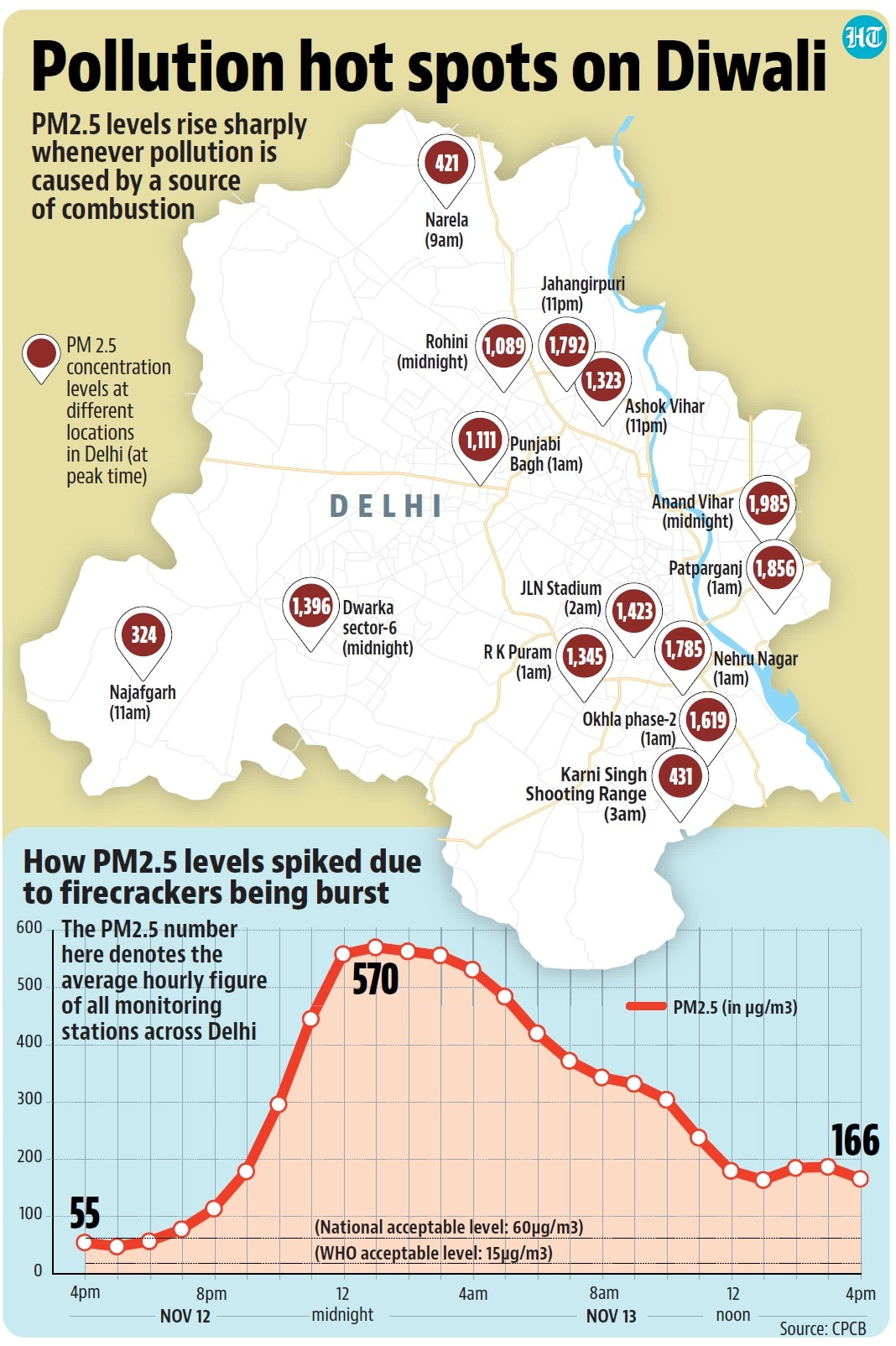
Picture Courtesy: Hindustan Times
What are the government of India initiatives to tackle air pollution?
Conclusion:
The UNEP and its Global Environment Outlook show that the world is entering a phase of converging environmental crises, where pollution, climate change and ecosystem decline reinforce each other and disproportionately harm vulnerable populations. Strengthening science-based policy, accelerating clean transitions and deepening global cooperation are now imperative to safeguard both human well-being and planetary stability.
Source: Down to Earth
|
Practice Question Q. The findings of the latest Global Environment Outlook highlight the deepening link between environmental degradation and human well-being. Discuss. (250 words) |
The United Nations Environment Programme is the global authority on environmental assessment, policy guidance and international environmental governance, established in 1972 and headquartered in Nairobi.
The Global Environment Outlook provides a comprehensive scientific assessment of global environmental trends and offers policy pathways for sustainable development.
It offers authoritative data on pollution, climate change and biodiversity loss—useful for GS-III, GS-II, Essay and Prelims questions on environment and international institutions.


© 2026 iasgyan. All right reserved