Description
Disclaimer: Copyright infringement not intended.
Context
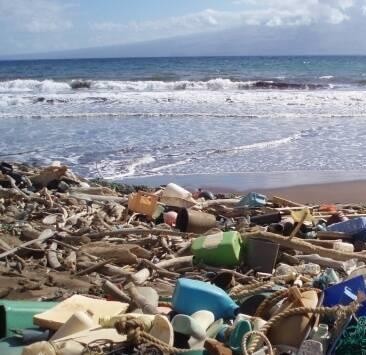
- 170 trillion plastic particles are currently afloat in the oceans across the world, according to a new study, which added that if no urgent action is taken then this number could nearly triple by 2040.
Details of the study
- Name: ‘A growing plastic smog, now estimated to be over 170 trillion plastic particles afloat in the world’s oceans — Urgent solutions required’, done by researchers from 5 Gyres Institute, Win Cowger of Moore Institute for Plastic Pollution Research and Stockholm Resilience Centre.
- In 2014, it was estimated that there were 5 trillion plastic particles in the ocean.
- From 1990 to 2005, the number of plastic particles more or less fluctuated.
- One of the reasons for this could be due to the effective implementation of important policy measures at the time.
|
In the 1980s and 90s, there were some international policies, like MARPOL Annex 5 that enforced laws against dumping trash at sea. They were powerful laws that were enforceable and were preventative.
|
- Since 2005 humanity has produced more than 5,000,000 tons of new plastic into the world, and with more plastic there is more pollution.

About microplastics
What are they?
- Plastic debris is found in the environment in a very wide range of sizes.
- Researchers first reported finding tiny beads and fragments of plastic, especially polystyrene, in the ocean in the early 1970s.
- The term ‘microplastics’ was introduced in the mid-2000s.
- Today, it is used extensively to describe plastic particles with an upper size limit of 5 mm.
Why are microplastics in the ocean receiving increasing attention?
Marine litter – especially plastic debris in the ocean – is a major global environmental issue.
Physical effects
- Microparticles can be ingested by filter-feeding marine organisms such as oysters and mussels.
- They have been observed to close the gut wall and induce a reaction within the tissue.
- Microplastics in the seawater present an additional stressor if they affect the filter-feeder system inside the whale’s mouth.
Chemical effects
- The ecotoxicological profiles of compounds added to plastics to achieve certain properties are generally well known. These additives can be transferred from a plastic particle into an organism.
- Seawater is contaminated with a wide variety of organic and inorganic pollutants. Many plastics absorb organic contaminants, such as the pesticide DDT and polychlorinated biphenols (PCBs), to a high degree.
- These compounds can cause chronic human health effects, including disruption of the hormonal system (endocrine disruption), inducing genetic changes (mutagenicity) and cancer (carcinogenicity).
- Once ingested by fish, birds or sea mammals, the compounds – which penetrate the structure of the plastic – may start to leach out.
- Organisms become continuously contaminated by contact with their environment and by ingestion of contaminated food.

Sources of plastic debris
Sea-based sources include:
- Merchant shipping – rope, galley waste
- Fishing – nets, boxes, rope, wrapping bands, galley waste
- Aquaculture – nets, floats, rope
- Offshore oil and gas platforms – galley waste, sewage-related
- Cruise ships – galley waste, sewage-related (may be equivalent to a medium-sized town)
- Recreational boating – galley waste, sewage-related
Land-based sources include:
- Coastal tourism – packaging, cigarette filters
- Population centres – sewagerelated, storm drains, street litter
- Horticulture/agriculture – plastic sheeting, tubing
- Poorly controlled waste sites and illegal dumping – all waste types
- Industrial sites – plastic production and conversion, packaging
- Ship-breaking
Way Forward
- There is an urgent need to implement a global resolution to limit the production of single-use, throwaway plastic.
- Cities need to be responsible for managing their waste so it does not leave their territory.
- There is a need to reduce the amount of chemical additives in new plastic products.
- Industries should be legally required to put at least 75% recycled plastic in any new product.
|
Global Partnership on Marine Litter
GPML) is a voluntary, open-ended partnership for governments, international agencies, businesses, academia, local authorities, NGOs and individuals, launched during the United Nations Conference on Sustainable Development (Rio+20) in June 2012.
Objectives
- Its main objective is protecting human health and the global environment though reduction and management of marine litter.
- A specific objective of the GPML is to enhance international cooperation and coordination through promotion and implementation of the Honolulu Strategy.
The Honolulu Strategy and the 4Rs
The Honolulu Strategy is a framework for a comprehensive and global effort to reduce the ecological, human health and economic impacts of marine debris. The framework consists of three goals and associated strategies:
- Goal A: Reduced amount and impact of land-based sources of marine debris introduced into the sea
- Goal B: Reduced amount and impact of sea-based sources of marine debris introduced into the sea, including solid waste; lost cargo; abandoned, lost or otherwise discarded fishing gear; and abandoned vessels
- Goal C: Reduced amount and impact of accumulated marine debris on shorelines, in benthic habitats, and in pelagic waters
A key action proposed for strategies under Goal A is to promote an assortment of behaviours and actions, the “4Rs”related to waste management (reduce, reuse, recycle, and recover).
In view of the nature of microplastics – and their increasing use in personal care products – there may be a need to add a fifth “R”: redesign.
|
Must Read Articles:
Microplastics: https://www.iasgyan.in/daily-current-affairs/microplastics-2
|
PRACTICE QUESTION
Q) There is an urgent need to implement a global resolution to limit the production of single-use, throwaway plastic. Discuss in the context of microplastics. (250 words)
|
https://indianexpress.com/article/explained/explained-climate/170-trillion-plastic-new-study-impact-8533894/