Tuberculosis (TB) is a contagious bacterial infection caused by Mycobacterium tuberculosis, primarily affecting the lungs. Spread through the air via coughs or sneezes, it remains a major global health challenge but is generally preventable and curable with antibiotics.
Copyright infringement not intended
Picture Courtesy: news18
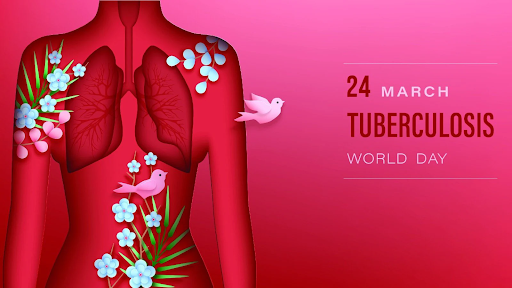
World Tuberculosis Day 2026 is observed on March 24, with the theme "Yes! We Can End TB: Commit, Invest, Deliver" to commemorate Dr. Robert Koch's discovery of the causative bacterium, Mycobacterium tuberculosis in 1882.
It is an infectious disease caused by the bacterium Mycobacterium tuberculosis.
It primarily affects the lungs (pulmonary TB) but can spread to any part of the body, such as the kidneys, spine, and brain (extrapulmonary TB).
Transmission and Mechanism
Common Symptoms
Challenge of Drug Resistance
One of the biggest global health threats is the evolution of TB strains that do not respond to standard medicine:
Diagnosis and Prevention
Tuberculosis is not merely a medical issue; it is deeply intertwined with poverty, nutrition, and healthcare access, making it a disease of social and economic inequality.
High Global Burden
In 2024, an estimated 10.7 million people contracted TB globally, leading to 1.23 million deaths. The COVID-19 pandemic had temporarily set back the progress made in fighting TB. (Source: WHO)
India's Disproportionate Share
India has the highest TB burden globally, accounting for approximately 25% of all cases. It also contributes 32% of the world's multidrug-resistant (MDR) TB cases. (Source: WHO)
Socio-Economic Drivers
TB disproportionately affects the poor due to factors like overcrowding, poor ventilation, and undernutrition. Malnutrition is a leading risk factor.
The Crisis of Drug Resistance
Incomplete treatment leads to Drug-Resistant TB (DR-TB). While the treatment success rate for new cases is high at 90%, it drops to 77% for MDR/RR-TB cases, which are more complex and expensive to treat. (Source: WHO)
Global Funding Gaps
Global funding remains a major obstacle. In 2024, only $5.9 billion was available for TB programs, far short of the $22 billion annual target set by the UN. (Source: WHO)
India's TB incidence has declined by 21% from 2015 to 2024, which is faster than the global average of 12%. (Source: WHO Global TB Report 2025)
Key Initiatives
Pradhan Mantri TB Mukt Bharat Abhiyaan (PMTBMBA)
A community-led "Jan Andolan" (people's movement) that encourages Ni-kshay Mitras (donors) to provide nutritional, diagnostic, and vocational support to TB patients for at least six months.
100-Day TB Mukt Bharat Campaign (2026)
An intensified nationwide drive launched on World TB Day 2026 covering 1.58 lakh villages and urban wards through micro-planned, targeted interventions for early detection.
A direct benefit transfer (DBT) scheme that provides financial support for nutrition. In October 2024, the monthly support was doubled from ₹500 to ₹1,000 for the entire treatment duration.
Sub-National Disease-Free Certification: Initiative to reward districts and states that show significant reductions in TB incidence (20%, 40%, 60%, or 80%) compared to 2015 baseline levels.
Advanced Clinical & Technical Interventions
BPaLM Regimen
A shorter, safer, and highly effective four-drug combination (Bedaquiline, Pretomanid, Linezolid, and Moxifloxacin) for Multi-Drug Resistant TB (MDR-TB), reducing treatment duration from 20 months to just six months.
AI-Driven Diagnostics
Deployment of over 500 AI-enabled hand-held X-ray units for community screening, radiology AI to read scans, and acoustic AI ("Cough Against TB") to identify TB signatures from cough recordings.
TB Mukt Bharat App
Launched in 2026, it features an AI-enabled 'Khushi' Chatbot to strengthen patient access to timely care and information.
Universal Drug Susceptibility Testing (UDST)
Ensures every diagnosed TB patient is tested for drug resistance at the time of diagnosis itself.
Source: THEHINDU
|
PRACTICE QUESTION Q. Consider the following statements regarding the Ni-kshay Poshan Yojana: 1. It provides a Direct Benefit Transfer (DBT) of ₹2,000 per month to all diagnosed TB patients. 2. The financial assistance is provided strictly for the first two months of the treatment period. Which of the statements given above is/are correct? a) 1 only b) 2 only c) Both 1 and 2 d) Neither 1 nor 2 Answer: d Explanation: Statement 1 is incorrect: The Ni-kshay Poshan Yojana (NPY) provides a Direct Benefit Transfer (DBT) of ₹1,000 per month (increased from the previous ₹500 per month as of late 2024) to all notified TB patients. Statement 2 is incorrect: Financial assistance is provided for the entire duration of the treatment, not just for the first two months. |
The theme for World TB Day 2026 is "Yes! We Can End TB: Commit, Invest, Deliver." This underscores the urgent global necessity for accelerated financial and political commitment to eradicate the disease.
It is a nutritional support initiative by the Government of India that provides a Direct Benefit Transfer (DBT) of ₹1,000 per month to all diagnosed TB patients to aid their dietary needs throughout the entire duration of their treatment.
Tuberculosis is a contagious airborne bacterial disease caused by *Mycobacterium tuberculosis*. It spreads through aerosolized microscopic droplets when a person with active pulmonary TB coughs, sneezes, or speaks.


© 2026 iasgyan. All right reserved