The WHO Pandemic Pact, under Article 19, seeks to prevent future crises but faces concerns over biosafety and rapid pathogen sharing through PABS. Debates on intellectual property, One Health dilution, and CBDR reflect tensions between innovation, equity, and global health security leadership.
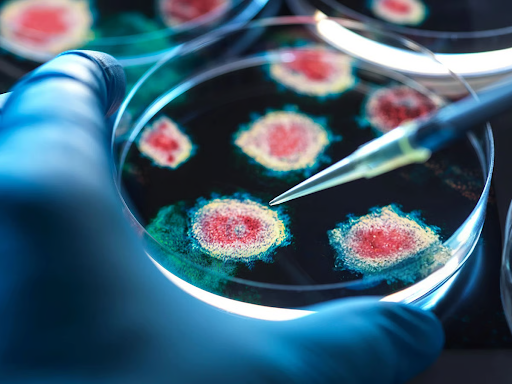
Copyright infringement not intended
Picture Courtesy: DOWNTOEARTH
Context
Negotiations are underway at the WHO to finalise the last unresolved part of the world’s first Pandemic Agreement, a system for sharing dangerous pathogens and the benefits that come from them.
What is WHO Pandemic Agreement?
The WHO Pandemic Agreement is a legally binding international treaty adopted by the World Health Organization (WHO) member states in May 2025.
Its primary goal is to ensure the world is better prepared for future health emergencies through enhanced global cooperation and equity.
Key Objectives & Provisions
Equitable Access
The Pathogen Access and Benefit-Sharing (PABS) System mandates countries to share pathogen data (like virus samples) for guaranteed access to 20% of resulting pandemic products (vaccines, diagnostics, treatments): 10% donated and 10% at affordable prices.
One Health Approach
It formally adopts the "One Health" principle, recognizing that human health is deeply connected to animal and environmental health, aimed at preventing zoonotic diseases from spilling over to humans.
Global Supply Chain
It establishes a Global Supply Chain and Logistics Network (GSCL) to ensure medical supplies are distributed fairly and rapidly during a crisis.
Financial Mechanism
A Coordinating Financial Mechanism will be set up to help developing nations build the necessary infrastructure to handle future pandemics.
What It Does NOT Do?
Agreement explicitly safeguards national sovereignty. It cannot grant the WHO authority to:
Current Status
Adoption: The framework was adopted by the World Health Assembly in May 2025.
Finalizing Details: An Intergovernmental Working Group (IGWG) is currently negotiating the specific operational details of the PABS system, which will form a mandatory annex. This is expected to be finalized by May 2026.
Ratification: Once the annex is adopted, the agreement will be open for signature. It will officially enter into force 30 days after 60 countries have ratified it through their own national processes.
Participation: While 124 countries voted in favour, some key nations like the United States have declined to participate or have abstained, which may impact the treaty's global effectiveness.
Major Areas of Contention and Debate
The negotiations are primarily split between the interests of developed nations (Global North) and developing nations (Global South). The key disputes revolve around three main themes.
Access to Vaccines & Drugs:
Intellectual Property (IPR) Waivers:
Benefit Sharing (PABS System):
A coalition of scientists has raised alarms that the treaty, in its current form, prioritizes speed over safety, increasing the risk of lab-induced pandemics.
The "One Health" approach links human, animal, and environmental health. The treaty mentions it but is criticized for lacking enforcement.
India's Stance and Role
As the "Pharmacy of the World" and a leading voice for the Global South, India plays a crucial and balancing role in the negotiations.
Advocating For Equity: India strongly advocates for the principle of Common But Differentiated Responsibilities (CBDR), arguing that while all nations share responsibility, developed countries must provide finance and technology to developing nations.
Manufacturing Diversification: India is pushing for a geographically diversified global manufacturing network to prevent the supply chain concentration seen during COVID-19.
Strengthening Domestic Capacity: India is enhancing its own pandemic preparedness through the Pradhan Mantri Ayushman Bharat Health Infrastructure Mission (PM-ABHIM).
Integrating Traditional Medicine: The establishment of the WHO Global Centre for Traditional Medicine in Jamnagar, Gujarat, showcases India's leadership in promoting a more inclusive and holistic approach to global health.
Conclusion
The WHO Pandemic Agreement must be a balanced compromise, bridging the Global North-South divide to safeguard global health security and justice by enforcing biosafety, ensuring equity, and accelerating pathogen sharing.
Source: DOWNTOEARTH
|
PRACTICE QUESTION Q. Consider the following statements about the WHO Pandemic Agreement: 1. It is being negotiated under Article 19 of the WHO Constitution. 2. The Pathogen Access and Benefit-Sharing (PABS) system mandates the voluntary sharing of only non-dangerous pathogens. 3. The negotiations are being conducted by an Intergovernmental Negotiating Body (INB). Which of the statements given above is/are correct? A) 1 only B) 1 and 3 only C) 2 and 3 only D) 1, 2 and 3 Answer: B Explanation: Statement 1 is correct: The WHO Pandemic Agreement was negotiated and adopted under Article 19 of the WHO Constitution. This article empowers the World Health Assembly to adopt legally binding conventions or agreements for its member states. Statement 2 is incorrect: The Pathogen Access and Benefit-Sharing (PABS) system is specifically designed to facilitate the sharing of pathogens with pandemic potential (which are inherently dangerous) and their genetic sequence data. Statement 3 is correct: The negotiations for the agreement are being conducted by the Intergovernmental Negotiating Body (INB), which was established by WHO Member States specifically for this purpose in December 2021. |
The WHO Pandemic Pact (or Treaty) is a proposed international legal instrument aimed at strengthening pandemic prevention, preparedness, and response globally. It is currently being negotiated to ensure the world is better prepared for future health crises than it was for COVID-19.
One Health is an integrated approach that recognizes the health of humans is closely connected to the health of animals and the shared environment. It aims to tackle root causes of pandemics like deforestation and wildlife trade to prevent zoonotic spillovers.
India advocates for equity, specifically demanding guaranteed access to medical countermeasures for developing nations. India supports the principle of "Common But Differentiated Responsibilities" (CBDR), arguing that developed nations must provide financial and technical support to the Global South.

© 2026 iasgyan. All right reserved