Cassava Brown Streak Disease is spreading across Africa, threatening food security. Transmitted by whiteflies and infected cuttings, it causes root rot in cassava, a key staple. The crisis drives economic losses and hunger, especially among women farmers, demanding resistant varieties, clean seeds, and stronger global cooperation.
Copyright infringement not intended
Picture Courtesy: DOWNTOEARTH
Context
A deadly viral outbreak is destroying Cassava crops, posing an immediate threat to food security in Africa.
What is Cassava?
Cassava (Manihot esculenta), also known as yuca or manioc, is a starchy root vegetable and a major tropical tuber crop cultivated worldwide for its edible, calorie-dense tubers.
It serves as a vital staple food for over 800 million people, providing a resilient, drought-tolerant, and versatile source of carbohydrates, often processed into flour or tapioca.
Key Facts About Cassava
Appearance & Taste: It has a rough, brown, fibrous skin with a firm, white or yellowish starchy flesh. It tastes earthy, slightly sweet, and nutty, similar to a potato but denser.
Safety Warning: Cassava must never be eaten raw. It contains cyanogenic compounds that require proper processing—peeling, soaking, and cooking—to be safe for consumption.
Versatility: It is highly versatile and can be boiled, fried, roasted, or ground into flour (garri) to make breads and porridge.
Nutritional Value: It is an affordable source of energy (high in calories and carbohydrates) and contains some vitamin C, but is relatively low in protein.
Origin & Cultivation: Native to South America, it is now widely grown in tropical and subtropical regions of Africa and Asia.
Industrial Use: Processed into tapioca starch for food, animal feed, and industrial applications.
It is a "climate-smart" crop:
What is Cassava Brown Streak Disease (CBSD)?
Pathogens: Caused by the Cassava brown streak virus (CBSV) and Ugandan cassava brown streak virus (UCBSV), which are ipomoviruses in the family Potyviridae.
Symptoms:
Transmission: Primarily spread by the whitefly Bemisia tabaci and through the use of infected stem cuttings.
Impact: CBSD is a major threat to food security in Sub-Saharan Africa, with the pandemic spreading from coastal East Africa toward the Great Lakes region.
Management: Control involves using certified virus-free planting materials, planting resistant/tolerant cassava varieties, and strict sanitation (removing infected plants).
Source: DOWNTOEARTH
|
PRACTICE QUESTION Q. Which insect acts as the vector for spreading Cassava Brown Streak Disease (CBSD) in the field? A. Aphids B. Mealybugs C. Whiteflies D. Thrips Answer: C Explanation: Cassava Brown Streak Disease (CBSD) is primarily spread in the field by the whitefly species Bemisia tabaci. These insects transmit the viruses causing the disease—specifically Cassava brown streak virus (CBSV) and Ugandan cassava brown streak virus (UCBSV)—in a semi-persistent manner. |
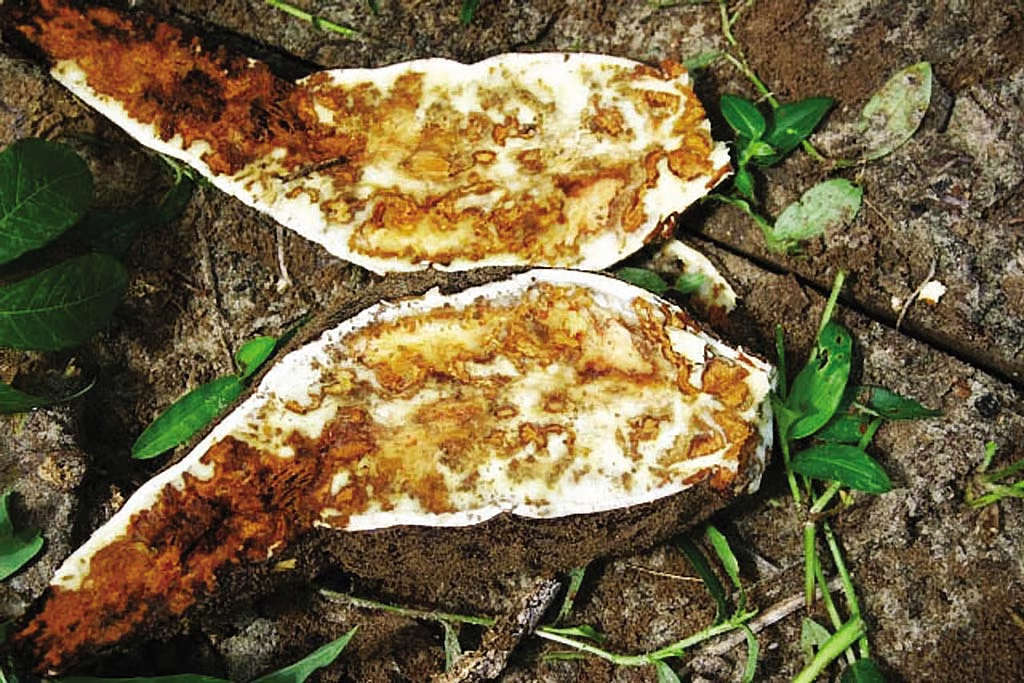
CBSD is a devastating viral disease affecting cassava plants, a staple food crop in Africa. It is dangerous because while the leaves may show mild symptoms, the disease causes a hard, brown, corky rot in the tuberous roots, making them inedible and often leading to total crop loss discovered only at harvest.
Cassava is a cornerstone of food security for over 800 million people, especially in sub-Saharan Africa. It is highly valued as a "climate-smart" crop because of its tolerance to drought and poor soils, making it a reliable food source when other crops fail. For millions of smallholder farmers, it is both a primary source of calories and income.
The disease spreads primarily through two pathways: 1) The whitefly (Bemisia tabaci), which acts as a vector, transmitting the virus from infected to healthy plants. 2) The use of infected planting material, where farmers unknowingly use stem cuttings from an infected plant for the next crop cycle.



© 2026 iasgyan. All right reserved