

President Vladimir Putin’s Beijing visit highlights China’s growing diplomatic role and a "no-limits" Russia-China partnership, which challenges India’s strategic autonomy..
|
Read all about: DEEPENING RUSSIA-CHINA TIES AND IMPACT ON INDIA l INDIA-CHINA RELATIONSHIP l INDIA RUSSIA RELATIONS |
The deepening of the Russia-China relationship represents a strategic choice driven by shared geopolitical interests.
Countering US Hegemony
Both nations align to oppose unilateralism and hegemonism, advocating for a multipolar world where the United States does not dictate global norms.
Economic Necessity and Energy Security
Following the Ukraine crisis, Russia shifted its trade routes toward Asia.
Energy exports to China increased to replace lost Western markets, while Chinese products filled the vacuum left by Western firms in Russia.
Technological Symbiosis
China utilizes Russian aerospace and missile technology to bypass research and development (R&D) hurdles.
Russia receives Chinese support through cash and basic arms to alleviate the financial strain of international sanctions.
Energy Infrastructure Integration
In 2025, Russia and China concluded a legally binding Memorandum of Understanding (MoU) for the Power of Siberia 2 (PoS 2) gas pipeline through Mongolia.
Security Coordination in the Arctic
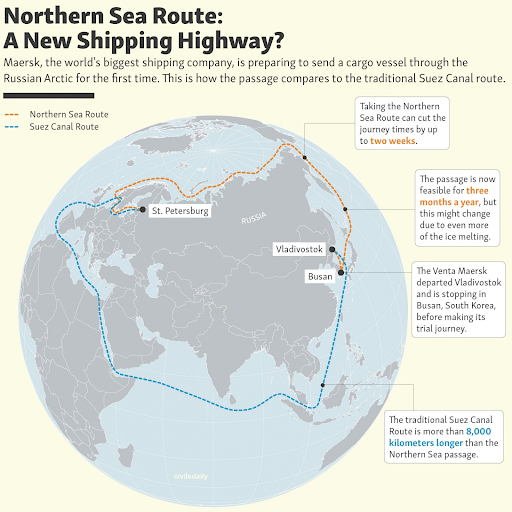
Russia relies on Chinese investment to develop the Northern Sea Route (NSR) and liquified natural gas (LNG) projects, such as the Yamal LNG plant, as EU sanctions phase out Russian imports.
 How Have Russia-China Relations Changed in Recent Years?
The partnership has evolved from transactional arms sales into a Comprehensive Strategic Partnership of Coordination for a New Era.
Treaty Extension
In May 2026, President Xi Jinping and President Vladimir Putin agreed to extend the China-Russia Treaty of Good-Neighborliness and Friendly Cooperation, pledging to strengthen strategic coordination.
Joint Military Operations
Naval/Submarine Patrols: Both nations conducted their first joint submarine patrol in the Sea of Japan and the East China Sea in August 2025.
Strategic Air Patrols: The 10th Joint Strategic Air Patrol over the East China Sea and Western Pacific occurred in December 2025.
Missile Defense: A third joint anti-missile exercise took place in Russia in December 2025.
Shift in Trade Dominance
Bilateral trade exceeded $200 billion for three consecutive years by 2026, with a nearly 20% increase in the first four months of 2026 alone. (Source: China Daily)
Arctic Engagement
In 2024, the Russian-Chinese Subcommittee on Cooperation on the NSR was established to coordinate navigation safety and logistics.
Institutionalization
The relationship now includes regular dialogue mechanisms, high-level political meetings, and systems for consultation on international issues.
India views the burgeoning Moscow-Beijing axis as a threat to its strategic autonomy and regional security.
Russia as a "Junior Partner"
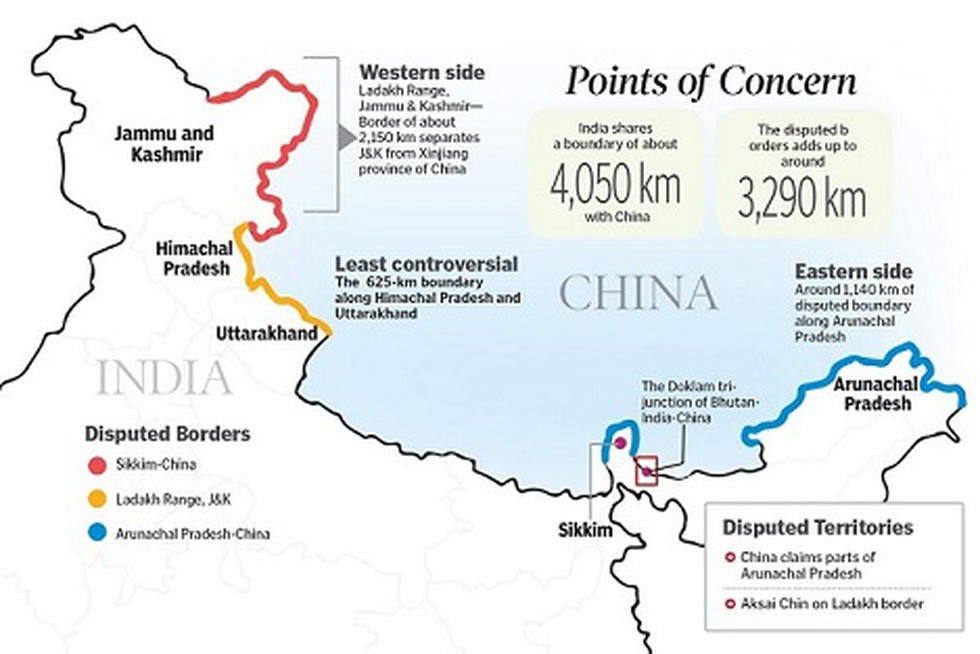
Concerns grow that Russia is becoming a junior partner to China, potentially limiting Russia's strategic flexibility and its reliability as a neutral mediator in India-China border disputes.
 Defense Supply Chain Vulnerabilities
Approximately 60-70% of India's military equipment is of Soviet/Russian origin. Deepening Russia-China ties could lead to the disruption of spare parts or technological downgrades if China exerts influence over Russian exports.
Pakistan-China-Russia Triad
India faces a potential three-front challenge. China is fast-tracking the delivery of stealth J-35s to Pakistan, while joint exercises (like the 2020 Caucasus drills) involve troops from China, Russia, and Pakistan.
Techno-Nationalism and IP Theft
China’s history of intellectual property (IP) theft—including cases against Russia—suggests that China may eventually replace Russian tech with its own domestic versions, outcompeting India’s defense industry.
Arctic Exclusion
While Russia invites China to invest in the Arctic, India must carefully monitor if this alignment compromises its own interests in the Far East and Arctic research.
India is shifting from Non-Alignment to a more pragmatic Multi-Alignment strategy to maximize national interests.
Military and Defense Responses
Operation Sindoor (May 2025): In response to a militant attack in Pahalgam, the Indian Air Force (IAF) launched airstrikes against terrorist infrastructure in Pakistan and Pakistan-administered Kashmir.
S-400 Performance: During the 2025 conflict, the Indian S-400 Triumf secured a world-record kill by hitting a Pakistani Saab Erieye-2000 AEW&C aircraft at a distance of 314 kilometers.
Integrated Air Defense System (IADS): The IAF Doctrine 2022 emphasizes creating a networked IADS, combining fighter aircraft, LRSAMs (Long-Range Surface-to-Air Missiles), MRSAMs (Medium-Range Surface-to-Air Missiles), and CIWS (Close-In Weapon Systems) to ensure defense in depth.
BrahMos Dominance: India utilizes BrahMos surface-to-surface missiles (a joint India-Russia venture) to strike critical enemy hangars and force multipliers.
Diplomatic and Strategy Responses
Neighborhood First Policy: India deepens ties with BIMSTEC nations to counter Chinese regional influence.
Strategic Autonomy: India maintains its relationship with Russia despite US CAATSA threats, citing its need for diversified defense and energy security.
The "Act East" Policy: India engages ASEAN and Indo-Pacific countries to counterbalance China's military rise in the Indian Ocean Region.
India employs Realpolitik to maintain a "Special and Privileged Strategic Partnership" with Russia while deepening security ties with the West.
Managing the US Relationship: India uses its Indo-Pacific importance to secure CAATSA waivers from the US, arguing that a weakened Indian defense only benefits China.
Opportunistic Neutrality: India abstained from UN resolutions condemning Russia’s invasion of Ukraine to protect its defense supply chains and energy security.
The "Vishwamitra" Policy: India positions itself as a "friend of the world," keeping military engagements with Moscow low-profile to avoid disrupting partnerships with Western nations.
A multi-pronged approach involving indigenization, diversification, and diplomatic recalibration is essential.
Accelerate Atmanirbhar Bharat in Defense
Reduce dependence on Russian components through the licensed production and indigenous development of critical tech like jet engines.
Diversify Defense Partners
To mitigate risks from the Russia-China axis, expand procurement from France (Rafale), Israel (MRSAM), and the USA (foundational defense agreements).
Operationalize RELOS
Complete the ratification of the Reciprocal Exchange of Logistics agreement to enable better maritime presence in the Arctic and Far East.
Strengthen Anti-Access/Area-Denial (A2AD) Zones
Strengthen air defenses by placing more S-400 units on both Western and Eastern fronts to counter the saturation attacks and electronic warfare tactics utilized by regional rivals.
Counter Disinformation
During conflicts, improve information dissemination to combat the viral spread of AI-generated visuals and fabricated social media narratives that exacerbate public confusion.
Strategic Hedging
Maintain a strong presence in Eurasian platforms (SCO, BRICS) to ensure it is not excluded from regional security dialogues, while using its strategic autonomy to avoid being "captured" by any single power's agenda.
Streamlining Procurement
The Defence Acquisition Procedure (DAP) must be reviewed to ensure capability development occurs in a definitive timeframe, moving away from a reliance on emergency tranches.
Develop Counter-Drone Capabilities
Learn lessons from the 2025 conflict, to strengthen hard-kill and soft-kill systems to counter drone saturation attacks.
Maintaining Technical Superiority
Ensure that BVR (Beyond-Visual-Range) combat capabilities and long-range precision firepower (like BrahMos) remain ahead of Pakistani and Chinese counterparts.
Conclusion
India must navigate the deepening Russia-China axis through indigenous modernization, strategic logistical agreements, and a tiered, integrated defense architecture to maintain its regional stability and security.
Source: INDIANEXPRESS
|
PRACTICE QUESTION Q. A coordinated Russia-China technological and intelligence axis poses unique challenges to India’s national security. Analyze. 150 words |
Both nations share a mutual structural rivalry with the United States and oppose Western hegemony. Furthermore, following Western sanctions over the Ukraine war, Russia heavily relies on China for economic support, technology, and export markets.
The "Power of Siberia" refers to a network of cross-border gas pipelines. Power of Siberia-1 transports natural gas from Eastern Siberia directly to China and reaches full capacity in 2025. The upcoming Power of Siberia-2 aims to connect Arctic Yamal gas fields to China via Mongolia.
It narrows India's diplomatic space. India traditionally balanced its continental security by maintaining robust ties with both the US and Russia. A Russia highly dependent on China may prioritize Beijing's strategic interests, forcing India to seek alternative strategic options.
© 2026 iasgyan. All right reserved