Project HANUMAN in Andhra Pradesh addresses rising human–wildlife conflict through a proactive strategy combining AI-based monitoring, mobile alerts, rapid response teams, community ‘Vajra’ groups, and improved compensation. It also uses trained Kumki elephants and rescue infrastructure, promoting technology-driven, community-based coexistence between people and wildlife.
Copyright infringement not intended
Picture Courtesy: DOWNTOEARTH
Context
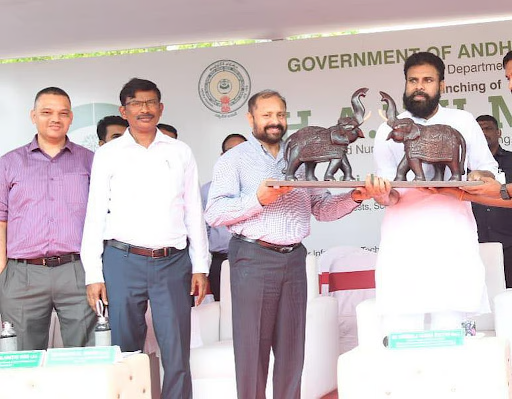
The Andhra Pradesh Deputy Chief Minister Pawan Kalyan launched Project HANUMAN to tackle the growing problem of human-wildlife conflict in the state.
What is Human-Wildlife Conflict (HWC)?
Human-Wildlife Conflict (HWC) describes the negative interactions between humans and wild animals, which result in adverse impacts on people, their property, livelihoods, and also on wildlife populations themselves.
Human fatalities from elephant encounters in India increased by approximately 36% between 2020-21 and 2023-24, driven by rising conflicts in states like Odisha, West Bengal, and Jharkhand. (Source: State of India's Environment 2025)
Key Drivers of Rising HWC
Habitat Fragmentation
The continuous expansion of infrastructure like roads, railways, and urban centers is destroying and breaking up natural wildlife habitats, compelling animals to venture into human-dominated areas in search of food and territory.
Agricultural Expansion
The cultivation of palatable crops like sugarcane and paddy near forest boundaries acts as an easy food source for herbivores (e.g., elephants, wild boars), leading to frequent crop-raiding incidents.
Conservation Success
Conservation successes have increased tiger and elephant populations, but limited habitat expansion is causing them to encroach on human areas.
Climate Change
Erratic weather patterns, including droughts and floods, disrupt the natural availability of food and water in forests, forcing wildlife to seek these resources closer to human settlements.

What is Project HANUMAN?
Project HANUMAN (Healing and Nurturing Units for Monitoring, Aid and Nursing of Wildlife) is a comprehensive scientific and technological initiative launched by Andhra Pradesh to mitigate rising human-wildlife conflict.
Core Components of the Project
Rapid Response and Rescue: Deployment of 100 specialized vehicles staffed with forest officials, veterinarians, and trained local helpers for immediate on-site response.
Rehabilitation Network: Establishment of four dedicated Wildlife Rescue and Treatment Centres at Visakhapatnam, Rajamahendravaram, Tirupati, and Birlut for long-term care of injured animals.
Community-Led Conservation: Creation of village-level 'Vajra' (Wildlife Rakshak) teams. These trained local volunteers are equipped to handle minor wildlife incursions and act as the first line of response.
Technological Interventions:
Specialized Elephant Management: Collaboration with Karnataka to deploy four Kumki elephants (trained captive elephants) to guide and manage wild elephant herds, particularly in high-conflict districts like Chittoor.
Enhanced and Timely Compensation: The ex-gratia payment for human death in wildlife attacks has been doubled from ₹5 lakh to ₹10 lakh, with increased compensation for injuries, ensuring swift financial relief.
Source: DOWNTOEARTH
|
PRACTICE QUESTION Q. Which Indian state launched Project HANUMAN, to address rising human-wildlife conflicts? A) Telangana B) Karnataka C) Andhra Pradesh D) Tamil Nadu Answer: C Explanation: Project HANUMAN (Healing and Nurturing Units for Monitoring, Aid and Nursing of Wildlife) is a wildlife protection and conflict mitigation initiative launched by the Government of Andhra Pradesh. |
Project HANUMAN (Healing and Nurturing Units for Monitoring, Aid and Nursing of Wildlife) is an initiative by the Government of Andhra Pradesh to manage human-wildlife conflict using a multi-pronged approach that includes technology, rapid response teams, community participation, and specialized elephant management.
The main causes include habitat fragmentation due to infrastructure and urbanization, agricultural expansion near forests providing easy food for wildlife, increased animal populations due to conservation success without a corresponding increase in habitat, and climate change disrupting food and water availability.
The project uses an AI-based system to monitor wildlife movements near forest boundaries and generate early warnings for communities. It also utilizes the HANUMAN Digital App, a mobile application for the forest department to streamline reporting, monitoring, and coordination of response efforts.


© 2026 iasgyan. All right reserved