First Indian study measuring inhalable microplastics at breathing height across four metros shows plastics now form up to 5% of urban particulate pollution. Markets in Kolkata and Delhi show highest loads. iMPs carry pathogens, heavy metals and toxic chemicals, posing emerging health risks including inflammation, hormonal disruption and possible cancer pathways. Urgent inclusion of microplastics in air-quality regulation is needed.
Copyright infringement not intended
Picture Courtesy: Down to earth
Recently, researchers warn of a newly emerging menace i.e., inhalable microplastics in the markets of metropolitan cities in India.
|
BASIC TERMS Microplastics These are tiny plastic fragments smaller than 5 millimetres, formed by the breakdown of larger plastic waste or released directly from products like cosmetics, textiles and tyres. Inhalable Microplastics (iMPs) These are very small plastic particles less than 10 microns in size that can float in the air and enter the human lungs when we breathe. Nano plastics These are extremely tiny plastic particles smaller than 1 micron, so small that they can cross cell membranes and enter the bloodstream or organs. Particulate Matter (PM2.5 and PM10) These are major air pollutants:
Both can enter the lungs, but PM2.5 penetrates deeper. Fibre Shedding The process through which synthetic clothes release tiny plastic fibres into the air or water during wearing or washing. |
Redefining the nature of urban air pollution: The presence of inhalable microplastics fundamentally changes how we understand urban air pollution, as it shows that our air is no longer contaminated only by dust, fuel emissions, or industrial pollutants but also by microscopic plastic particles that were never included in air-quality assessments.
Expanding the public health threat landscape: Inhalable microplastics add a new dimension to public health risks because these particles can penetrate deep into the lungs, cross biological barriers, and reach the bloodstream, thereby affecting multiple organs.
Increasing vulnerability of high-risk groups: The impact is especially severe for children, the elderly, street vendors, traffic police, and workers in crowded markets who spend long hours outdoors and inhale larger quantities of polluted air. Their long-term exposure to airborne plastics could result in higher disease burdens,
Revealing global circulation and persistence of plastics: Since microplastics are lightweight and remain suspended for long periods, they can travel across cities, states, and even continents, showing that plastic pollution is not confined to landfills or oceans but has now entered the atmospheric system.
Pollutant that escapes routine detection: Managing inhalable microplastics is extremely difficult because they are invisible to the naked eye and undetectable through routine PM2.5 and PM10 monitors, which only measure mass concentration and not material composition. For instance, even though the recent IISER study found that microplastics constitute up to 5% of total particulate pollution in cities like Delhi and Kolkata
Absence of national standards and regulatory frameworks: The challenge is compounded by the fact that India’s National Ambient Air Quality Standards (NAAQS) do not include microplastics, leaving agencies like CPCB without legal or technical guidelines to monitor, report, or control them.
Long environmental lifecycles: Another major challenge lies in the extreme persistence of microplastics—many of these particles can survive for over 100 years, circulating through the atmosphere, depositing on soil, washing into rivers, and re-entering the air through resuspension. For example, tyre-wear particles shed on Delhi roads during winter can settle, wash into drains during monsoon, travel to the Yamuna, and later drift back into the air as dust during dry months.
Multiple sources of emission: Inhalable microplastics also originate from numerous everyday sources, many of which are dispersed, unregulated, and deeply embedded in urban lifestyles. Synthetic clothing sheds microfibres with every movement; cosmetic products release plastic beads; tyre and brake wear generate rubber fragments; and packaging materials break down into airborne dust.
|
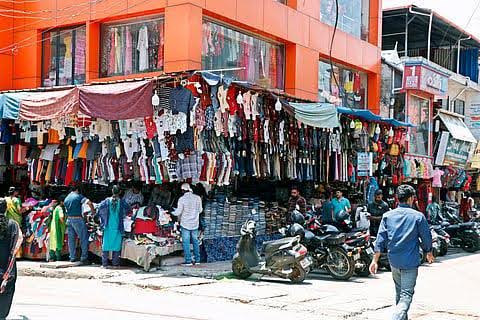
CASE STUDY Delhi Markets (e.g., Sarojini Nagar) Delhi’s busy markets, such as Sarojini Nagar, illustrate how everyday commercial activity can significantly contribute to airborne microplastic pollution, as the high turnover of low-cost, fast-fashion and second-hand garments leads to continuous shedding of polyester fibres into the surrounding air. This problem is further aggravated by the presence of nearby informal settlements where waste burning is common, releasing additional plastic aerosols that mix with textile-derived particles and amplify overall microplastic concentrations. The study’s findings also revealed the presence of harmful substances such as Diethyl Phthalate (DEP) and lead in Delhi’s air samples, highlighting how microplastics in these market environments act not only as pollutants themselves but also as carriers of toxic chemicals. |
Policy level interventions:
Market level interventions
Individual behavioural changes
Inhalable microplastics are a new class of invisible pollutants that now constitute up to 5% of India’s particulate pollution. Their ability to carry toxins, pathogens and heavy metals makes them far more dangerous than previously understood. India urgently needs air-quality standards, textile reforms and behavioural change to mitigate this emerging health hazard.
|
Must Read: MICROPLASTICS | MICROPLASTIC POLLUTION & HEALTH ISSUES | |
Source: Down to Earth
|
Practice Question Q. “Air pollution in Indian cities is no longer limited to dust and fuel emissions. Microplastics have emerged as a new invisible threat.” Discuss (250 words) |
Inhalable microplastics are extremely small plastic particles less than 10 microns in size that can remain suspended in the air and enter the human respiratory system during breathing.
Regular microplastics are defined as plastic fragments smaller than 5 mm, while iMPs are a much smaller subset that are specifically airborne and small enough to enter the lungs
iMPs mainly originate from synthetic textiles, tyre and brake wear, plastic packaging, cosmetics, paints, footwear, and burning of plastic waste. Crowded markets with high textile turnover are major hotspots.



© 2026 iasgyan. All right reserved