Amid rising US-Israel-Iran tensions, India adopts multi-alignment, urging de-escalation while balancing ties with all sides. The crisis threatens its 10 million diaspora, Gulf energy supplies, and projects like Chabahar Port and IMEEC. Managing this turmoil will test India’s strategic autonomy and diplomatic credibility.
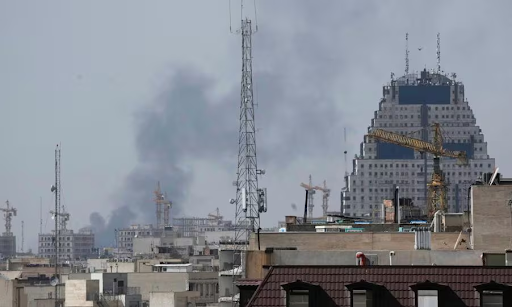
Copyright infringement not intended
Picture Courtesy: TIMESOFINDIA
Context
Recent military escalations involving the US, Israel, and Iran have plunged West Asia into a crisis, prompting India to prioritize de-escalation due to significant threats to its core interests and stability.
|
Read all about: The Iran-Israel Conflict & Impact l Israel-Iran Strike Regional Tension l Israel Attack & International Law |
What is the Current Situation in West Asia?
The West Asia crisis has escalated into a direct and large-scale regional war following a massive joint military operation by the United States and Israel against Iran.
Iranian state media confirmed that Iran's Supreme Leader Ayatollah Ali Khamenei was killed during a high-intensity aerial bombardment by US and Israeli forces targeting Tehran.
Iran has responded by firing missiles and drones at Israel, US military bases in the Gulf, and commercial hubs like Dubai.
What are India's Core Interests in West Asia?
Vast Diaspora
Population: The West Asia region is home to a nearly 10 million-strong Indian diaspora. The Gulf Cooperation Council (GCC) countries alone host over nine million Indians. (Source: MEA)
Economic Contribution: This diaspora is a vital source of foreign exchange. In 2024-25, India received remittances totaling $135.46 billion, with contributions from the UAE (19.2%) and Saudi Arabia (6.7%). (Source: RBI Remittances Survey).
Energy, Trade & Investment
Indian economic stability is heavily dependent on the relationship with West Asian countries. Any disruption in this region has a direct and immediate impact on the economy.
|
|
Details |
Significance for India |
|
Energy Security |
Roughly 50% of India's crude oil and 54% of LNG imports were routed through the Strait of Hormuz in FY25. Key crude suppliers in 2024-25: Iraq (20.5%) and Saudi Arabia (13.0%) (Source: Energy Institute) |
Disruption can cause oil price surges, high inflation, and a widening Current Account Deficit (CAD). |
|
Trade Partnership |
The GCC is India's largest trading partner bloc. Bilateral trade reached nearly $179 billion in FY 2024-25, over 15% of India's total global trade. (Source: Ministry of Commerce and Industry). |
The region is a massive market for Indian goods and services, crucial for export growth. |
|
Foreign Investment |
Cumulative FDI from the GCC into India exceeded $31.14 billion as of September 2025. (Source: PIB) |
Gulf sovereign wealth funds are major investors in India's infrastructure and technology sectors, fueling economic growth. |
Connectivity
India-Middle East-Europe Economic Corridor (IMEEC)
Announced at the G20 Summit 2023, this project connects India with Europe via the UAE, Saudi Arabia, Jordan, and Israel. It is a strategic counter to China's BRI, but the current conflict has stalled its progress.
Chabahar Port
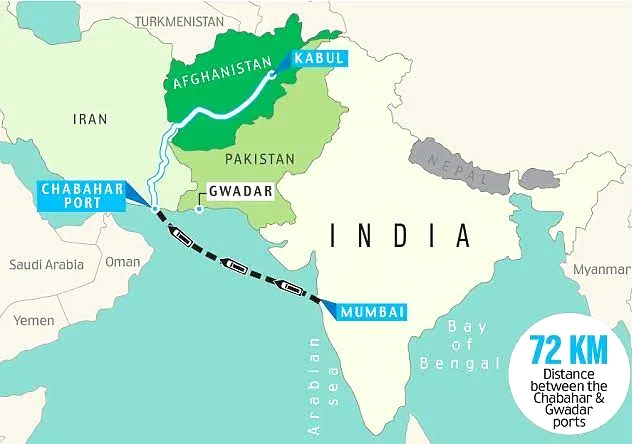
Located in Iran, this port is crucial for India to bypass Pakistan and access Afghanistan and Central Asia. Escalating conflict and the threat of US sanctions create uncertainty for this strategic asset.
What is India's Diplomatic Balancing Act?
India pursues a policy of 'strategic autonomy' in West Asia, maintaining independent and robust relationships with all major regional powers, even those who are adversaries.
With Israel: A deep strategic partnership focused on high-technology, defense cooperation, and agriculture. Conflict could disrupt critical defense supply chains.
With Iran: A historic and functional relationship, essential for the Chabahar port and regional connectivity. India often maintains an independent stance, such as abstaining from certain UN resolutions against Iran.
With Arab States (GCC): Relationship has transformed from a simple buyer-seller dynamic (energy) to a comprehensive strategic partnership.
What are the Immediate Challenges Posed by the Conflict?
Erosion of Diplomatic Space: Intense regional polarization makes it difficult for India to maintain its multi-aligned posture, facing pressure to choose sides.
Threat to Strategic Projects: The conflict has effectively put the IMEEC on hold and increases the geopolitical risks for the Chabahar port.
Economic Disruption: A full-scale war could close the Strait of Hormuz, triggering a severe global energy crisis and damaging India's economy.
Diaspora Safety: Ensuring the safety of nearly ten million Indians is the most critical challenge. A region-wide conflict would make mass evacuation operations incredibly complex.
Way Forward for India
India's response must be proactive and calculated, aimed at safeguarding its interests while promoting regional peace.
Reinforce Strategic Autonomy: India must resist pressure to align with any bloc. Ability to communicate with all parties is the greatest diplomatic asset.
Champion Dialogue: Leverage goodwill and position in forums like G20 and BRICS to act as a voice of moderation and facilitate backchannel communications for de-escalation.
Prioritize Diaspora Safety: Maintain and update robust contingency and evacuation plans, drawing lessons from past operations like 'Ganga' and 'Ajay'.
Focus on Long-Term Stability: Advocate for a stable, multipolar West Asia where regional issues are resolved by regional actors through dialogue and respect for sovereignty.
Conclusion
Successfully navigating the West Asian crisis is a crucial test for Indian diplomacy. A strategy based on strategic autonomy and proactive peacemaking will safeguard India's interests and boost its global stature as a responsible leading power.
Source: TIMESOFINDIA
|
PRACTICE QUESTION Q. The escalating conflict in West Asia is a real-world test of India's policy of strategic autonomy. Critically analyze. 150 words |
India's official stance is carefully calibrated, reflecting its "multi-alignment" strategy. The Ministry of External Affairs has called for immediate de-escalation, restraint, and a return to diplomacy, while emphasizing that the "sovereignty and territorial integrity of all states must be respected."
The region is critical for three main reasons:
The IMEEC is an ambitious infrastructure project announced at the G20 Summit in 2023. It aims to create a modern-day spice route connecting India to Europe through the UAE, Saudi Arabia, Jordan, and Israel. The current conflict, particularly involving Israel, one of its key nodes, threatens to delay or derail this strategic project.

© 2026 iasgyan. All right reserved