The revival of the Shipping Corporation of India marks a strategic shift in India’s maritime policy as the government seeks to rebuild national shipping capacity after decades of decline caused by liberalisation, ageing fleets and loss of preferential rights. The pandemic and global supply-chain disruptions exposed India’s dependence on foreign carriers, highlighting the need for stronger domestic control over EXIM logistics, energy transport and critical shipping routes. By acquiring new vessels through PSU joint ventures and aligning with global trends of increased state ownership in strategic sectors, India aims to enhance economic resilience, safeguard national interests and re-establish a robust maritime presence.
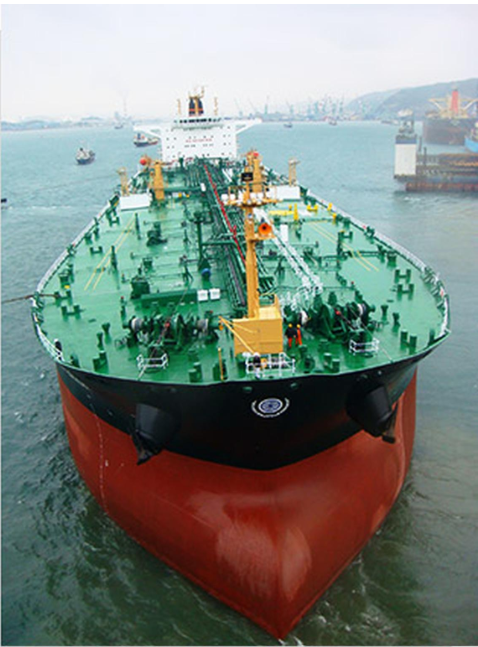
Copyright infringement not intended
Picture Courtesy: The Hindu
The Government of India has announced a major revival plan for the State-owned Shipping Corporation of India (SCI), proposing to acquire 200+ merchant vessels across categories through joint ventures (JVs) with other Public Sector Undertakings (PSUs).
|
Must Read: INDIA’S PORTS AND SHIPPING | SHIPPING INDUSTRY AND EMISSIONS | INDIA- NORWAY GREEN MARITIME PARTNERS | |
Foundation
The Shipping Corporation of India was established as India’s national carrier with the objective of building an indigenous maritime capability. Over the decades, it expanded rapidly, becoming one of the world’s respected state-owned shipping companies.
Emergence as a pillar of India’s maritime ecosystem
SCI soon became synonymous with India’s maritime aspirations and capabilities.
Technological advancement
SCI led technological modernisation in Indian shipping:
National service role
SCI’s role went far beyond commercial shipping:
Decline in the Liberalisation era
The 1990s marked a turning point. As India implemented Liberalisation-Privatisation-Globalisation (LPG) reforms and aligned with WTO–GATS obligations:
Contemporary revival efforts
Recognising SCI’s importance, the government has initiated a major revival strategy:
Reversal of the post–cold war “Free Market Consensus”: For nearly three decades after the 1990s, global economic policy emphasised deregulation, privatisation, and minimal state involvement. However, successive crises—financial shocks, geopolitical tensions, pandemics, and supply-chain disruptions—have revealed the limitations of an entirely market-driven model.
State Role in Industrial Policy: Countries are increasingly viewing certain industries—technology, logistics, minerals, food systems, and energy—as “strategic assets” requiring direct government involvement.
|
CASE STUDY United States as a Major Example of Strategic Intervention The United States, once a champion of minimal state interference, now illustrates a major shift in approach by investing billions in domestic semiconductor manufacturing through the CHIPS Act and by acquiring strategic stakes in companies like Intel and U.S. Steel, actions driven by concerns over technological leadership and supply-chain security, and complemented by increased federal support for rare-earth development to reduce dependency on foreign suppliers. Europe’s Push for Strategic Autonomy European nations, especially after the pandemic and the Russia–Ukraine conflict, have intensified their direct role in sectors like energy, pharmaceuticals, batteries and clean technology, as governments realised that excessive reliance on external sources compromises economic stability, prompting them to pursue strategic autonomy through strengthened public ownership and targeted industrial support. |
Strengthening economic growth and industrialisation: National development depends heavily on building a resilient economic base, and strategic public institutions such as the Shipping Corporation of India contribute to this by enabling efficient movement of energy, raw materials and finished goods.
Ensuring energy and supply-chain security: Shipping, transport and logistics play a central role in securing uninterrupted access to essential imports such as crude oil, LNG, fertilizers and machinery. By maintaining dedicated fleets and reliable transport channels, national carriers help protect the country from external shocks, geopolitical tensions and sudden market disruptions
Promoting regional connectivity and social inclusion: National enterprises often undertake non-commercial responsibilities that support remote and underserved regions. Through subsidised services, passenger transport and supply delivery to islands or difficult terrains, they strengthen territorial integration, improve access to essential goods, and ensure that development benefits reach all parts of the country, not just economically strong regions.
Developing skilled human resources: Public institutions contribute significantly to human capital development by offering specialised training, technical education, and professional certification. In the maritime sector, dedicated training academies produce skilled seafarers, engineers and technicians who support global shipping networks and generate substantial foreign exchange, thereby expanding India’s talent pool and enhancing its competitiveness.
Ageing Fleet: A critical challenge for India’s national shipping capacity has been the ageing profile of vessels, particularly within the Shipping Corporation of India (SCI). The average age of an SCI vessel is around 18 years, very close to the 20-year scrapping threshold whereas countries like Japan and South Korea maintain average fleet ages of 8–12 years.
Erosion of India’s Share in Export Import Cargo: India’s shipping sector has struggled to retain market share in the transport of its own export–import cargo. Indian-flagged ships today carry only about 7% of India’s EXIM trade, a significant fall from nearly 27% in the early 1990s.
Limited Access to Long-Term Finance: Building modern ships is capital-intensive, and Indian shipping companies face higher financing costs than global competitors.
Inadequate domestic shipbuilding capacity: Indian shipyards are often criticised for long construction timelines and cost overruns, limiting their competitiveness. While Cochin Shipyard’s production quality is globally recognised, construction of large vessels often faces delays of several months to years, reducing India’s ability to modernise its fleet at the pace required.
India’s experience shows that a strong national shipping capacity is essential not only for trade efficiency but also for energy security, strategic resilience and economic stability. The decline of Indian-flagged vessels and overdependence on foreign carriers exposed critical vulnerabilities, especially during global disruptions like COVID-19. The revival of SCI and renewed state participation reflect a broader recognition that key logistics sectors cannot be left entirely to market forces. Strengthening domestic fleet capacity, supporting private players and modernising shipbuilding are therefore crucial for building a resilient maritime ecosystem that safeguards India’s long-term national interests.
Source: The Hindu
|
Practice Question Q. The revival of the Shipping Corporation of India (SCI) reflects a larger shift towards strategic public ownership in critical sectors.” Examine (250 words) |
SCI is being revived to strengthen India’s maritime self-reliance, reduce dependence on foreign carriers, enhance energy and supply-chain security, and increase India’s control over EXIM logistics—especially after the vulnerabilities exposed during COVID-19.
The dilution of preferential rights under WTO commitments, withdrawal of the “right of refusal” for oil cargo, relaxation of cabotage rules, lack of fleet renewal, and policy uncertainty significantly weakened SCI and reduced Indian-flagged tonnage.
Indian-flagged vessels carry only about 7% of India’s EXIM trade, declining sharply from 27% in the early 1990s.






© 2026 iasgyan. All right reserved