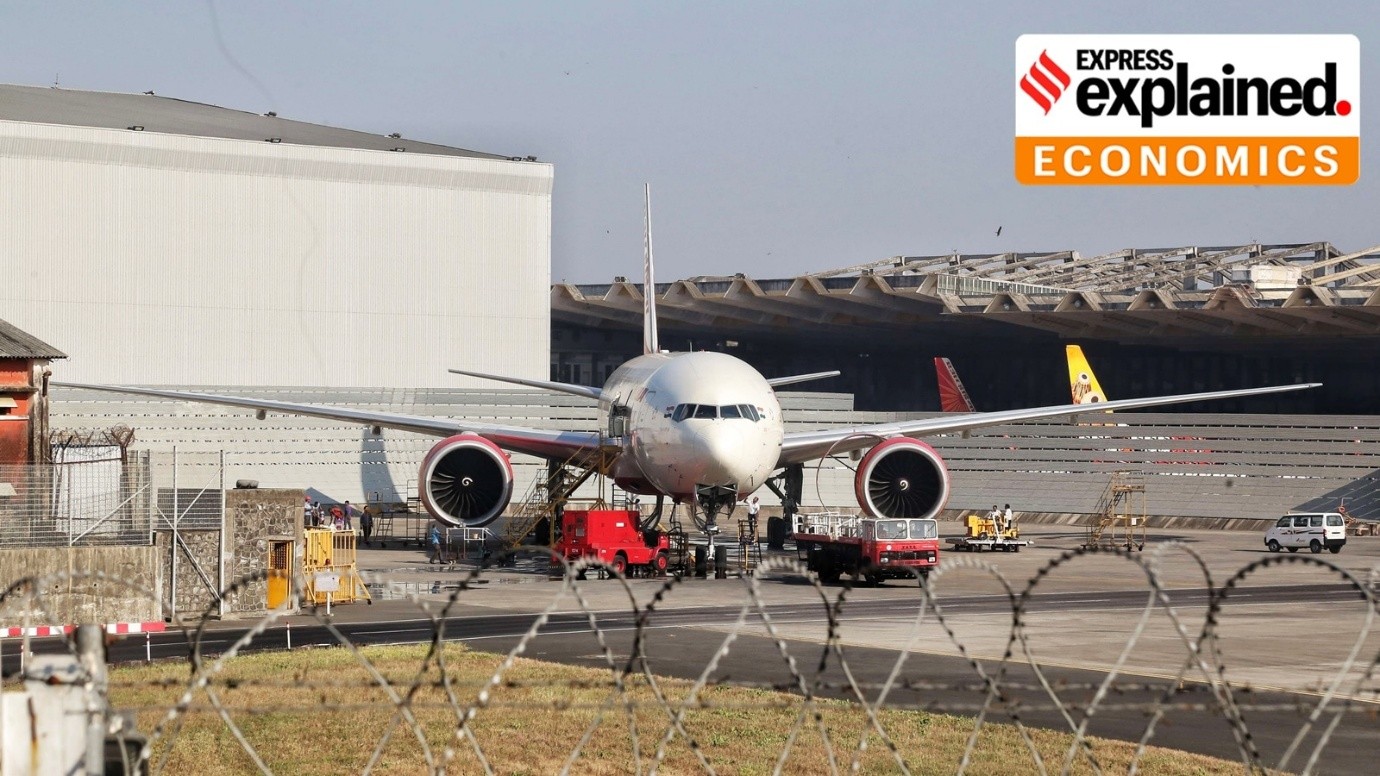
India is set to get four new regional airlines, but their success is not guaranteed because the Indian aviation market is highly competitive and dominated by IndiGo and the Air India group, which together hold over 90 percent of the domestic market. Regional airlines face high fuel and leasing costs, low profit margins, seasonal demand on smaller routes, and difficulty in accessing finance. Many earlier regional carriers have already shut down, showing how fragile this segment is. While government connectivity schemes and rising air travel offer opportunities, only those airlines with strong funding, careful route planning, and efficient operations are likely to remain viable.
Copyright infringement not intended
Picture Courtesy: Indian Express
India might soon see four new regional airlines taking off. The Ministry of Civil Aviation has given no objection certificates (NOCs) to two airlines Al Hind Air and Fly Express. Two others Air Kerala and Shankh Air.
|
Must Read: UDAN Regional Connectivity Scheme | UDAN 5.0 | |
High market concentration and dominance of big airlines: Regional airlines struggle because India’s domestic market is highly concentrated, with IndiGo and the Air India group together controlling over 90% of market share. This dominance gives large airlines better bargaining power for aircraft leasing, fuel, airport slots, and fares, while small regional airlines operate in a market with little room to expand.
Low profit margins and high operating costs: Regional airlines face very thin profit margins, while their operating costs remain high. Aviation turbine fuel accounts for 35–40% of total airline costs, and its price is volatile and dollar-linked, putting pressure on cost structures.
Price-sensitive passengers and limited ability to charge premiums: India is one of the most price-sensitive aviation markets in the world, where passengers often switch to trains or buses if ticket prices increase. On many regional routes, trains offer lower cost and comparable travel time, especially with Vande Bharat and express services
Seasonal demand on regional routes: Regional airlines often operate in tier-2 and tier-3 cities where demand is seasonal, linked to festivals or tourism. Load factors on many regional routes fluctuate and sometimes fall below 70%, whereas airlines usually need around 80% load factor to break even.
Infrastructure and maintenance constraints: Regional airlines depend on smaller airports, many of which lack full night-landing facilities, MRO (maintenance, repair, overhaul) bases, and spare parts support. This leads to longer aircraft ground time, reducing fleet utilisation; whereas big airlines achieve utilisation of 11–12 hours per aircraft daily, regional airlines often remain well below this level, directly reducing revenue.
|
IndiGo–Air India duopoly concerns Recently, IndiGo faced a major operational crisis, which revived fears that India’s airline market is turning into a duopoly. Together, IndiGo and the Air India group now control over 90% of the domestic market, giving them overwhelming dominance in capacity, routes, and pricing power. Even though new airlines are entering the market, experts believe they are unlikely to significantly challenge or reduce the dominance of these two major players in the near future. |
Economic implications: The failure or weakness of regional airlines restricts balanced economic growth, as smaller cities and remote regions receive fewer business and tourism flows. Reduced air connectivity slows investment, job creation, and local industry development, particularly in Northeast, hill states, and hinterland areas.
Social implications: Limited regional air connectivity widens the urban–rural divide in mobility and opportunity, as people in smaller towns face higher travel time and reduced access to education, healthcare, and jobs. Poor connectivity also affects medical evacuation, emergency travel, and migration, making it harder for people in remote regions to access essential services in time.
Regional development implications: When regional airlines struggle, tier-2 and tier-3 cities remain under-connected, slowing the growth of logistics hubs, tourism circuits, and regional business clusters. This undermines the objectives of schemes like UDAN, which aim to bring aviation-led development, and concentrates growth around metro airports, reinforcing regional imbalance.
Governance implications: Repeated airline failures create pressure on the government to subsidise, bail out, or repeatedly redesign policies, increasing fiscal burden. The inability of regional airlines to sustain operations raises questions on implementation efficiency of UDAN, leasing norms, fuel taxation, and airport charges, pushing policymakers to reconsider regulatory structures.
Reducing operating costs: A key measure to end the struggles of regional airlines is to lower their operating costs, especially the high tax burden on aviation turbine fuel, which forms the largest share of airline expenditure. Rationalising state VAT on ATF and extending central excise relief can immediately improve viability, while uniform fuel taxation would prevent wide cost differences across states.
Strengthening regional connectivity schemes: Regional airlines need stronger and faster support under the Ude Desh ka Aam Nagrik - "Let the Common Citizen Fly" and Regional Connectivity Scheme (UDAN–RCS) scheme, where viability gap funding must be disbursed on time so that airlines are not burdened by delayed reimbursements. Expanding UDAN 4.0 and 5.0 to cover more small towns and tourism routes, along with ensuring predictable subsidy timelines, will help airlines operate sustainably instead of abandoning routes.
Easing aircraft leasing, maintenance, and regulatory processes: Regional airlines require easier access to aircraft, spare parts, and maintenance services, which calls for simplified leasing regulations and lower import duties on aviation parts. The government’s MRO (Maintenance, Repair, and Overhaul) policy reforms and push for domestic maintenance hubs can reduce dependence on foreign facilities and bring down turnaround time and costs, improving fleet availability.
Integrating regional airlines with major carriers and multimodal transport: Ending isolation of regional airlines is essential, and this can be done by promoting code-sharing and interline agreements with large airlines, allowing regional carriers to feed passengers into major hubs and maintain healthy load factors. Integration with rail, road, heliports, and water aerodromes under UDAN 4.0 and 5.0 strengthens multimodal connectivity and spreads traffic more evenly.
Regional airlines in India struggle mainly because of high costs, weak finances, seasonal demand and the dominance of large carriers, but with lower fuel taxes, timely government support, better airport infrastructure and stronger financial backing, they can become viable and play a crucial role in connecting smaller towns and ensuring balanced regional growth.
Source: Indian Express
|
Practice Question Q. Despite policy support, regional airlines in India continue to struggle. Discuss the major challenges faced by regional airlines and suggest key measures required to improve their viability. (250 words) |
Most regional airlines fail because they face high fuel costs, thin profit margins, seasonal demand, difficulty in accessing finance, and strong competition from major airlines, along with infrastructure constraints at smaller airports.
Regional airlines help connect tier-2 and tier-3 cities, improve accessibility to remote regions, promote tourism, support medical and emergency travel, and enable balanced regional development.
The government supports regional airlines through regional air connectivity schemes, tax relief measures, development of small airports, and financial support for operating loss-making routes to improve connectivity to underserved areas.





© 2026 iasgyan. All right reserved