The RBI’s 25 bps repo rate cut to 5.25% reflects confidence in low inflation and strong growth, aiming to boost borrowing, investment and consumption through cheaper credit. While it supports economic momentum, risks persist due to rupee weakness and uncertain external conditions, making cautious monetary calibration essential.
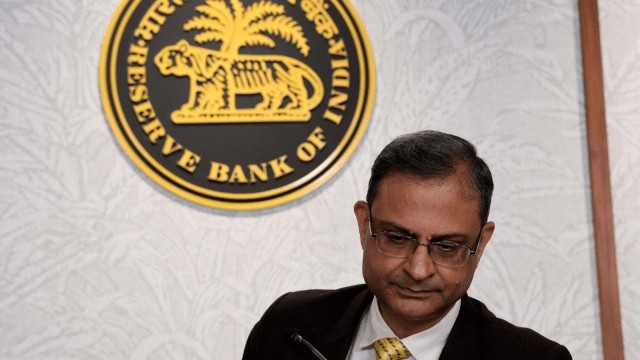
Copyright infringement not intended
Picture Courtesy: Indian Express
Context:
The RBI’s Monetary Policy Committee (MPC) unanimously cut the repo rate by 25 bps, bringing it down to 5.25%.
|
Must Read: Repo Rate | REPO RATE CUT | |
The Repo Rate is the rate at which commercial banks borrow short-term funds from the RBI by selling securities with an agreement to repurchase them. It is not just an interest rate, but a collateralised liquidity facility
Instrument of monetary transmission: The repo rate acts as the anchor for all interest rates in the economy, shaping the cost of home loans, deposit returns, government bond yields, and corporate borrowing. It works as a calibration tool—when inflation rises, the RBI increases the repo rate, making loans expensive, cooling demand and eventually moderating prices; when growth slows, the rate is reduced to make credit cheaper, boost investment, and stimulate consumption.
Liquidity management tool: The repo rate forms a core component of the RBI’s Liquidity Adjustment Facility, where banks borrow funds at the repo rate and park their surplus at the reverse repo rate. The difference between the cost of borrowing from RBI and lending onward helps determine liquidity conditions, guiding how money moves through the financial system.
Market signalling mechanism: Any change in the repo rate is interpreted as the RBI’s assessment of future inflation and growth dynamics. Financial markets treat it as forward guidance, adjusting expectations and asset prices, often causing bond yields and interest rate benchmarks to shift even before liquidity conditions actually change.
Developmental policy lever: The repo rate shapes credit flows across key sectors by influencing borrowing costs for MSMEs, mortgage markets, agriculture lending, and corporate finance. A lower repo encourages expansion, while a higher rate restrains lending intensity, making it either an accelerator or brake for economic development.
Exchange rate management: Changes in repo rate also influence foreign capital movement—higher rates attract foreign inflows and tend to strengthen the rupee, while lower rates may trigger outflows and weaken currency conditions. Thus, repo movements indirectly impact India’s external sector and overall forex stability.
Shift in policy priority: The rate cut marks a clear shift from prioritising inflation control to actively supporting growth, as inflation has now eased into a comfortable and predictable range.
Boost to consumption and investment: By lowering borrowing costs and improving liquidity availability, the rate cut is expected to make loans cheaper, thereby stimulating consumption and encouraging investment across households and businesses.
Support amid currency pressure: The policy move also provides support to the growth momentum at a time when the rupee has weakened past the ₹90 per dollar mark, signalling RBI’s intent to reinforce domestic demand even amid external currency pressures.
Positive implication:
Cheaper borrowing & EMIs: After the 2020 rate cuts, SBI reduced home loan rates to 6.7%, resulting in ₹1,500–₹3,000 monthly EMI savings for a ₹30 lakh loan—illustrating how repo reduction directly boosts household purchasing power.
Revival of credit Cycle: Historically, India’s credit growth jumped from 6% in FY21 to 15% in FY23 following accommodative monetary policy during COVID recovery, showing how lower rates catalyse borrowing and investment momentum.
Demand boost in housing and durable Sectors: Mumbai saw 50% surge in property registrations in late 2020 when lower repo combined with state incentives—demonstrating how lower rates stimulate housing markets with strong multiplier effects.
Support to MSME financing: Under the ECLGS credit guarantee scheme (2020–22), which operated in a low-rate environment, ₹5 lakh crore credit was extended to MSMEs, highlighting how reduced cost of credit sustains small-business activity.
Macro investment revival indicator: RBI’s accommodative stance helped gross fixed capital formation rise from 27.3% of GDP in FY21 to 29.2% in FY24, showing monetary easing’s role in investment revival.
Negative implications:
Currency weakness: The rupee breaching ₹90 per dollar in 2025 echoes earlier vulnerabilities, such as the 2013 taper tantrum when it fell sharply from ₹55 to ₹68 per dollar. This parallel illustrates that periods of monetary easing can weaken currency sentiment, trigger capital outflows, and amplify external sector risks.
Imported inflation risk: India imports 85% of crude oil; thus, a ₹5 depreciation per dollar historically raises annual oil import bill by ₹50,000–₹60,000 crore, showing how weak rupee can feed inflation.
Capital flow vulnerability: In 2018, when US rates increased while India maintained accommodative stance, FPIs withdrew ₹80,000 crore from debt markets, underscoring the risk of outflows when domestic rates fall.
The repo rate cut signals confidence in India’s growth outlook and aims to sustain economic momentum through cheaper credit, but its benefits must be balanced against currency pressures, transmission challenges, and external vulnerabilities, underscoring the need for calibrated monetary easing rather than aggressive accommodation.
Source: Indian Express
|
Practice Question Which of the following outcomes is MOST likely after a repo rate cut? 1.Borrowing costs fall 2.Consumption increases 3.Rupee appreciates automatically 4.Investment sentiment improves Select the correct options: Answer: A Explanation: Statement 1 is correct: Borrowing costs fall When the RBI cuts the repo rate, it becomes cheaper for commercial banks to borrow from the central bank.
So, Statement 1 is definitely correct. Statement 2 is correct: Consumption increases Lower interest rates → lower EMIs → more disposable income in the hands of households.
So, Statement 2 is also correct and logically follows from a rate cut. Statement 3 is incorrect: Rupee appreciates automatically Lowering the repo rate:
Exchange rates are affected by many factors—global risk sentiment, oil prices, US Fed policy, geopolitical tensions—not just repo rate. Statement 4 is correct: Investment sentiment improves When interest rates fall:
Thus, repo cuts often improve investment sentiment, especially if: · Growth outlook is good, and · Policy is seen as supportive and credible. So, Statement 4 is also correct. |
The Repo rate is the interest rate at which commercial banks borrow short-term funds from the RBI against government securities under a repurchase agreement.
The RBI adjusts the repo rate to control inflation, manage liquidity, and influence economic growth—raising it to cool demand and lowering it to stimulate borrowing and spending.
A repo cut usually leads banks to reduce lending rates, making EMIs on home, auto, and MSME loans cheaper over time, improving household purchasing power.






© 2026 iasgyan. All right reserved