India is tackling lethal Nipah outbreaks by shifting from reactive responses to One Health integration, utilizing BSL-3 labs and surveillance to counter ecological disruptions, aiming to bridge institutional gaps for stronger, systemic grassroots resilience.
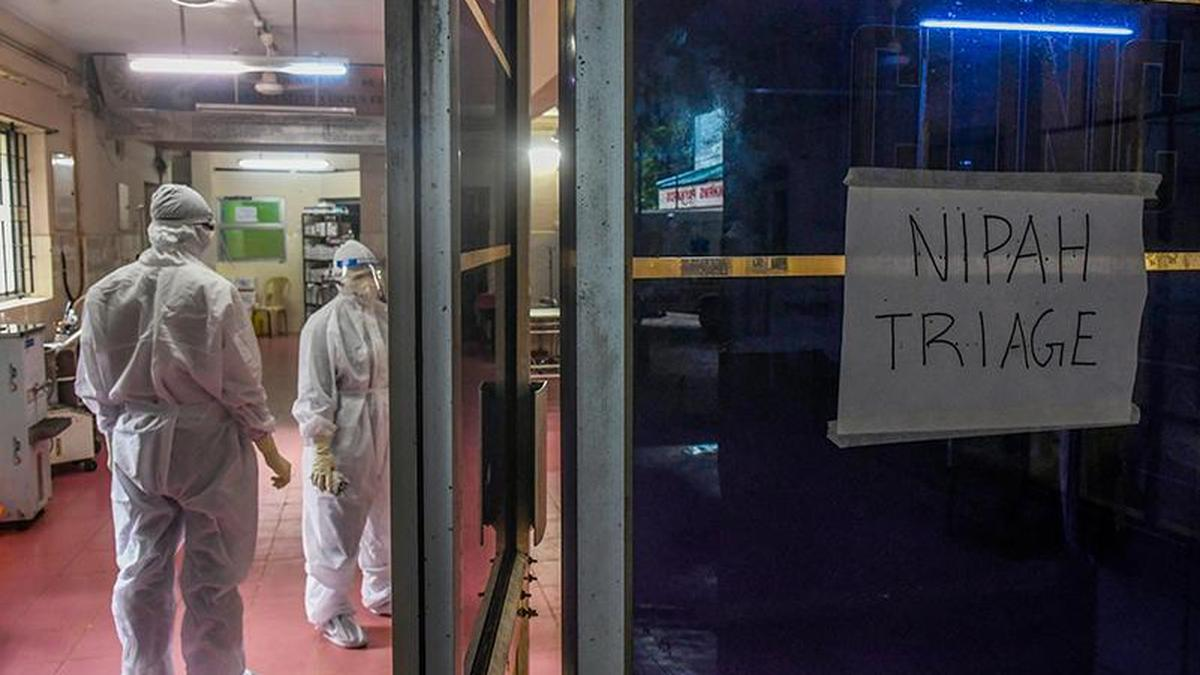
Copyright infringement not intended
Picture Courtesy: THEHINDU
Why In News?
Health officials in Kerala have issued an alert against Nipah infections in the State from April to September.
What is Nipah Virus (NiV)?
The Nipah Virus (NiV) is a highly pathogenic zoonotic virus (transmitted from animals to humans) that causes severe respiratory illness and fatal encephalitis (inflammation of the brain).
It is classified as a Biosafety Level 4 (BSL-4) pathogen due to its high fatality rate, which ranges from 40% to 75%. (Source: WHO)
Virology and Transmission
Genus: It belongs to the genus Henipavirus and the family Paramyxoviridae.
Natural Reservoir: The Pteropus bat (commonly known as the Fruit Bat or Flying Fox) is the natural host of the virus. The bats carry the virus without falling ill themselves.
Modes of Transmission
Clinical Features and Diagnosis
Incubation Period: 4 to 14 days, but can extend up to 45 days.
Symptoms: Initially presents as "flu-like" symptoms (fever, headache, cough). However, it rapidly progresses to acute encephalitis (drowsiness, disorientation, seizures, and coma).
Diagnosis: The RT-PCR test using throat/nasal swabs or cerebrospinal fluid. For later stages, the ELISA test is used to detect antibodies.
Treatment and Prevention
No Vaccine: Currently, there is no specific vaccine or drug approved for Nipah virus for either humans or animals.
Treatment: Primary care is limited to Supportive Care (managing symptoms and ensuring hydration).
Experimental Drugs: During the 2023-24 Kerala outbreaks, the Monoclonal Antibody (mGAP) was imported from Australia for "compassionate use" under ICMR supervision.
Why is Nipah a Recurring Issue in Kerala?
Ecological Encroachment: Destruction of bat habitats forces bats closer to human settlements, increasing the "spillover" risk.
Climate Change: Changes in fruiting seasons of trees lead to bats foraging in areas heavily populated by humans.
High Population Density: In states like Kerala, the high density of population and rapid urban-rural connectivity facilitates quick human-to-human spread.
Governance and Public Health Response
One Health Approach: India is moving toward a "One Health" framework that integrates human, animal, and environmental health data to predict outbreaks.
Integrated Health Information Platform (IHIP): A digital platform used for real-time surveillance and reporting of infectious diseases, including Nipah.
WHO R&D Blueprint: Nipah is listed as a priority disease by the WHO, meaning it has the potential to cause a pandemic and requires urgent research.
Source: THEHINDU
|
PRACTICE QUESTION Q. Consider the following statements regarding the Nipah virus (NiV): 1. It is a zoonotic paramyxovirus with Pteropus fruit bats as its natural reservoir. 2. There is a licensed human vaccine available in India for its prevention. Which of the statements given above is/are correct? a) 1 only b) 2 only c) Both 1 and 2 d) Neither 1 nor 2 Answer: a Explanation: Statement 1 is correct: The Nipah virus (NiV) is a highly pathogenic zoonotic virus belonging to the Paramyxoviridae family. The Pteropus fruit bats (commonly known as flying foxes) are its natural reservoir hosts. Statement 2 is incorrect: As of early 2026, there is no licensed vaccine or specific antiviral treatment available for Nipah virus infection in humans or animals anywhere in the world. Treatment is limited to intensive supportive care. |
The Nipah virus is a highly fatal zoonotic paramyxovirus transmitted by fruit bats. It is considered a severe public health emergency due to its exceptionally high mortality rate (often exceeding 80% in India), the extreme vulnerability of children, and the absence of licensed human vaccines or targeted therapeutics.
Kerala's rapid urbanization and agricultural expansion into the Western Ghats have disturbed natural bat habitats, increasing the human-animal interface. Additionally, climate change and local ecological disruptions are causing bat roosts to shift, aligning outbreaks with bat breeding and fruiting seasons.
Approved in February 2024, the NOHM is an initiative steered by the Office of the Principal Scientific Adviser. It recognizes the interconnectedness of human, animal, and environmental health, aiming to build an integrated and proactive disease control system against zoonotic threats.


© 2026 iasgyan. All right reserved