The Methane Alert and Response System (MARS) utilizes advanced satellites to pinpoint major methane leaks globally. According to the Global Methane Status Report 2025, mitigating emissions across energy, agriculture, and waste remains critical to curbing short-term global warming.
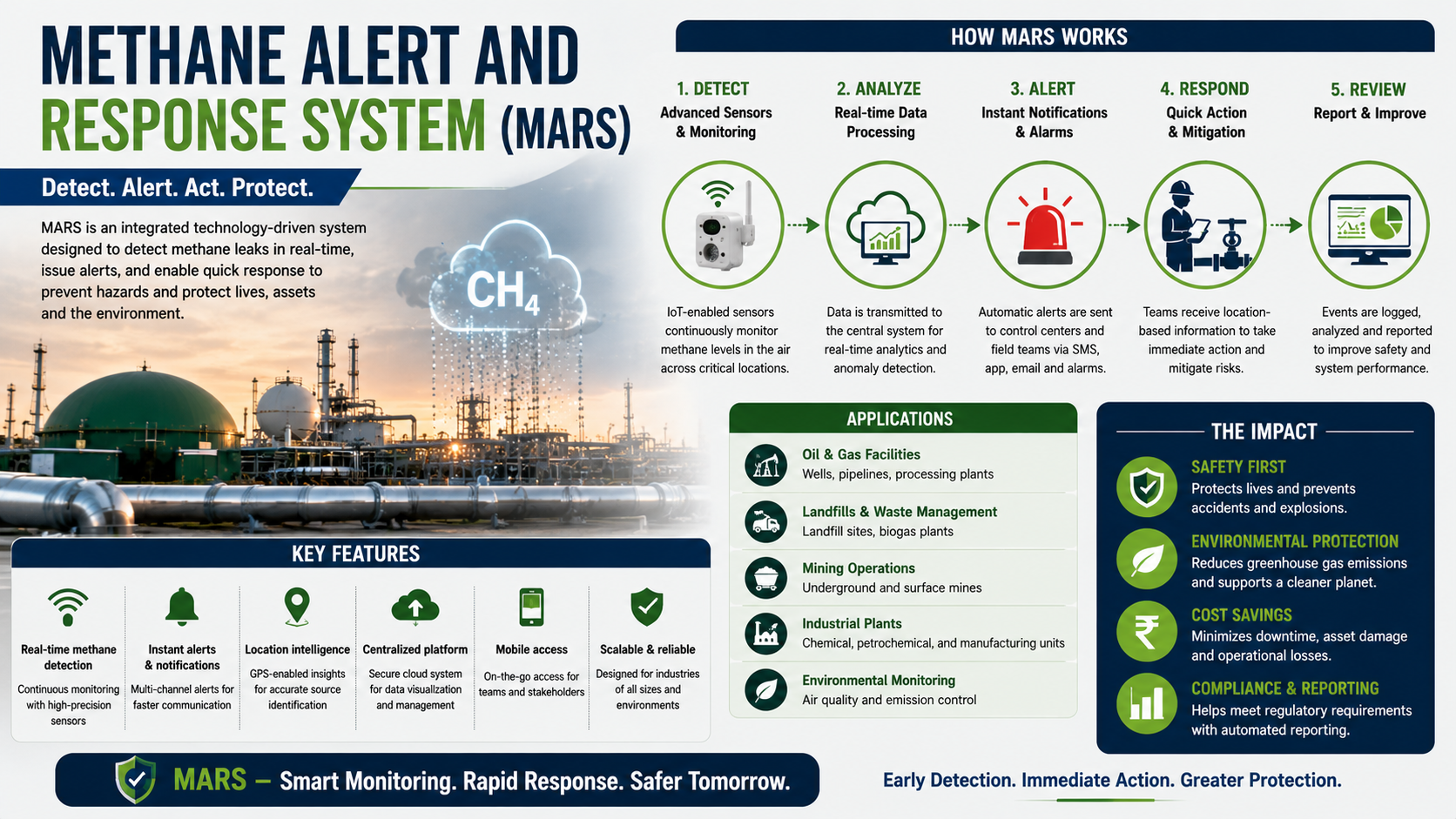
The UN Environment Programme’s International Methane Emissions Observatory (IMEO) announced that its Methane Alert and Response System will be expanded to cover coal mines and waste facilities.
It is the first global satellite-based system designed to monitor methane super-emitters and connect data to mitigation and transparent notification processes.
It was announced at the 27th Conference of Parties (COP27) to the UNFCCC in Sharm El-Sheikh, Egypt (2022), and became officially operational in January 2023.
Governing Body: It operates as a core component of the International Methane Emissions Observatory (IMEO) under the United Nations Environment Programme (UNEP).
Objectives
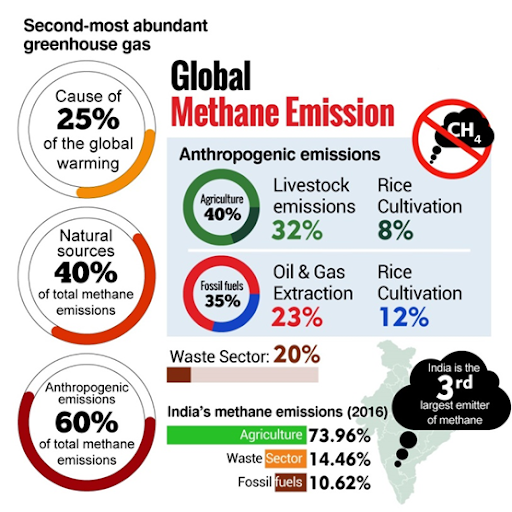
Note: Methane is 80 times more powerful than carbon dioxide (CO2) at trapping atmospheric heat over a 20-year period.
 Operational Mechanism
Detection and Attribution: MARS utilizes over 35 mapping satellites and high-resolution imagery to identify methane hotspots and link plumes to specific facilities.
Notification and Engagement: The IMEO team alerts governments and companies about significant emissions within their jurisdictions.
Mitigation Action: Stakeholders repair infrastructure, with MARS partners offering technical and advisory services for mitigation upon request.
Tracking and Verification: IMEO monitors sites to verify repairs, later publishing accountability data on the "Eye on Methane" platform.
Key Features & Technological Integration
Sector Expansion: Monitoring now includes coal mining and waste management alongside the original oil and gas focus.
AI Integration: Custom machine learning rapidly analyzes thousands of satellite images.
Metrics: The Persistency-Weighted Flux (PWF) method distinguishes transient leaks from chronic super-emitters.
Transparency: Detection data is public 30 to 75 days post-event to balance accountability with repair windows.
Performance Data & Current Status
Since its inception, MARS has detected over 10,000 methane plumes and issued more than 2,500 notifications in the oil and gas sector.
Across all sectors, MARS has issued over 3,500 satellite-based alerts across 33 countries regarding "super-emitter" events.
While methane detection capacity has grown tenfold, nearly 90% of super-emitter events remain unaddressed, though the rate of follow-up actions has notably improved from 1% to 12% in one year.
Plugging methane leaks is highly cost-effective; doing so could return 200 billion cubic meters of gas to global markets annually.
Source: DOWNTOEARTH
|
PRACTICE QUESTION Q. India ranks among the world's top methane emitters, yet it has abstained from signing the Global Methane Pledge. Discuss. 150 words |
MARS is the first global satellite-based system designed to monitor methane super-emitters and connect empirical data to rapid mitigation efforts. It operates under the UN Environment Programme’s (UNEP) International Methane Emissions Observatory (IMEO).
The Global Methane Pledge is a voluntary international initiative launched at COP26 to reduce global methane emissions by at least 30% from 2020 levels by 2030.
Methane is over 80 times more potent than carbon dioxide at trapping atmospheric heat over a 20-year timeframe, making it a critical driver of short-term global warming.



© 2026 iasgyan. All right reserved