Description
Disclaimer: Copyright infringement not intended.
Context
The ongoing debate in Bengaluru regarding the city's drinking water problem and the proposed solutions.
Details
- Environmentalists propose the revival of the Raja Kaluve network and dead lakes in Bengaluru as a solution to the city's drinking water problem.
- The current state of stormwater drains and lakes in Bengaluru is either concretized or functioning as sewage carriers.
- Reviving the lakes and Raja Kaluve network would help streamline water levels and address water scarcity issues.
Importance of Bengaluru's Geographical Location
- Bengaluru is surrounded by three major valley systems: Vrishabhavathi Valley, Hebbal Valley, and Koramangala-Challaghatta Valley.
- These valleys house many lakes and play a crucial role in hydrological processes and groundwater replenishment.
Concerns with the Mekedatu Reservoir Project
- Environmentalists argue that the Mekedatu Reservoir Project is not considering sustainability aspects and has become a political issue.
- The Cauvery River does not have sufficient water to support another dam, as it has maintained a consistent course and precipitation levels over the past 10 years.
- Lakes breach or experience flooding only during the monsoon season when there is no space for water seepage, resulting in overflow.
Advocacy for Ancient Methods and Advanced Technology
- Environmental communicators suggest utilizing advanced technology available for treating impure water instead of constructing a destructive dam.
- Advanced technology allows for the transformation of sewage water into potable water, which can effectively meet the city's water needs.
- Bengaluru, receiving significant rainfall annually and substantial water flow through drainage or sewage (13 tmc), does not require a dam pumping water from the south of the city.
Potential Ecological Destruction and Financial Concerns
- If approved, the Rs 9,000 crore Mekedatu Reservoir Project could lead to the destruction of ecology in both Karnataka and Tamil Nadu.
- Submergence of approximately 63% of the forest area of the Cauvery Wildlife Sanctuary is anticipated.
- Investing in a dam and pumping water back from the south of the city is deemed wasteful in terms of resources.

About Mekedatu Reservoir Project
- The Mekedatu Reservoir Project is a proposed initiative aimed at addressing Bengaluru's drinking water needs.
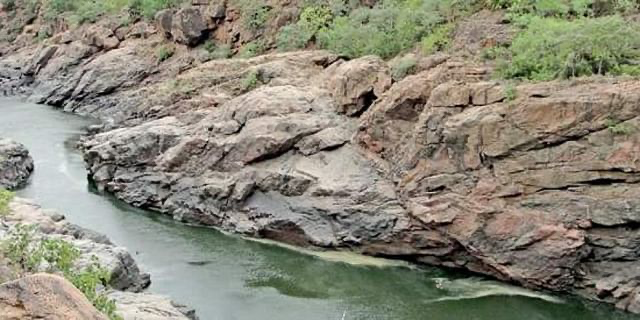
- The project involves the construction of a reservoir on the Cauvery River, located near Mekedatu in Karnataka, India.
Water Supply and Drinking Water Requirements
- Bengaluru faces a significant drinking water problem due to population growth and water scarcity.
- The Mekedatu project intends to utilize the excess water from the Cauvery River to meet the city's drinking water requirements.
Water Management and Sustainability Concerns
- Environmentalists argue that the project lacks consideration for sustainability and ecological preservation.
- They claim that the Cauvery River does not have sufficient water to support another dam, as it has maintained a consistent course and precipitation levels over the past 10 years.
Political Controversy and Government Support
- The Mekedatu Reservoir Project has become a political issue, with various stakeholders involved.
- Deputy CM and Water Resource Minister DK Shivakumar has met with the Union Jal Shakti Minister to discuss the project's details and water utilization.
Impact on Ecology and Forest Area
- Experts estimate that around 63% of the forest area within the Cauvery Wildlife Sanctuary would be submerged if the project is approved.
- The ecological destruction caused by the reservoir's construction is a significant concern raised by environmentalists.
Financial Implications and Resource Allocation
- The Mekedatu Reservoir Project is estimated to cost around Rs 9,000 crore.
- Critics argue that investing in a dam and pumping water from the south of the city is wasteful in terms of resources, considering Bengaluru's annual rainfall and existing water flow.
Alternative Solutions and Advanced Technology
- Some environmental communicators suggest exploring advanced water treatment technologies to meet the city's water needs.
- Utilizing advanced technology, sewage water can be transformed into potable water, offering a sustainable and environmentally friendly solution.
About Lakes of Bengaluru
- Bengaluru, the capital city of Karnataka, is known for its numerous lakes that play a significant role in the city's ecosystem and water management.
- Over the years, the lakes in Bengaluru have faced challenges such as encroachment, pollution, and neglect.
Importance of Lakes in Bengaluru
- Lakes in Bengaluru act as catchment areas, storing rainwater and replenishing groundwater.
- They help regulate the city's water table and maintain ecological balance.
- Lakes also provide habitats for various flora and fauna, contributing to biodiversity.
Encroachment and Pollution
- Many lakes in Bengaluru have fallen prey to encroachment, with surrounding areas being developed for residential and commercial purposes.
- Encroachment leads to the shrinking of lake boundaries, reducing their water-holding capacity.
- The encroached areas often contribute to pollution, as untreated sewage and solid waste find their way into the lakes.
Consequences of Lake Encroachment
- Reduced water-holding capacity of lakes results in decreased groundwater recharge during the monsoon season.
- Depleted lakes fail to store and supply water during dry periods, contributing to water scarcity issues in the city.
- Encroachment disrupts the natural habitat of aquatic plants and animals, affecting the overall ecosystem.
Revival and Restoration Efforts
- Various governmental and non-governmental initiatives have been undertaken to revive and restore the lakes of Bengaluru.
- Lake rejuvenation projects focus on desilting, clearing encroachments, and treating the inflow of sewage and pollutants.
- Citizen participation and awareness campaigns play a crucial role in creating a sense of ownership and responsibility towards lake preservation.
Successful Lake Rejuvenation Projects
- Kaikondrahalli Lake, Bellandur Lake, and Jakkur Lake are notable examples of successful lake rejuvenation efforts.
- These lakes have undergone significant restoration work, including desilting, construction of wetlands, and implementation of sewage treatment measures.
- Improved water quality, revival of biodiversity, and recreational spaces have been the outcomes of these rejuvenation projects.
Challenges and Future Considerations
- The revival of lakes in Bengaluru faces challenges such as sustained maintenance, community involvement, and preventing future encroachments.
- Continuous monitoring and enforcement of regulations are necessary to ensure the long-term sustainability of restored lakes.
- Integrated water management approaches, including rainwater harvesting and effective sewage treatment, need to be implemented to prevent further pollution.
|
PRACTICE QUESTION
Q) Discuss the challenges faced in the revival of lakes and the measures required for their long-term preservation. Provide examples of successful lake rejuvenation projects and their impact on the city's ecosystem and water resources. (250 words)
|

https://www.newindianexpress.com/states/karnataka/2023/jul/03/revive-bengalurus-raja-kaluves-instead-of-mekedatu-project-environmentalists-2590796.html