Description
In March 2026, the USTR initiated two separate Section 301 investigations targeting several major trading partners.
Why in News?
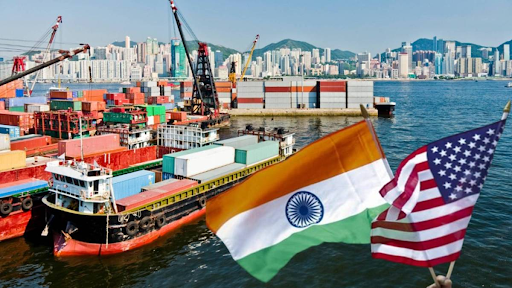
In March 2026, the USTR initiated two separate Section 301 investigations targeting several major trading partners. The first probe focuses on structural excess capacity in manufacturing, while the second examines whether countries like India have failed to effectively ban goods produced with forced labour.
Key Highlights of India’s Response
- Commitment to ILO Standards: India highlighted that it has ratified the Forced Labour Convention, 1930 (No. 29) and the Abolition of Forced Labour Convention, 1957 (No. 105). These treaties mandate the prohibition of forced labour in all forms within the national legal framework.
- Domestic Demand-Driven Economy: India argued that its merchandise export-to-GDP ratio of approximately 12% proves that its manufacturing growth is anchored in domestic consumption, not artificial excess capacity meant for dumping in global markets.
- Minimal Market Share: The government pointed out that Indian goods account for only 3.1% of total US imports, making it highly unlikely that Indian trade practices are a primary driver of the US trade deficit.
- Lack of Evidence: New Delhi asserted that the USTR notice relies on aggregate macroeconomic indicators rather than identifying specific discriminatory acts, policies, or practices that burden US commerce.
- Legal Challenge: India stated that the investigations do not satisfy the legal requirements for initiation under Sections 301 and 302 of the Trade Act of 1974.
Objectives of the Indian Submission
- Protecting Sovereign Policy: To prevent unilateral US trade measures from dictating domestic industrial and labour policies.
- Safeguarding Trade Negotiations: To ensure that ongoing talks for a Bilateral Trade Agreement between India and the US are not undermined by these investigations.
- Clarifying Trade Surplus: To explain that bilateral trade imbalances are natural macroeconomic phenomena influenced by the status of the US dollar as a reserve currency, rather than unfair trade practices.
Challenges and Economic Risks
- Potential for Tariffs: If the USTR issues a positive determination, it could lead to the restoration of steep reciprocal tariffs, which were previously struck down by the US Supreme Court but remain a policy priority for the current US administration.
- Supply Chain Disruptions: Forced labour allegations can lead to import bans on specific Indian sectors like textiles, gems, and electronics, causing significant distress to exporters.
- Geopolitical Tension: These trade probes emerge at a time when both nations are trying to balance strategic partnerships with protectionist economic agendas.
Way Forward
- The Ministry of Commerce and Industry is scheduled to send a negotiating team to Washington next week to seek a diplomatic resolution.
- India must continue to engage constructively within the framework of the proposed Bilateral Trade Agreement rather than accepting unilateral probes.
- Simultaneously, enhancing the enforcement of existing labour laws at the state level will provide India with stronger evidence to counter international scrutiny in future trade reviews.
Conclusion
By citing its adherence to ILO conventions and the domestic orientation of its economy, India has mounted a robust defense against the USTR allegations. While the threat of Section 301 tariffs remains a concern for 2026, India’s insistence on bilateral dialogue over unilateral investigations marks a firm stand on its economic sovereignty.
Source: Indian Express
|
PRACTICE QUESTION
Q. How do international labor standards influence a country's global trade standing? Discuss with reference to India’s legal alignment with ILO standards. (150 words)
|