The CEA’s roadmap targets 100 GW of Hydro Pumped Storage by 2047 as India’s main grid-scale storage to integrate 500 GW renewables. Despite cost, gestation, and clearance hurdles, policy support, PPPs, and faster approvals can make HPS vital for energy security and Net Zero goals.
Copyright infringement not intended
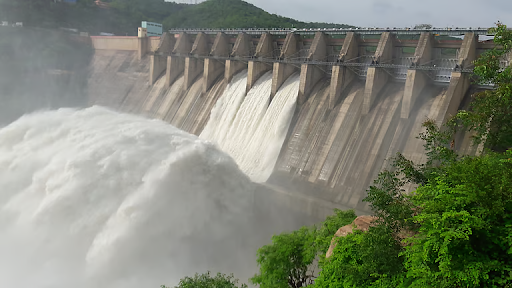
Picture Courtesy: DOWNTOEARTH
|
Read all about: India's Hydropower Capacity: Challenges and Opportunities l Small Hydropower (SHP) Scheme Revival |
What is Hydro Pumped Storage (HPS)?
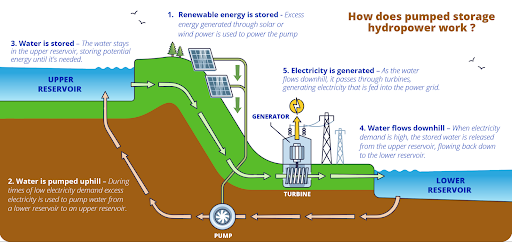
HPS is a type of hydroelectric energy storage system that functions like a large-scale, rechargeable water battery.
It is a mature technology, accounting for over 90% of the world's electricity storage capacity. (Source: International Hydropower Association)
The system uses two water reservoirs at different elevations to store and generate power.
Why HPS is Significant for India's Energy Transition?
Achieving the 'Panchamrit' goal of 500 GW non-fossil fuel capacity by 2030 requires robust energy storage to stabilize the grid against variable solar and wind power.
Stabilising the Grid
HPS absorbs surplus renewable energy when generation is high and releases it when needed, balancing the intermittency of solar and wind power.
Meeting Peak Demand
As India's peak electricity demand is expected to reach 708 GW by 2047, the quick-start capability of HPS plants is vital for managing sudden surges in demand. (Source: PIB)
Cost-Effective Long-Duration Storage
For storing energy for 8-10 hours, HPS is more economical than Battery Energy Storage Systems (BESS). The levelized cost from HPS is around ₹4.7 per unit, compared to ₹6.6 per unit from BESS (Source: CARE Ratings).
Energy Security & Self-Reliance
HPS is an indigenous technology with a long operational life (over 50 years), reducing dependence on imported minerals like lithium and cobalt required for BESS.
National Hydro Pumped Storage (HPS) Roadmap
The CEA's plan aims to unlock vast HPS potential, estimated at over 180 GW across over 120 potential pumped storage sites across the country
Target: The phased rollout aims for 100 GW by 2047, with about 22 GW currently in development and another 50-60 GW planned for rollout by 2032–37.
Financial Plan: Requires a cumulative investment of ₹5-6 lakh crore, to be mobilized through Public-Private Partnerships (PPP) and Viability Gap Funding (VGF).
State-Led Initiative: States like Andhra Pradesh, Maharashtra, Odisha, Gujarat, and Tamil Nadu will lead the initial capacity addition.
Environmental Consideration: The plan promotes "off-river closed-loop" systems and developing HPS on existing dams to minimize ecological impact.
Challenges in Hydro Pumped Storage (HPS) Development
Despite its potential, the path to 100 GW is marked by several long-standing challenges associated with hydropower projects in India.
|
Challenge |
Details |
|
Financial Hurdles |
High upfront capital investment and long gestation periods (7-10 years) increase financial risks. |
|
Regulatory Delays |
Complex and lengthy processes for environmental and forest clearances, along with land acquisition issues. |
|
Market Uncertainty |
Lack of clear tariff structures to compensate HPS for grid balancing services deters private investment. |
|
Political & Geographical Issues |
Inter-state water disputes and the remote location of potential sites, which require extensive transmission infrastructure. |
Way Forward
A multi-pronged strategy combining policy reforms, innovative financing, and learning from global best practices is essential for success.
Streamlined Clearances: The Ministry of Power's 2023 guidelines propose exempting off-river HPS projects from lengthy Environmental Impact Assessments (EIA) to fast-track approvals.
Innovative Financing: Promoting green bonds, concessional climate finance, and Foreign Direct Investment (FDI) can attract necessary capital.
Developing Ancillary Markets: The Central Electricity Regulatory Commission (CERC) is working to create markets that pay HPS for grid services like frequency regulation, enhancing their economic viability.
Learning from Examples
Domestic Example (Pinnapuram IRESP, Andhra Pradesh): Developed by Greenko, this project integrates 1,680 MW of HPS with solar and wind power to provide 24/7 dispatchable renewable energy, serving as a model for future projects.
Global Example (China): China leads the world in HPS by implementing clear national targets, offering long-term contracts, and streamlining approvals through a state-led, mission-mode approach.
Conclusion
The 100 GW HPS roadmap is essential for clean energy transition. It requires stable policy, simplified regulations, and Centre-state collaboration to ensure reliable, affordable power and establish India as a green energy leader.
Source: DOWNTOEARTH
|
PRACTICE QUESTION Q. "Analyze the technical and environmental challenges associated with the rapid scaling of Hydro Pumped Storage to 100 GW in India." 150 words |
HPS is a type of energy storage system that functions like a large, rechargeable water battery. It uses two water reservoirs at different heights. During times of surplus electricity (e.g., peak solar generation), it uses power to pump water from the lower to the upper reservoir. When electricity is needed, the water is released back down through turbines to generate power.
India is rapidly increasing its renewable energy capacity (solar and wind), which is intermittent. HPS is essential to store the excess renewable energy and release it when needed, ensuring a stable and reliable power supply (grid stability), meeting peak electricity demand, and helping India achieve its Net Zero targets.
For long-duration storage (8-10 hours), HPS is currently more cost-effective than BESS. Furthermore, HPS is a largely indigenous technology with a very long operational life (over 50 years), enhancing India's energy security. BESS, in contrast, relies on imported critical minerals like lithium and cobalt.



© 2026 iasgyan. All right reserved