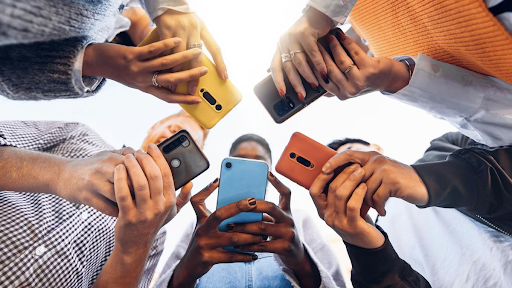
Karnataka and Andhra Pradesh propose social media bans for children over safety concerns. The move raises constitutional issues since internet regulation lies under the Union List. Despite the IT Act 2000 and DPDP Act 2023, challenges remain in age verification, enforcement, and preventing a widening digital gender divide.
Copyright infringement not intended
Picture Courtesy: THEHINDU
Context
The proposal by states like Karnataka to ban social media for children sparks a national debate on whether the Centre or the States have the constitutional authority to regulate the internet.
|
Read all about: SOCIAL MEDIA REGULATION l Social Media Regulation Explained l Code of Ethics on Social Media l New Rules for AI Content on Social Media l Guidelines For Social Media Influencers |
What is the Core Issue of Jurisdictional Conflict?
The core of the conflict lies in the division of legislative powers defined in the Seventh Schedule of the Constitution under Article 246. The powers are divided into three lists: the Union List, the State List, and the Concurrent List.
|
Argument For |
Constitutional Provision |
Implication |
|
Union Government's Authority |
Entry 31, Union List I: Covers "Posts and telegraphs; telephones, wireless, broadcasting and other like forms of communication." |
Courts have consistently interpreted this to include the internet and digital platforms, giving the Centre exclusive power to legislate on this subject. Central laws like the IT Act, 2000, reinforce this domain. |
|
State Government's Justification |
Entry 1, State List II ('Public Order') and Entry 6, State List II ('Public Health'). |
States argue that since social media affects children's mental health and can create public order issues, they have the right to intervene. However, a state law directly regulating the internet is likely to be legally challenged for overstepping its jurisdiction. |
Why Are Such Bans Being Proposed?
Mental and Physical Health Crises
A 2022 Lancet report highlighted that 1 in 7 Indians aged 15-24 suffer from some form of mental illness, correlating with excessive social media use and rising anxiety, depression, and poor sleep among adolescents.
Exposure to Harmful Content
Children are vulnerable to cyberbullying, online grooming, scams, and age-inappropriate content. About 85% of Indian children are victims of cyber-bullying, the highest in the world. (Source: McAfee)
Negative Impact on Academics
Excessive screen time is linked to decreased concentration, poor academic performance, and a decline in offline social skills among students.
India's Existing Legal Framework for Online Safety
The Information Technology (IT) Act, 2000: This is the foundational law for cyber activities in India.
The Digital Personal Data Protection (DPDP) Act, 2023: This Act introduces specific and stringent protections for children's data.
What are the Challenges in Implementing Such a Ban?
Arguments Against Blanket Bans
Digital rights organizations argue that blanket bans are a blunt instrument with significant downsides. They contend that such bans:
Implementation Challenges of a Ban
Age Verification: Implementing robust and privacy-preserving age verification is technically challenging and expensive. It could lead to the collection of sensitive biometric data of all users.
Easy Circumvention: Children can easily bypass age restrictions using VPNs (Virtual Private Networks), providing false birth dates, or using a parent's device.
Defining 'Social Media': Creating a clear legal definition is difficult. A poorly defined scope could inadvertently ban educational or useful communication apps.
Way Forward
Instead of a complete ban, a more effective and sustainable strategy requires a multi-pronged approach involving all stakeholders.
Strengthen Platform Accountability
Shift the focus from banning access to forcing platforms to adopt a "Safety-by-Design" approach: building in safety features from the start, making algorithms safer for children, and strengthening content moderation.
Empowerment through Digital Literacy
Collaboration among government, schools, and civil society is essential to scale digital literacy, enabling children, parents, and teachers to navigate the online world safely and responsibly.
Effective Co-regulation
The government should collaborate with tech companies, child rights experts, and mental health professionals to establish a dynamic regulatory environment that encourages innovation in safety tools while strictly enforcing compliance.
Collaborative Federalism
The Centre should create a uniform legal framework, while states can lead implementation, run awareness campaigns, and integrate digital citizenship into school curricula.
Conclusion
A blanket ban on social media to protect children is likely unconstitutional and ineffective; a sustainable solution lies in robust platform accountability, systemic digital literacy, and collaborative governance to empower children in the digital world.
Source: THEHINDU
|
PRACTICE QUESTION Q. "Instead of outright bans which curtail access, the focus of digital regulation should be on platform accountability and user empowerment." Discuss. 150 words |
States like Karnataka and Andhra Pradesh are proposing these bans due to rising concerns over the adverse effects of social media on children, including mental health issues like anxiety and depression, exposure to harmful content, cyberbullying, and negative impacts on academic performance.
Under the Indian Constitution's Seventh Schedule, "communications," which includes internet regulation, falls under Entry 31 of the Union List, making it the Centre's exclusive domain. A state ban would likely be challenged as an overreach of its constitutional authority, even if justified under 'Public Health' or 'Public Order' (State List).
The Central Government has the primary authority to legislate on matters related to the internet and digital communications. It has enacted key laws like the Information Technology (IT) Act, 2000, and the Digital Personal Data Protection (DPDP) Act, 2023, to create a uniform regulatory framework for the entire country.

© 2026 iasgyan. All right reserved