Launched in 2015, Digital India built a strong digital ecosystem through BharatNet connectivity, affordable data, and Digital Public Infrastructure like Aadhaar and UPI. However, rural-urban and gender digital divides, connectivity gaps, and low digital literacy require targeted policies for inclusive digital growth.
Copyright infringement not intended
Picture Courtesy: irpp
Context
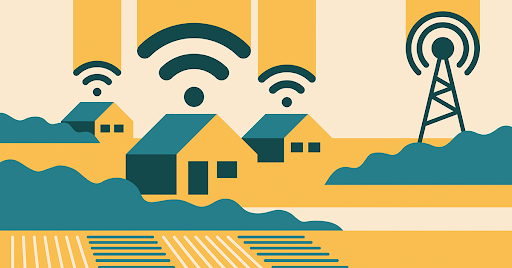
The government highlighted initiatives under Digital India aimed at bridging the digital divide by expanding Common Service Centres (CSCs) and digital infrastructure in rural areas.
What is the Digital India Programme?
Launched in 2015, the Digital India programme has become a global case study in using technology for public service delivery and citizen empowerment.
It aims to transform India into a digitally empowered society and knowledge economy by bridging the urban-rural gap in connectivity, affordability, and digital literacy.
Core Pillars of India's Digital Infrastructure
India's strategy is built on three interconnected pillars to ensure that digital access translates into meaningful economic participation.
Universal Digital Connectivity: This is the foundational layer.
Inclusive Digital Public Infrastructure (DPI): A stack of digital solutions for identity, payments, and data exchange.
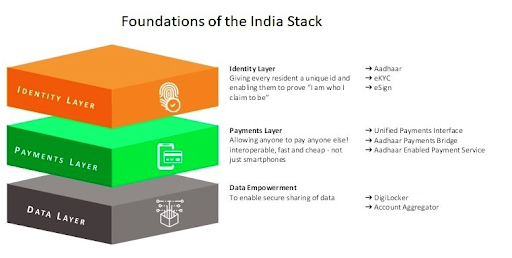
High-Performance Computing (HPC): To build indigenous capacity for advanced research and AI.
What are the Challenges in Bridging the Digital Divide?
Rural-Urban & Gender Gap
The Oxfam "India Inequality Report" highlights that only 31% of the rural population uses the internet compared to 67% in urban areas. Indian women are 33% less likely to use mobile internet than men.
Quality of Connectivity
While access has expanded, the quality and reliability of internet connections, especially in remote and hilly areas, remain inconsistent, hindering the effective use of digital services.
Functional Digital Literacy
According to the Central Board for Workers Education Only 38% of India households are digitally literate (61% in urban areas and 25% in rural areas. This makes them vulnerable to online fraud and misinformation.
Affordability of Devices
While data is cheap, the high upfront cost of a smartphone or computer remains a major barrier for the poorest households.
Cybersecurity and Data Privacy
The Supreme Court judgment in K.S. Puttaswamy vs Union of India (2017) affirmed the Right to Privacy as a fundamental right, establishing the constitutional need for a robust data protection framework.
India’s Strategies for an Inclusive Digital Ecosystem
Last-Mile Service Delivery
Over 5.5 lakh functional Common Service Centres (CSCs), run by Village Level Entrepreneurs (VLEs), act as access points for citizens with limited connectivity or literacy, providing services like digital banking and online education. (Source: PIB)
Promoting Digital Literacy
The Pradhan Mantri Gramin Digital Saksharta Abhiyan (PMGDISHA) is one of the world's largest digital literacy programs, having trained over 6.39 crore individuals in rural areas. (Source: PIB)
Affordable Internet Access
The PM-WANI (Wi-Fi Access Network Interface) scheme enables local entrepreneurs to set up public Wi-Fi hotspots, democratizing access. As of February 2026, over 4.09 lakh such hotspots have been deployed. (Source: PIB)
Accessibility for Persons with Disabilities (PwD)
The Rights of Persons with Disabilities Act, 2016, mandates digital accessibility. The Unique Disability ID (UDID) project simplifies access to benefits.
Way Forward
Nurturing Innovation at School
The Atal Innovation Mission (AIM) has set up over 10,000 Atal Tinkering Labs (ATLs) in schools, engaging more than 1.1 crore students in technologies like AI and robotics.
Skilling for the Future
The FutureSkills Prime programme (a MeitY-NASSCOM initiative) is upskilling professionals in emerging technologies, with women constituting 41% of the beneficiaries.
Powering the Startup Ecosystem
India is now home to over 2 lakh DPIIT-recognized startups (up from 400 in 2016), which have created over 21 lakh jobs. Nearly half are based in Tier-II and Tier-III cities. (Source: Ministry of Commerce & Industry, 2025)
Learn from Global Best Practice
Estonia's 'e-Estonia' initiative serves as a model for building a comprehensive digital society where 99% of public services are online, based on a strong legal framework and user trust.
Conclusion
India has built a digitally empowered foundation and must now focus on improving rural connectivity quality, bridging the gender gap, and strengthening data protection to foster digital innovation and an equitable knowledge economy.
Source: PIB
|
PRACTICE QUESTION Q. With reference to Digital Public Infrastructure (DPI), consider the following statements: 1. DPI refers to open, interoperable, and scalable digital systems that are exclusively owned and operated by the government to prevent private sector monopoly. 2. The foundational goal of DPI is to facilitate the digital transition of essential public and private services at a societal scale. Which of the statements given above is/are correct? A. 1 only B. 2 only C. Both 1 and 2 D. Neither 1 nor 2 Answer: B Explanation: Statement 1 is incorrect: While Digital Public Infrastructure (DPI) is designed to be open, interoperable, and scalable, it is not exclusively owned and operated by the government. DPI is often developed through public-private partnerships or, as in the case of India's UPI, by non-profit entities (like the National Payments Corporation of India, owned by a consortium of banks). The goal is to provide a "public good" model rather than a government-exclusive monopoly. Statement 2 is correct: The fundamental goal of DPI is to create shared, interoperable digital systems—such as digital identity, payments, and data exchange—to facilitate the digital transition of essential public and private services at a societal scale. |
The Digital India programme, launched in 2015, aims to transform India into a digitally empowered society and knowledge economy by focusing on three key areas: creating digital infrastructure as a core utility for every citizen, delivering governance and services on demand, and digitally empowering citizens.
Digital Public Infrastructure (DPI) refers to a set of shared digital systems that are secure and interoperable. In India, key examples include Aadhaar for unique identity, UPI for payments, and DigiLocker for document access. These platforms enable public and private services to be delivered at scale.
The primary objective of the BharatNet project is to provide high-speed broadband connectivity to all Gram Panchayats in India through an optical fibre network, thus bridging the rural-urban digital divide in internet access


© 2026 iasgyan. All right reserved