The National Supercomputing Mission (NSM) is India’s flagship initiative to build indigenous high-performance computing capacity by creating a nationwide network of supercomputers for academic and strategic research. Through phased indigenisation, systems like PARAM, and initiatives such as Trinetra, NSM aims to enhance scientific innovation, technological self-reliance, and India’s global competitiveness in advanced computing.
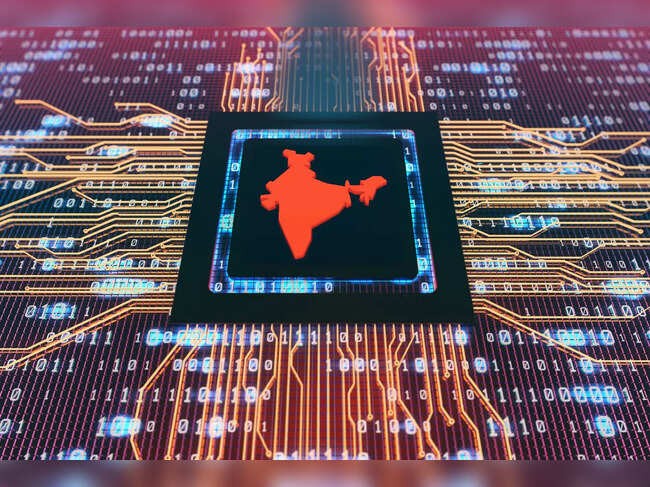
Copyright infringement not intended
Picture Courtesy: Economic Times
Context:
India’s National Supercomputing Mission (NSM) aims to build indigenous high-performance computing (HPC) capacity.
|
Must Read: SUPERCOMPUTERS | INDIA IN SUPERCOMPUTING | |
What is National Supercomputing Mission?
The National Supercomputing Mission (NSM) was initiated in 2015 to strengthen India’s high-end computing ecosystem and position the country among globally competitive supercomputing nations. The mission responds to the rapidly growing computational needs of India’s scientific, academic, and strategic sectors.
NSM is jointly implemented by the Department of Science and Technology (DST) and the Ministry of Electronics and Information Technology (MeitY). The mission aligns closely with the objectives of Digital India and Make in India.
Rationale for the Mission
Despite having strong scientific manpower, India’s presence in global supercomputing has remained limited, with relatively low global ranking and few operational supercomputers. Increasing reliance on data-intensive research, strategic simulations, and emerging technologies necessitated a national-level coordinated HPC infrastructure.
Core Objectives
Application Areas
NSM supports computational research across a wide spectrum, including:
Current Status of NSM:
Importance of National Supercomputing Mission:
Indigenous technology development: The mission prioritises design and deployment of supercomputers using Indian hardware and software, reducing long-term dependence on imports.
Phased roll-out: NSM follows a multi-phase implementation model, gradually scaling infrastructure across institutions based on readiness and research demand.
High-end research enablement: HPC systems under NSM support cutting-edge research in AI, machine learning, climate science, health, and national security.
Alignment with Make in India: By encouraging domestic manufacturing of servers, processors, and system software, NSM strengthens India’s electronics and digital manufacturing base.
Skill development and training: Structured training programmes aim to create a skilled HPC workforce, essential for optimal utilisation of supercomputing resources.
Academia–industry collaboration: The mission promotes partnerships between research institutions and industry to translate computational research into real-world applications.
Energy-efficient computing: Emphasis is placed on power-efficient and sustainable supercomputing systems, reducing operational costs and environmental impact.
Phase Wise Infrastructural development:
Phase I: Initial Capability Building
The first phase focused on the deployment of six supercomputers using components largely assembled within India.
Phase II: Partial Indigenisation
The second phase marked a shift towards local manufacturing and indigenous software development.
Phase III: Full Indigenisation Target
The final phase aims at end-to-end indigenous design and manufacturing of all critical HPC components.
Indigenous technology development under NSM:
Trinetra:
Trinetra is an indigenously developed high-speed communication fabric created by the Centre for Development of Advanced Computing (C-DAC) under NSM.
Its primary objective is to enable fast and efficient data transfer between computing nodes, which is critical for large-scale parallel processing.
Phases of Trinetra
Trinetra is being developed through three sequential stages:
PARAM Rudra Supercomputers:
PARAM Shivay
PARAM Pravega
Challenges of NSM:
Conclusion:
The National Supercomputing Mission represents India’s strategic push to achieve self-reliance in high-performance computing while empowering scientific research, innovation, and national problem-solving. By building indigenous infrastructure, developing skilled human resources, and enabling advanced applications across critical sectors, NSM is laying the foundation for technological sovereignty and global competitiveness in the data-driven future.
Source: Economic Times
|
Practice Question With reference to the National Supercomputing Mission (NSM), consider the following statements: 1. The mission aims to establish a nationwide grid of supercomputers connected through the National Knowledge Network. 2. Indigenous development of hardware, system software, and interconnects is a core objective of the mission. 3. PARAM Pravega, installed at IIT Bombay, is India’s first supercomputer under NSM. Which of the statements given above is/are correct? A. 1 and 2 only Answer: A Explanation: |
NSM is a Government of India initiative launched in 2015 to build a nationwide high-performance computing (HPC) infrastructure and promote indigenous supercomputing capabilities for research, innovation, and strategic applications.
The mission is jointly implemented by the Department of Science and Technology (DST) and the Ministry of Electronics and Information Technology (MeitY), with technical execution led by C-DAC and IISc Bengaluru.
NSM strengthens scientific research capacity, enhances technological self-reliance, supports national security and disaster management, and enables India to compete globally in data- and computation-intensive fields.






© 2026 iasgyan. All right reserved