A CREA analysis shows 85% of 238 Indian cities exceed national PM2.5 limits, with none meeting WHO standards. The Indo-Gangetic Plain remains the worst affected. Pollution from vehicles, industry, and agriculture harms health and costs 1.36% of GDP, demanding stronger regional airshed-based management.
Copyright infringement not intended
Picture Courtesy: THEHINDU
Context
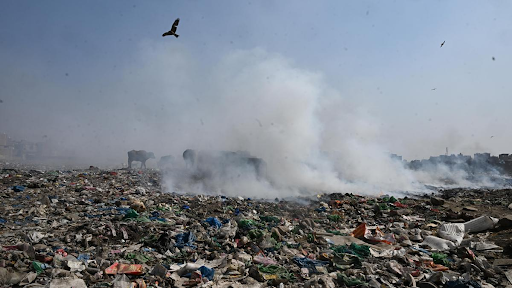
A recent analysis by the Centre for Research on Energy and Clean Air (CREA) reveals a persistent and widespread air pollution crisis across Indian cities.
What are the key findings of the CREA Report?
Widespread Non-Compliance
85% of Indian cities (204 out of 238) failed to meet the National Ambient Air Quality Standards (NAAQS) for PM2.5, which is set at 40 µg/m³.
Failure to Meet Global Standards
Not a single city out of the 238 analyzed met the much stricter World Health Organization (WHO) guideline of 5 µg/m³.
Most Polluted Regions
The Indo-Gangetic Plain remains the most polluted region in the country. The top 10 polluted cities were primarily from Uttar Pradesh, Haryana, Delhi, and Rajasthan.
Megacity Performance
Major megacities like Delhi (163 µg/m³), Kolkata (78 µg/m³), Mumbai (48 µg/m³), and Chennai (44 µg/m³) all recorded PM2.5 levels exceeding the national standard.
What are the main Causes of Air Pollution in India?
Vehicular Emissions
Rapid motorisation and heavy reliance on diesel and petrol engines release nitrogen oxides (NOx) and fine particulate matter (PM2.5). In cities like Delhi, transport can contribute over 30–38% of local winter pollution.
Industrial & Power Sector
This is the largest national contributor, led by coal-fired thermal power plants, brick kilns, steel mills, and chemical manufacturing. Many power plants still lack required flue gas desulphurisation (FGD) systems to control sulphur dioxide
Agricultural Practices
The seasonal burning of crop residue (stubble burning) in Punjab, Haryana, and UP causes severe pollution spikes across the Indo-Gangetic plains during winter
Construction & Road Dust
Unregulated construction activities and dust from unpaved roads contribute heavily to PM pollution in rapidly expanding urban areas.
Domestic Fuel Combustion
A significant population still relies on polluting solid fuels like biomass and coal for cooking, leading to high indoor and outdoor air pollution.
Geographical & Meteorological Factors
During winter, lower wind speeds and temperature inversion trap pollutants near the ground surface in Northern India, leading to smog formation.
What are the Impacts of Poor Air Quality?
Air pollution causes approximately 7–8 million premature deaths annually, with 99% of the global population breathing air that exceeds World Health Organization (WHO) air quality limits.
Health Impacts
Respiratory System: Immediate effects include coughing, wheezing, throat irritation, and chest tightness. Long-term exposure leads to chronic obstructive pulmonary disease (COPD), reduced lung function, and increased asthma attacks.
Cardiovascular System: Pollutants enter the bloodstream, causing inflammation that can lead to heart attacks, strokes, and high blood pressure.
Neurological & Cognitive Effects: Research links long-term exposure to impaired cognitive function, increased risks of Alzheimer’s disease, Parkinson’s disease, and dementia.
Vulnerable Populations: Children may develop bronchitis symptoms that persist into adulthood. Pregnant women exposed to pollution have higher risks of adverse outcomes, including low birth weight and preterm birth.
Mental Health: Exposure to high pollution levels is associated with an increased risk of depression and anxiety.
Environmental Impacts
Ecosystem Damage: Air pollutants harm plants and reduce biodiversity by interfering with photosynthesis.
Acid Rain: Pollutants like sulfur dioxide and nitrogen oxides settle into water bodies, increasing acidity and harming fish and aquatic life.
Reduced Visibility: Particulate matter can cause haze, which reduces visibility and blocks sunlight.
Economic and Societal Impacts
Reduced Productivity: Health issues caused by poor air quality lead to increased school absences, work absenteeism, and higher healthcare costs.
Safety Hazards: In regions reliant on biomass, household air pollution from inefficient stoves causes burns, injuries, and indoor smoke-related health issues.
What Measures has India Taken to Combat Air Pollution?
National Clean Air Programme (NCAP): Launched in 2019, this is a national strategy that now aims to reduce PM concentrations by 40% by 2026.
Commission for Air Quality Management (CAQM): A statutory body established in 2020 to coordinate air quality management in the NCR and adjoining areas. It implements measures like the Graded Response Action Plan (GRAP).
Stricter Vehicular Emission Norms: India leapfrogged from BS-IV to BS-VI emission standards, which are equivalent to Euro-VI norms, to curb vehicular pollution.
Promotion of Cleaner Fuels: Schemes like the Pradhan Mantri Ujjwala Yojana provide LPG connections to BPL households to reduce dependence on solid fuels.
Waste & Dust Management: The Swachh Bharat Mission focuses on solid waste management to prevent open burning, while cities are using mechanical sweepers to control road dust.
What are the Challenges in Implementing Pollution Control Measures?
Lack of Inter-State Coordination
Air pollution is a transboundary issue. A city-centric approach is inadequate; a coordinated "airshed-based" management plan is needed.
Inadequate Monitoring
Many cities still lack a sufficient number of real-time air quality monitoring stations, leading to data gaps.
Underutilization of Funds
Funds allocated under NCAP and by the Finance Commission often remain unutilized by municipal bodies due to capacity constraints. (Source: PIB)
Weak Enforcement
Poor enforcement of environmental laws against polluting industries, construction sites, and vehicles remains a major hurdle.
Way Forward
Regional Airshed Management
Moving beyond individual city actions to regional, inter-state cooperation, especially in heavily polluted areas like the Indo-Gangetic Plain (IGP) and National Capital Region (NCR).
Strengthening Monitoring Networks: Expand the CAAQMS (Continuous Ambient Air Quality Monitoring Stations) network, particularly focusing on PM2.5 and precursor gases (SO2 and NO2) over PM10, using a hybrid model of reference-grade monitors, low-cost sensors, and satellite data.
Empowering Local Bodies
Urban local bodies need increased funding and technical capacity to execute city-specific plans, such as mechanical road sweeping, greening, and waste management.
"Polluter Pays" Enforcement
There is a need to move beyond voluntary compliance to strict enforcement of emission standards for industries and power plants. This includes stricter penalties for violations and using "Air Quality Bonds".
Transition to Clean Energy & Mobility
Accelerating the shift to electric vehicles (EVs) through expanded charging infrastructure and promoting cleaner energy sources (solar, CNG/CBG) for industrial and domestic use is crucial.
Targeted Agricultural Solutions
Scaling up in-situ residue management (e.g., using machinery like Happy Seeders) to curb stubble burning, backed by financial incentives for farmers, has shown effectiveness.
AI and Data Analytics: Using AI to predict pollution spikes and identify sources from satellite data to inform policy.
Learn from Global Best Practices
Beijing's "War on Pollution": The city achieved a drastic reduction in pollution through a comprehensive plan involving strict industrial regulations, vehicle control (lottery system, EV promotion), and strong regional cooperation (Source: UN Environment Programme)
London's Congestion Charge: This policy successfully reduced traffic and pollution in central London by charging private vehicles, while the revenue generated was used to improve public transport.
Conclusion
Combating air pollution necessitates a collaborative regional airshed approach, merging strict, "polluter-pays" enforcement with accelerated clean energy adoption and public engagement for sustainable long-term results.
Source: INDIANEXPRESS
|
PRACTICE QUESTION Q. Air pollution in India is not merely an environmental issue but a severe public health and economic crisis." Elaborate. 150 words |
The CREA report found that 85% of 238 Indian cities did not meet the national standards for PM2.5 pollution. Critically, none of these cities met the stricter air quality guidelines set by the World Health Organization (WHO).
NCAP is a national-level strategy launched in 2019 to tackle air pollution. Its initial goal was a 20-30% reduction in particulate matter concentration by 2024. This has been revised to a more ambitious target of a 40% reduction by 2026.
An airshed management approach is a regional strategy that addresses air pollution across a shared geographical area where air pollutants are trapped. It moves beyond city-specific plans to tackle transboundary pollution sources through coordinated efforts and inter-state agreements.



© 2026 iasgyan. All right reserved