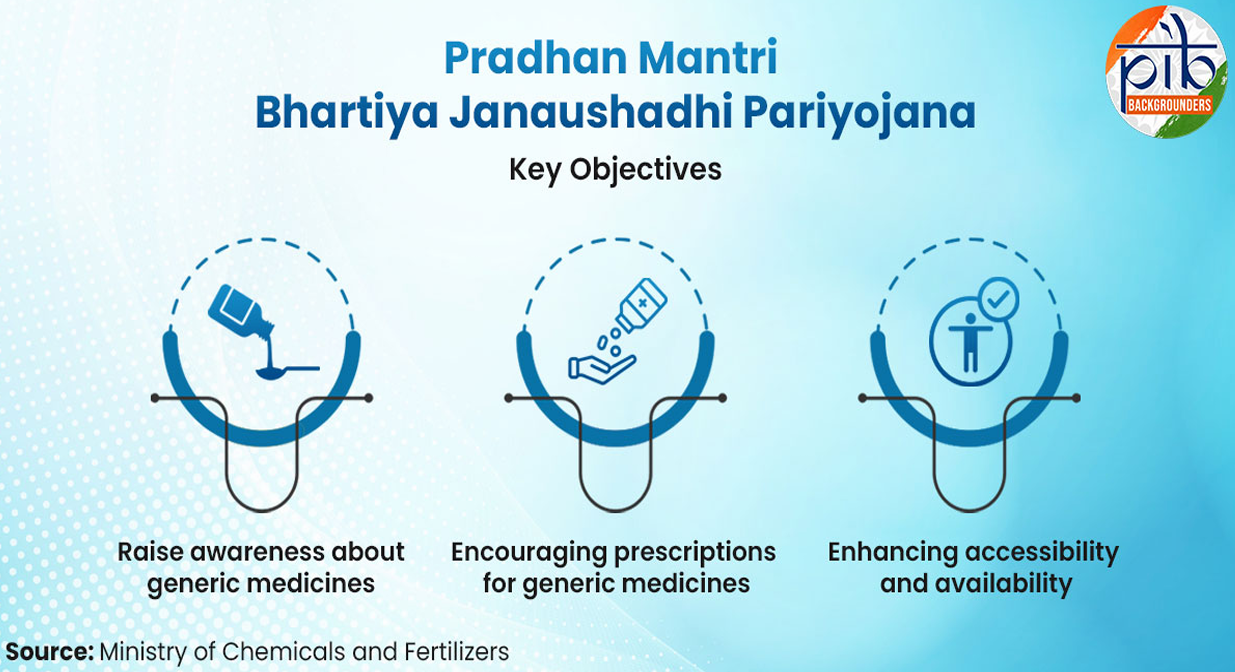
Pradhan Mantri Bhartiya Janaushadhi Pariyojana reduces healthcare costs by providing quality generic medicines at 50–80% lower prices through Jan Aushadhi Kendras. It lowers out-of-pocket expenditure, promotes women’s health via the Suvidha initiative, and supports entrepreneurship, though awareness gaps, doctor reluctance, and supply issues remain challenges.
Copyright infringement not intended
Picture Courtesy: PIB
Context
The government observed Janaushadhi Saptah (1–7 March 2026) with health camps and awareness programs nationwide to promote affordable generic medicines under PMBJP.
What is Pradhan Mantri Bhartiya Janaushadhi Pariyojana (PMBJP)
It was launched in 2008 by the Department of Pharmaceuticals (under the Ministry of Chemicals & Fertilizers), to provide quality generic medicines at 50–80% lower prices than branded drugs.
It operates through dedicated Jan Aushadhi Kendras, offering over 2,047 drugs and 300 surgical items to reduce out-of-pocket healthcare expenses. (Source: PIB)
Why is the Scheme Critical for India?
High Out-of-Pocket Expenditure (OOPE)
Medicines are a major driver of healthcare costs. In 2019-20, OOPE on health was 47.1% of the Total Health Expenditure, pushing many families into poverty. (Source: National Health Accounts Estimates, 2019-20)
Constitutional Mandate
The Supreme Court has interpreted the Right to Life under Article 21 to include the right to affordable treatment and health. PMBJP directly serves this constitutional goal.
Affordability
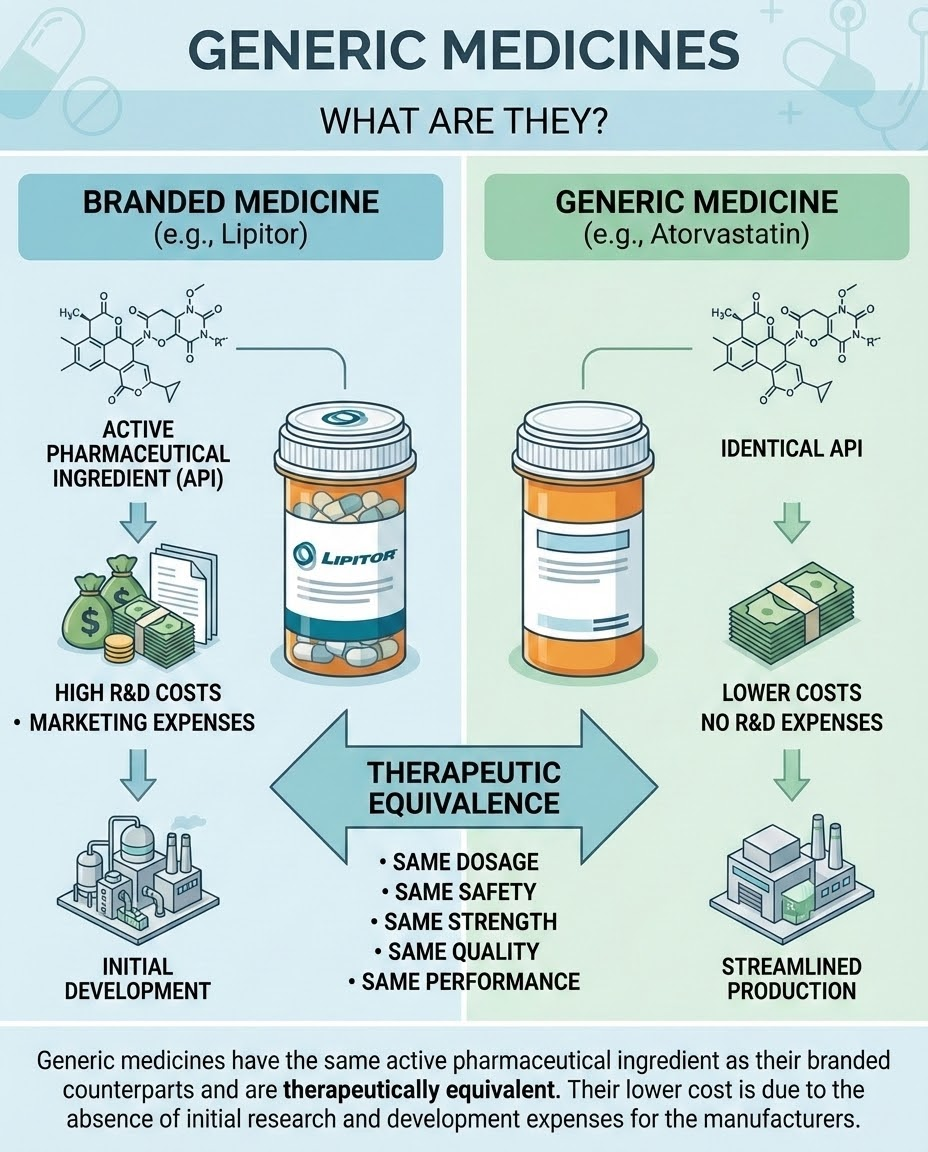
The scheme makes medicines available at prices 50% to 80% lower than branded alternatives, reducing the financial burden on citizens (Source: PIB).
Two-Tiered Quality Assurance System
Network of Kendras
Socio-Economic Impact of PMBJP
Citizen Savings
The scheme saved citizens about ₹38,000 crore by June 2025, freeing up income for essential needs like nutrition and education. (Source: PIB)
Women's Health & Hygiene
The "Janaushadhi Suvidha" initiative sells oxo-biodegradable sanitary napkins for ₹1 per pad. By January 2026, over 100 crore pads were sold, boosting menstrual hygiene. (Source: PIB)
Inclusive Entrepreneurship
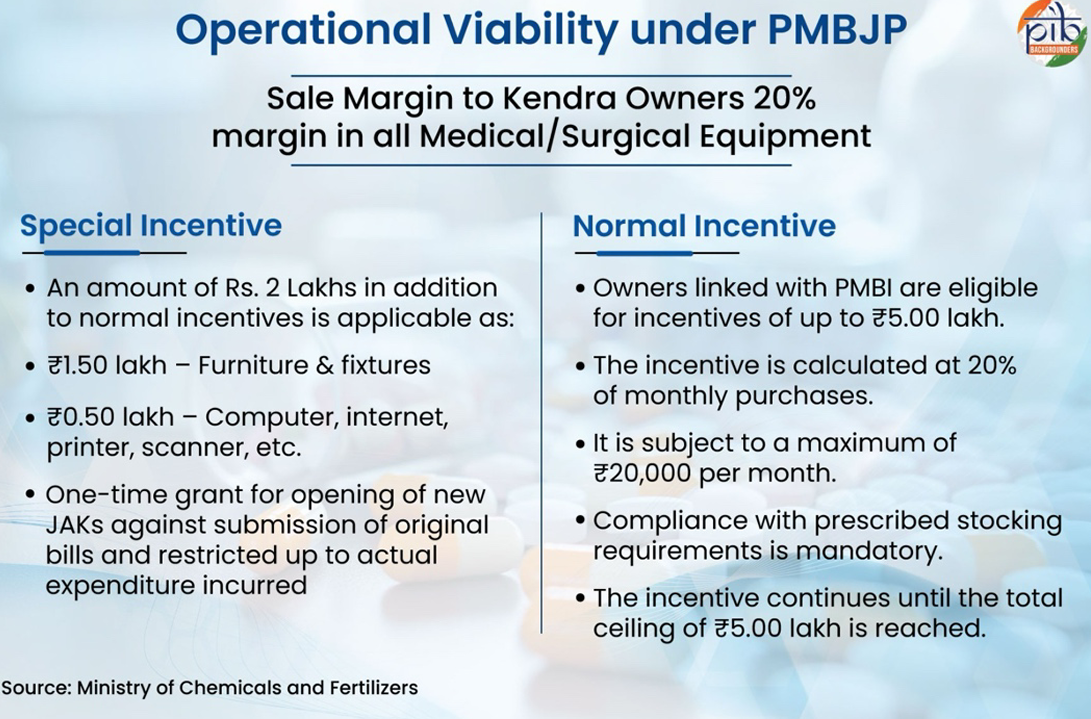
PMBJP provides financial incentives up to ₹5 lakh (20% of monthly purchases, max ₹20,000/month) to Kendras operated by individuals, NGOs, and entrepreneurs.
Key Challenges Impeding Progress
Doctor's Reluctance: Many medical practitioners are hesitant to prescribe generic drugs due to a lack of awareness or the influence of the branded pharmaceutical lobby.
Public Perception: Myth among the public that low price equates to low quality, leading to a trust deficit.
Supply Chain Management: Occasional stockouts of certain medicines at some Kendras disrupt the continuous supply chain.
Uneven Distribution: Network of Kendras is more concentrated in urban areas compared to remote and underserved regions.
Way Forward
Enforce Mandatory Generic Prescriptions
The National Medical Commission's guidelines making it mandatory for doctors to prescribe generic drugs must be strictly implemented.
Launch Awareness Campaigns
Conduct intensive Information, Education, and Communication (IEC) campaigns to build trust in generic medicines among both doctors and the public.
Strengthen Supply Chain
Use technology like AI for better demand forecasting and logistics management to prevent stockouts.
Integrate with Ayushman Bharat
Create a strong linkage between PMBJP Kendras and Ayushman Bharat Health and Wellness Centres for an integrated primary healthcare ecosystem.
Incentivize Doctors
Introduce performance-linked incentives for doctors in public facilities who show high rates of generic drug prescription.
Conclusion
The Pradhan Mantri Bhartiya Janaushadhi Pariyojana is a powerful tool for Universal Health Coverage through affordable and accessible medicines, but maximizing its impact requires addressing challenges in prescription practices, public awareness, and supply chain logistics.
Source: PIB
|
PRACTICE QUESTION Q. Consider the following statements regarding the Pradhan Mantri Bhartiya Janaushadhi Pariyojana (PMBJP): 1. It is a campaign launched by the Ministry of Health and Family Welfare to provide quality medicines at affordable prices. 2. The scheme is implemented by the Pharmaceuticals & Medical Devices Bureau of India (PMBI). Which of the statements given above is/are correct? A. 1 only B. 2 only C. Both 1 and 2 D. Neither 1 nor 2 Answer: B Explanation: Statement 1 is incorrect: It was launched by the Department of Pharmaceuticals, Ministry of Chemicals & Fertilizers. Statement 2 is correct: The scheme is implemented by the Pharmaceuticals & Medical Devices Bureau of India (PMBI). |
PMBJP launched by the Department of Pharmaceuticals, Ministry of Chemicals & Fertilizers, to provide quality generic medicines at affordable prices to all citizens, especially the poor and disadvantaged, through dedicated outlets known as Jan Aushadhi Kendras (JAKs).
The scheme employs a robust two-tiered quality assurance system. Firstly, all medicines are procured only from World Health Organization-Good Manufacturing Practices (WHO-GMP) certified manufacturers. Secondly, every batch of medicine is tested for quality at laboratories accredited by the National Accreditation Board for Testing and Calibration Laboratories (NABL) before it reaches the Kendras.
"Janaushadhi Suvidha" is an initiative under PMBJP focused on women's health and hygiene. It provides oxo-biodegradable sanitary napkins at a highly subsidized price of just ₹1 per pad, making affordable menstrual hygiene products accessible to millions of women across the country.

© 2026 iasgyan. All right reserved