The Kerala Nativity Card Bill, 2026 proposes a permanent identity card for residents to streamline welfare delivery and administration. However, it raises concerns about compatibility with India’s single citizenship principle, federal boundaries, migrant exclusion, and data privacy, making constitutional validity and inclusivity crucial for its success.
Copyright infringement not intended
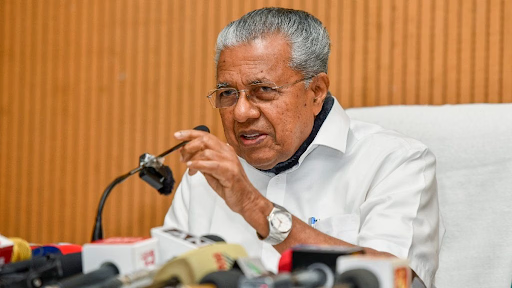
Picture Courtesy: THEPRINT
Context
The Kerala Assembly has passed the Kerala Nativity Card Bill 2026 to create a permanent, legally valid identity document for the state's residents.
What are the Key Provisions of the Bill?
The Bill proposes a permanent, photo-embedded 'Nativity Card' to replace the current system of temporary nativity certificates, which are required for accessing government services and educational quotas.
Administrative Hierarchy:
Penalties: Providing false information to obtain the card is a punishable offense, attracting up to three months of imprisonment or a fine of up to ₹5,000, or both.
What are the Potential challenges about the Bill?
The introduction of a state-specific identity card raises several critical questions spanning socio-economic, constitutional, and administrative domains.
Socio-Economic Challenges
|
Arguments For (Proponents) |
Arguments Against (Critics) |
|
The card could improve the targeting of welfare schemes by creating a clear, legally-backed identity for beneficiaries, potentially reducing inclusion and exclusion errors. |
It risks creating a "two-tiered hierarchy of belonging" by potentially excluding the state's large migrant workforce, who are vital to the economy but may not meet the 'native' criteria. |
Political and Legal Challenges
Federalism and Single Citizenship
State-level nativity card may encroach upon the Centre's exclusive domain over citizenship, challenging the constitutional framework of single citizenship.
Judicial Scrutiny
The Supreme Court permits domicile for state benefits (Pradeep Jain vs Union of India) but laws linking fundamental rights to nativity face strict scrutiny for violating Article 14 (Equality before Law) and Article 19 (Freedom of Movement and Residence).
Administrative and Technological Challenges
Duplication of Identity Documents
The necessity of another ID is questionable when citizens already possess multiple proofs like Aadhaar, Voter ID, and Passport. Aadhaar was designed as a universal identifier for service delivery nationwide.
Data Privacy
The creation of a new digital database raises data protection concerns and must comply with the principles established in the K.S. Puttaswamy (Retd.) judgment, which affirmed the Right to Privacy as a fundamental right.
Way Forward
Harmonization
Ensure the card complements national identity documents like Aadhaar rather than competing with them, with its scope clearly limited to state-specific benefits.
Inclusivity
Implement flexible eligibility criteria and robust grievance redressal mechanisms to prevent the exclusion of migrant workers and other vulnerable groups.
Data Protection
Establish a strong legal framework to protect citizens' data, in line with the Supreme Court's privacy judgment.
Stakeholder Consultation
Engage in wide consultations with legal experts, civil society, and migrant welfare groups to refine the legislation and address all concerns comprehensively.
Utilize Lessons from the Aadhaar Experience
Aadhaar authentication has streamlined welfare delivery but risks excluding genuine beneficiaries due to technical glitches (biometric failures or poor connectivity), necessitating offline fallbacks and stronger safeguards to ensure no one is denied their rights.
Conclusion
The Kerala Nativity Card Bill aims for administrative efficiency but must navigate constitutional and social challenges by prioritizing inclusion and upholding constitutional values for all residents, not just a narrow "native" demographic.
Source: THEPRINT
|
PRACTICE QUESTION Q. With reference to Aadhaar, consider the following statements:
Which of the statements given above is/are correct? A) 1 and 2 only B) 2 and 3 only C) 3 only D) 1, 2, and 3 Answer: B Explanation: Statement 1 is incorrect: The Supreme Court imposed a restriction on data retention, it ruled that authentication metadata cannot be stored for more than six months, striking down the original provision that allowed storage for up to five years. Statement 2 is correct: The Supreme Court ruled that Aadhaar is not mandatory for opening bank accounts or for mobile connections, as it was found to be disproportionate to the stated objectives. Statement 3 is correct: The Court upheld Section 7 of the Aadhaar Act, which allows the government to make Aadhaar mandatory for availing subsidies, benefits, or services that are funded directly out of the Consolidated Fund of India. |
The Kerala Nativity Card Bill, 2026, is a legislation passed by the Kerala Assembly that aims to create a permanent, legally valid identity document called a 'Nativity Card' for residents of the state. It is intended to replace the existing system of issuing temporary nativity certificates.
The primary objectives are to streamline administrative processes, reduce bureaucratic hurdles for citizens accessing welfare schemes and services, and eliminate the need to repeatedly apply for nativity certificates. The government also views it as a way to address anxieties related to identity verification and foster a sense of regional pride.
Critics argue that it may conflict with the constitutional principle of single citizenship, which falls under the exclusive domain of the Union government. By creating a formal state-level identity, it could be seen as creating a form of 'regional citizenship,' leading to legal challenges under Article 254 if it conflicts with central laws like the Citizenship Act.



© 2026 iasgyan. All right reserved