The 16th Finance Commission has recommended notifying heatwaves and lightning as national disasters, enabling SDRF support for relief and mitigation. With a proposed ₹2.04 lakh crore allocation for 2026–31, the move marks a shift toward proactive climate risk management and protection of vulnerable populations.
Copyright infringement not intended
Picture Courtesy: DOWNTOEARTH
Context
The 16th Finance Commission, chaired by Arvind Panagariya, recommended recognizing heatwaves and lightning strikes as nationally notified disasters.
|
Read all about: 16TH FINANCE COMMISSION REPORT SUBMITTED TO PRESIDENT l STATES AND THE CHALLENGE BEFORE THE FINANCE COMMISSION l FISCAL FEDERALISM IN INDIA EXPLAINED |
Key Recommendations of the 16th FC
Expansion of Notified Disasters: The Commission recommends adding Heatwaves and Lightning to the existing list of 12 nationally notified disasters (which includes cyclones, droughts, floods, landslides, etc.).
Financial Framework (2026-31)
State Flexibility: States can continue to use up to 10% of their SDRF allocation for "local disasters" that are not on the national list, after officially notifying them. (Source: Union Budget 2026)
Rationale for Inclusion of Heatwaves and Lightning
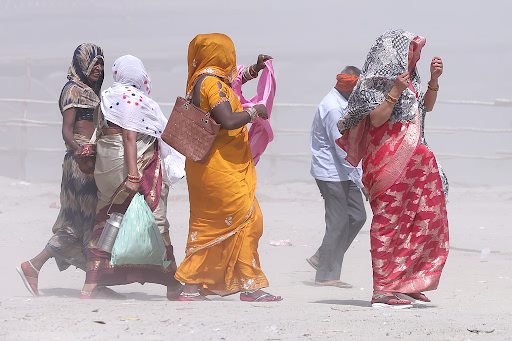
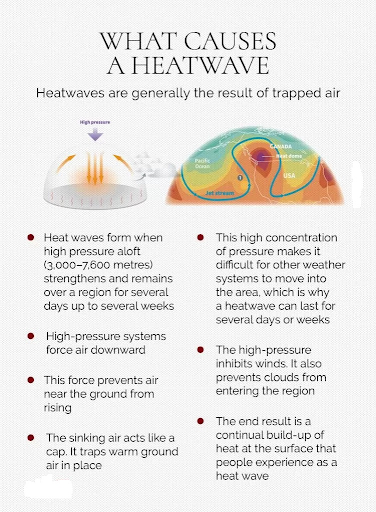
Escalating Threat of Heatwaves
High Mortality: Between 2018 and 2022, heatwaves officially caused 3,798 deaths. Experts suggest the actual number is much higher as heat often worsens pre-existing health conditions. (Source: NCRB)
Physiological Impact: Rise in "extremely hot nights" prevents the human body from cooling down, increasing the risk of fatal heatstroke.
Economic Disaster: The 2024 heatwave in North India, with temperatures crossing 50°C, demonstrated its economic impact by halting construction and reducing labour productivity.
Lightning: The Leading Disaster Killer
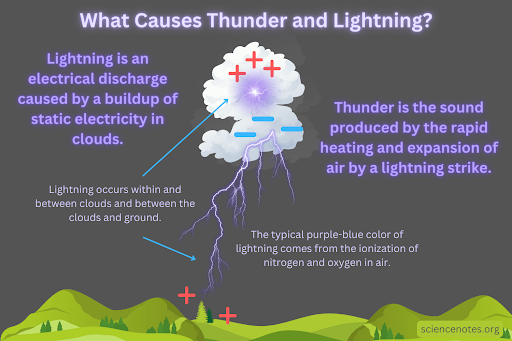
Highest Fatalities: Lightning is the single largest killer among natural disasters. In 2022, it caused 2,887 deaths, representing 35.8% of all natural disaster fatalities. (Source: NCRB)
Increasing Frequency: Driven by climate change, India witnessed a 34% increase in lightning strikes in 2020-21 compared to the previous year. (Source: Annual Lightning Report)
Socio-Economic Impact: It disproportionately affects farmers, labourers, and the rural poor working in open fields, making it a major issue of vulnerability.
Implications of the 16th FC Recommendations
The inclusion of the Heatwaves and Lightning as national disasters will fundamentally change how states prepare for and respond to them.
|
|
Previous Status (Before Recommendation) |
New Status (After Implementation) |
|
Funding |
States used their own budget or the limited 10% SDRF window for "local disasters." |
States can access the main 90% corpus of the SDRF, with a 75% central contribution. |
|
Response Protocol |
Fragmented approach. Only some states had Heat Action Plans (HAPs). No uniform guidelines. |
The National Disaster Management Authority (NDMA) will frame uniform, national guidelines for response and relief. |
|
Focus |
Primarily relief-centric, focused on providing ex-gratia payments after an incident. |
A balanced approach with a shift towards prevention, using the dedicated 20% SDMF allocation for mitigation projects. |
|
Example of Mitigation |
Mitigation projects were limited and funded solely by state budgets. |
States can use central funds to build "cool shelters," install lightning arresters, and create public awareness campaigns. |
Implementation Challenges
Definitional Ambiguity
A "heatwave" is defined by temperature thresholds, but experts argue that "Wet Bulb Temperature" (which combines heat and humidity) is a more accurate measure of human stress and should be adopted.
Verification of Deaths
Proving a death was caused solely by heatstroke is difficult without proper post-mortem analysis, especially in rural areas, leading to potential under-reporting and claim rejections.
Administrative & Fiscal Strain
The high frequency of lightning strikes could overwhelm the administrative machinery responsible for processing compensation claims and put strain on funds.
Way Forward
Update Scientific Metrics
Prioritize Mitigation (SDMF)
Last-Mile Early Warnings
Administrative Simplification
Institutional Coordination
Learn from Global Best Practices
India can learn from global examples to effectively implement the policy.
Conclusion
The 16th Finance Commission urges India to adopt a proactive climate resilience strategy by strengthening states. Key steps include modernizing metrics, utilizing technology like the 'Damini' app, and promoting climate-resilient urban development through green building codes.
Source: DOWNTOEARTH
|
PRACTICE QUESTION Q. Critically analyze the challenges associated with standardizing the definition and verification of deaths caused by 'silent disasters' like heatwaves in India. 150 words |
The key recommendation is the inclusion of Heatwaves and Lightning in the list of "Notified National Disasters," allowing states to use central SDRF funds for relief and mitigation associated with these events
They were added due to scientific data showing rising mortality rates. Lightning is currently the single largest natural killer in India, and heatwaves have caused thousands of deaths and significant economic loss in recent years.
Wet Bulb Temperature is a metric that considers both heat and humidity. It is considered a more accurate measure of the danger posed to the human body than standard temperature, as high humidity prevents the body from cooling down via sweating.


© 2026 iasgyan. All right reserved