In October 2025, India’s Goods and Services Tax collections reached ₹1,95,936 crore, up 4.6% from the previous year, partly due to festive spending. GST, introduced in 2017, replaced multiple indirect taxes to create a unified system. While industrialized states like Maharashtra, Karnataka, Gujarat, Tamil Nadu, and Haryana contributed over 40% of revenue, 20 states saw declines compared to pre-GST levels. Analysis shows that overall GST revenue remains lower than pre-GST taxes, with states like Mizoram and Nagaland improving collections, while Punjab, Chhattisgarh, Karnataka, Madhya Pradesh, and Odisha experienced significant drops.
Copyright infringement not intended
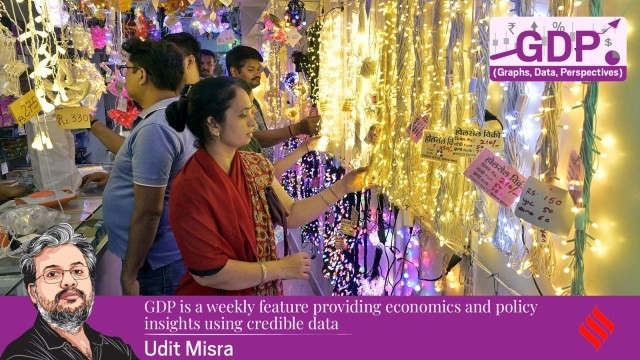
Picture Courtesy: Indian Express
The Government of India released data for Goods and Services Tax (GST) collections in October 2025. The total GST revenue was ₹1,95,936 crore, marking a 4.6% increase over October 2024.
GST is a comprehensive indirect tax that replaced multiple taxes levied by the central and state governments, such as excise duty, value-added tax, service tax, and central sales tax. It was designed to create a unified tax system, simplify compliance, and reduce cascading taxes.
|
Must Read: Goods And Services Tax (GST) | GST REFORM: SIGNIFICANCE, CHALLENGES AND WAY FORWARD| GST Compensation | |
Revenue Distribution Formula
Subsumed Taxes and Transitional Losses
Lower GST-to-GDP Ratio
Structural Issues in State GST
Sectoral and Regional Variations
Strengthen Compliance and Administration
Rationalize GST Rates and Structure
Address State-Specific Disparities
Promote Economic Growth and Consumption
Enhance Public Awareness and Digital Literacy
Encourage Use of Technology and Data Analytics
CASE STUDIESMaharashtra · Background: Maharashtra, with its large industrial and service sectors, faced initial transitional challenges post-GST. · Measures: Adoption of digital compliance tools, streamlined return filing, regular audits, and targeted awareness campaigns for businesses. · Impact: Maharashtra consistently became a top contributor to national GST collections, showing that technology, administrative efficiency, and sectoral focus can maximize revenue under GST. Mizoram · Background: Mizoram’s economy is small, but administrative reforms helped improve collections. · Measures: Capacity building of tax officials, simplified compliance for small traders, and promotion of formalization in informal sectors. · Impact: The state improved its revenue ratio relative to pre-GST levels, showing that even smaller states can benefit from focused governance and awareness initiatives. Odisha · Background: Mineral-rich state producing goods largely consumed outside, affecting destination-based revenue. · Challenges: Destination-based tax flow reduced inflow, underrepresentation of informal sectors, and lower compliance. · Impact: Shows that states with high production but lower consumption may face revenue disadvantages, emphasizing the need for policy adjustments and capacity building. |
GST has unified India’s indirect tax system, simplified compliance and promoting a common market. However, its benefits have been uneven across states due to economic structure, industrialization, and administrative capacity. Case studies show that technology, efficient administration, formalization of informal sectors, and policy adjustments are key to maximizing revenue. With focused measures, GST can become a tool for equitable growth and stronger national economy.
Source: India Express
|
Practice Question Q. Examine the reasons why some Indian states have lagged in GST revenue compared to the pre-GST era. Suggest measures to improve state-level GST collections. (250 words) |
GST is a destination-based indirect tax introduced in India in 2017 that replaced multiple central and state-level indirect taxes, creating a unified tax structure.
Lower collections are due to the destination-based model, limited industrial activity, informal sectors, delayed compensation, and administrative challenges.
Industrialized and consumption-heavy states like Maharashtra, Tamil Nadu, Karnataka, and Gujarat consistently report higher collections.




© 2026 iasgyan. All right reserved