Description
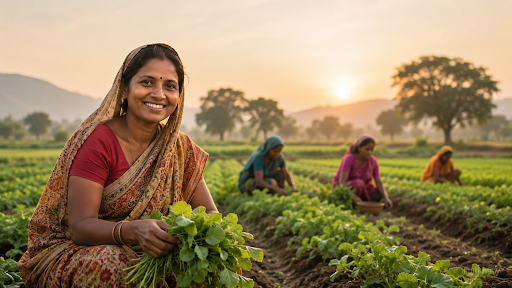
With the economy posting impressive growth rates in recent years, the female Labour Force Participation Rate (LFPR) has risen from 33.9% in 2022 to 40% in 2025.
Why in News?
Despite government initiatives and changing social norms, women hold less than 18 percent of board seats in listed Indian companies.
Key Trends in Women's Participation
- Rising Participation Rates: The Female Labour Force Participation Rate has seen an upward trajectory, particularly in rural areas, driven by the expansion of the Mahatma Gandhi National Rural Employment Guarantee Act and the growth of self-help groups.
- The Leadership Gap: In the Nifty 500 companies, the percentage of women in key managerial personnel roles—such as CEO, CFO, or Managing Director—is below 10 percent.
- Sectoral Variation: The services sector, particularly IT and banking, shows better gender diversity at the mid-level, whereas manufacturing and core infrastructure sectors continue to be heavily male-dominated.
- The Leakage in the Pipeline: Data suggests a significant drop-off in female employment at the mid-career stage, often coinciding with marriage and childcare responsibilities, which prevents them from reaching the top tier.
Barriers to Senior Leadership
- Societal Expectations: The disproportionate burden of unpaid domestic work and caregiving falls on women, often forcing them to take career breaks or opt for less demanding roles that offer limited upward mobility.
- Lack of Mentorship: Women often have limited access to the professional networks and mentorship opportunities that are crucial for navigating the path to executive leadership.
- Implicit Bias: Subconscious biases in hiring and promotion processes often lead to women being overlooked for high-stakes leadership roles or international assignments.
- Infrastructure Challenges: Issues related to safe transport and the lack of affordable, high-quality childcare facilities near workplaces further restrict the ability of women to commit to the long hours often associated with senior positions.
Significance for the Economy
- Increased gender diversity is not just a social imperative but an economic necessity.
- Studies suggest that companies with more women in leadership roles tend to have better financial performance and more robust corporate governance.
- Bridging the gender gap in the workforce could potentially add hundreds of billions of dollars to India's GDP.
- Diverse leadership brings varied perspectives that are essential for innovation and effective problem-solving in a globalized market.
Way Forward
- To break the glass ceiling, companies must move beyond tokenism and implement formal mentorship and sponsorship programs for high-potential women.
- The government can further support this by extending maternity and paternity leave benefits and incentivizing companies to set up on-site crèche facilities.
- Implementing "gender-neutral" recruitment processes and mandatory diversity reporting can also drive accountability.
- On a broader level, addressing societal norms through education and awareness is essential to redistribute the burden of domestic responsibilities.
Conclusion
The rising participation of women in the Indian economy is a positive sign of social evolution, but the dismal presence at the top is a reminder of the miles left to cover. Achieving true gender parity requires a concerted effort from both the state and the private sector to dismantle the invisible barriers that hold women back.
Source: Indian Express
|
PRACTICE QUESTION
Q. "While women’s labor force participation in India is on an upward trajectory, their representation in senior management and boardrooms remains dismal." Analyze the socio-economic factors contributing to this 'leaky pipeline' in the corporate hierarchy. (250 words)
|
|
Key Insights
The labour force represents the total number of people within an economy who are either currently employed or actively seeking employment. It is calculated by excluding individuals who are not looking for work, such as students, retirees, or those engaged exclusively in domestic duties. This metric serves as a vital indicator for the Labour Force Participation Rate, which helps policymakers understand the utilization of human resources in the country. In the context of India, the National Sample Survey Office typically tracks these figures to help assess unemployment trends and economic productivity.
|