To preserve parliamentary stability and accountability, India must replace the partisan Speaker-led disqualification model with an independent tribunal. This shift would prevent the Tenth Schedule from being weaponized to suppress internal dissent or facilitate tactical, large-scale political defections.
Seven of ten Aam Aadmi Party (AAP) Rajya Sabha members have joined the BJP. In response, the AAP has begun disqualification proceedings under the Tenth Schedule.
Disqualification of Members of Parliament (MPs) is the constitutional and statutory termination of eligibility to remain in the Lok Sabha or Rajya Sabha, ensuring lawmakers uphold required legal and ethical standards.
Constitutional Framework for Disqualification
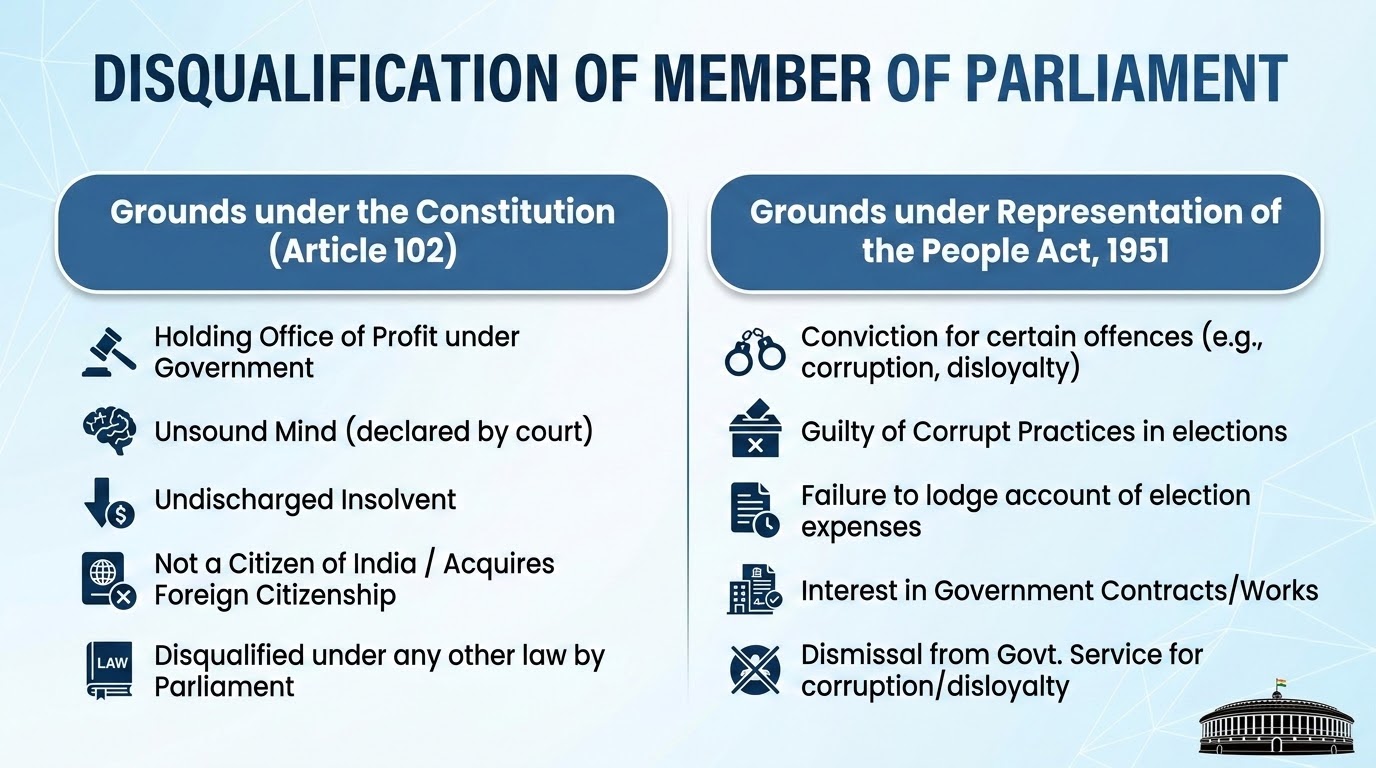
Article 102(1): Specifies general grounds for disqualification (e.g., office of profit, unsound mind).
Article 102(2): Mandates disqualification on the grounds of defection, governed by the Tenth Schedule.
Article 103: Establishes the decision-making authority.
The grounds are broadly categorized into Constitutional Grounds, Defection Grounds, and Statutory Grounds (under the Representation of the People Act, 1951).
A. Constitutional Grounds (Article 102(1))
An MP is disqualified if they:
B. Grounds of Defection (Tenth Schedule / Anti-Defection Law)
An MP is disqualified if they:
Exception (The "Merger" Clause): Disqualification does not apply if a "merger" takes place, which requires at least two-thirds of the members of the legislature party to agree to the merger.
C. Statutory Grounds (Representation of the People Act, 1951)
Parliament enacted the RPA, 1951 to define additional disqualifications under Article 102(1)(e). Key grounds include:
The authority to disqualify an MP depends on the specific ground for disqualification.
For Defection (10th Schedule)
For Other Grounds (Office of Profit, Citizenship, etc.)
For Criminal Conviction
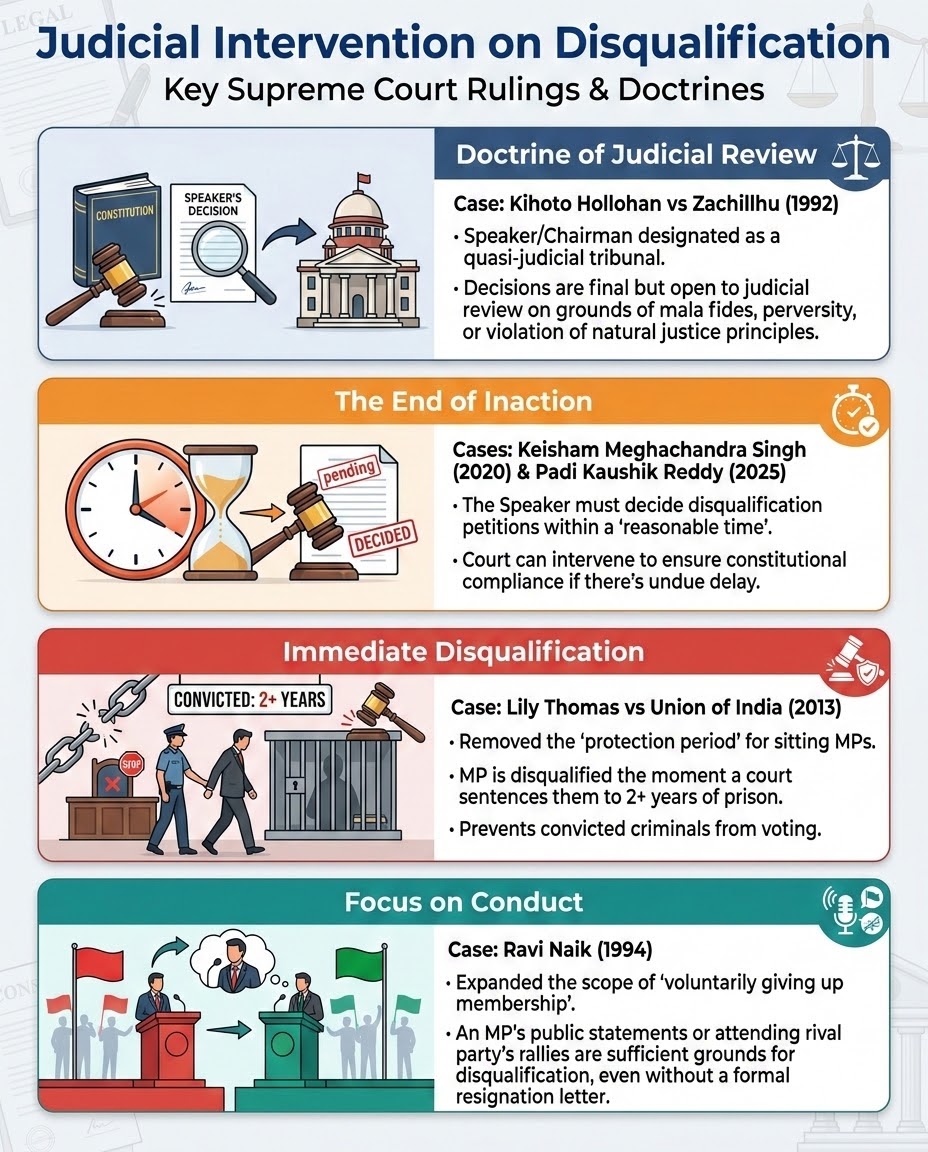
The "Pocket Veto" (Indefinite Delay): The Constitution does not specify a time limit for the Speaker to decide on disqualification petitions.
The "Merger" Loophole (2/3rd Rule): The law allows a "merger" if two-thirds of MPs defect. This legalizes "wholesale defection" while punishing "retail defection" (individual MPs). This is the core issue in the AAP-BJP case (2026).
Silencing Dissent: The fear of disqualification compels MPs to vote blindly according to the party whip, even if it goes against the interests of their own constituency or conscience.
 How Does Disqualification Impact Indian Democracy?
Undermining the Voter's Mandate: When an MP defects but is not disqualified (due to delays or loopholes), they continue to hold a seat won on a different party's manifesto. This is a "fraud on the electorate".
Stability vs Accountability: While the law has provided some stability by preventing frequent government collapses (unlike the 1960s), it has reduced Parliament to a rubber stamp where MPs cannot hold the Executive accountable due to strict party discipline.
Judicial Overreach vs Legislative Privilege: Increasing intervention of Courts to force Speakers to act (as seen in 2025) creates friction between the Judiciary and the Legislature, challenging the separation of powers.
Independent Tribunal: The Law Commission (170th Report) and Venkatachaliah Commission advised transferring disqualification power from the Speaker to the President/Governor based on binding Election Commission advice.
Limiting the "Whip": The Dinesh Goswami Committee proposed restricting disqualification for defying whips only to votes affecting government stability.
Abolishing Merger Exception: NITI Aayog suggests removing the 2/3rd merger clause to end mass defections, requiring defecting MPs to always seek a new mandate.
Defined Timeline: As per Supreme Court recommendations, a constitutional amendment should enforce a 3-month deadline for Speaker decisions.
To maintain Parliamentary balance, India should replace Speaker-led disqualification with an Independent Tribunal. This would eliminate partisan bias, protect legislative stability, and prevent the Tenth Schedule from being used to reward bulk defections or stifle internal democracy.
Source: INDIANEXPRESS
|
PRACTICE QUESTION Q. Discuss how the Anti-Defection Law impacts the internal democracy of political parties and the freedom of speech of individual legislators. 150 words |
The disqualification of MPs is primarily governed by Article 102(1) (for holding an office of profit, unsound mind, etc.) and Article 102(2) along with the Tenth Schedule (for defection). Additionally, the Representation of the People Act (RPA), 1951, provides statutory grounds for disqualification related to criminal convictions and electoral malpractices.
For disqualifications under Article 102(1) and the RPA, 1951, the President of India makes the final decision, but is bound by the advice of the Election Commission of India. However, for disqualifications under the Tenth Schedule (Anti-Defection Law), the Speaker of the Lok Sabha or the Chairman of the Rajya Sabha acts as the sole adjudicating authority.
Paragraph 4 of the Tenth Schedule exempts lawmakers from disqualification if their original political party merges with another party. However, this exemption is only valid if at least two-thirds of the members of the legislative party agree to the merger. This clause is criticized for being exploited to engineer mass defections.



© 2026 iasgyan. All right reserved