The Constitution (One Hundred and Thirty-First Amendment) Bill, 2026, along with the Union Territories Laws (Amendment) Bill, 2026, and the Delimitation Bill, 2026, were tabled in the Lok Sabha. These bills aim to adjust the scale of representation in Parliament and state assemblies while simultaneously introducing a mechanism for the removal of high-ranking officials if detained on serious criminal charges.
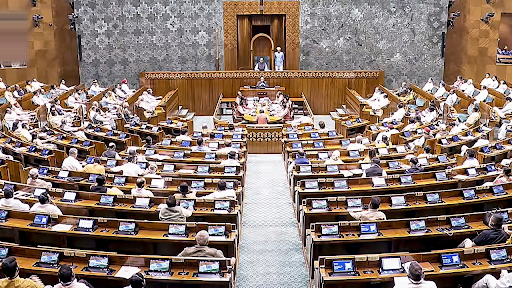
The Constitution (One Hundred and Thirty-First Amendment) Bill, 2026, along with the Union Territories Laws (Amendment) Bill, 2026, and the Delimitation Bill, 2026, were tabled in the Lok Sabha. These bills aim to adjust the scale of representation in Parliament and state assemblies while simultaneously introducing a mechanism for the removal of high-ranking officials if detained on serious criminal charges.
|
Article |
Subject Matter |
Proposed Change/Impact |
|
Article 85 |
Manner of election of President. |
Aims to maintain uniformity in the scale of representation of different states. |
|
Articles 81 & 82 |
Composition of the Lok Sabha & readjustment after the census. |
Relates to the delimitation of constituencies and the number of seats assigned to states and UTs. |
|
Article 170 |
Composition of Legislative Assemblies. |
Adjusts the seat allocation for State Assemblies in line with new delimitation data. |
|
Articles 75 & 164 |
Appointment and removal of ministers. |
Introduces a legal framework for the automatic removal of a PM or CM if detained for 30 consecutive days. |
|
Articles 330, 332, 334 |
Reservation of seats for SCs and STs. |
Extends and adjusts the special representation provisions within the newly delimited constituencies. |
The introduction of these three bills marks a watershed moment in Indian parliamentary history. While the expansion of the Lok Sabha to 850 members addresses the long-overdue need for better citizen representation, the method and timing of delimitation remain highly sensitive.
Source: Indian Express
|
PRACTICE QUESTION Q. Who among the following does NOT participate in the election of the President of India? a) Elected members of Rajya Sabha b) Elected members of Legislative Assemblies of States c) Nominated members of either House of Parliament d) Elected members of Legislative Assemblies of Delhi and Puducherry Answer: B Explanation: The President of India is elected by an electoral college as prescribed under Article 54 of the Constitution, which consists of the elected members of both Houses of Parliament and the elected members of the Legislative Assemblies of all States, including the Union Territories of Delhi and Puducherry. Nominated members of the Rajya Sabha and Lok Sabha, as well as nominated members of State Legislative Assemblies, are excluded from the voting process to maintain the impartiality of the head of state toward those who were appointed rather than elected. Similarly, members of the State Legislative Councils (Vidhan Parishad), where they exist, do not participate in the presidential election regardless of whether they are elected or nominated. |





© 2026 iasgyan. All right reserved