Recent amendments to the Van (Sanrakshan Evam Samvardhan) Adhiniyam, 1980 permit private leasing of forest land for commercial plantations without NPV fees to expand forest cover and cut wood imports. Critics warn monoculture plantations may create green deserts, harm open ecosystems, and undermine forest rights protections.
Copyright infringement not intended
Picture Courtesy: DOWNTOEARTH
Context
The Union Government amended the Van (Sanrakshan Evam Samvardhan) Adhiniyam 1980 to boost private sector participation in forestry by allowing companies to lease forest land for commercial plantations.
|
Read all about: Van (Sanrakshan Evam Samvardhan) Adhiniyam |
Amendments to the Forest (Conservation & Augmentation) Act 1980
Recent amendments in forest legislation have changed the regulation of commercial plantations by reclassifying certain activities and establishing specific exemptions.
|
Provision |
Previous Status |
New Status (Post-Amendment) |
|
Environmental Levies |
Diverting forest land for any non-forest activity (like commercial plantations) required payment of Net Present Value (NPV) and charges for Compensatory Afforestation (CA). |
Private entities leasing forest land for plantations are exempted from paying NPV and CA charges. |
|
Activity Classification |
Commercial plantations were considered a "non-forest activity", requiring strict clearance from the central government. |
Plantations by any organisation, including private companies, are now classified as a "forestry activity", simplifying the clearance process. |
Decision is driven by economic compulsions and climate commitments
Addressing Industrial Needs: The paper and pulp industry faces raw material shortage. India imports nearly ₹45,000 - ₹50,000 crore worth of wood and wood products annually. (Source: Ministry of Commerce & Industry Data)
Boosting Economic Growth: By ensuring a domestic supply of raw materials, the policy aims to revive struggling paper mills and support the 'Make in India' initiative.
Meeting Climate Targets: Government frames this as a measure to achieve India's climate goals, including:
Major Concerns and Criticisms
Experts warn that this policy could cause irreversible ecological and social damage.
Ecological Hazards
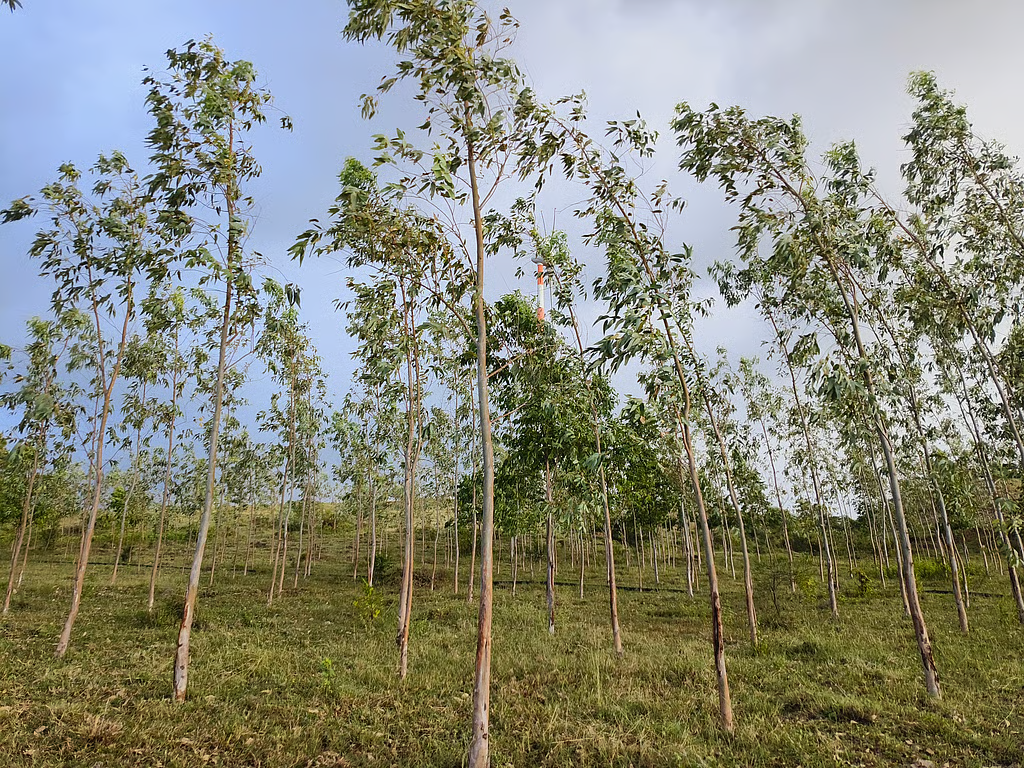
The Threat of Monoculture: Commercial forestry prioritises fast-growing, profitable species like Eucalyptus and Acacia. These create 'green deserts' that lack biodiversity.
Destruction of Open Natural Ecosystems (ONEs): Misclassifying ecologically vital grasslands and savannahs as "degraded forests" risks disrupting unique habitats, like those for the Great Indian Bustard, and negatively impacts pastoral communities.
Violation of Forest Dwellers' Rights
Conflict with the Forest Rights Act (FRA), 2006
The policy directly clashes with the Forest Rights Act (FRA), which empowers local communities.
Denial of Access
Minor Forest Produce (MFP) is crucial for the livelihoods of tribal and forest-dwelling communities, but private plantations often prevent access to items like tendu leaves and honey by fencing off land.
Bypassing Gram Sabha Consent
The amendments, by allowing forest land transfer to private entities without mandatory Gram Sabha consent, violate the spirit of the Supreme Court's Niyamgiri Judgment (2013), which affirmed the village council's authority over forest land diversion.
Way Forward
Privatizing forest land to increase forest cover and reduce import dependency is a risky approach that needs a more balanced strategy for economic and ecological security.
Promote Agro-Forestry: Incentivize industries to partner with farmers to grow trees on private farmlands and wastelands, as outlined in the National Agroforestry Policy, 2014.
Enforce the Forest Rights Act: Ensure that any forestry project obtains the free, prior, and informed consent of the local Gram Sabha and guarantees benefit-sharing with communities.
Adopt Scientific Restoration: Use CAMPA funds for ecological restoration based on science, using diverse native species, and respecting the unique ecology of grasslands and other non-forest ecosystems.
Embrace a Circular Economy: Reduce pressure on forests by promoting the use of agricultural residues and recycled materials for paper production.
Learn Lessons From Global Best Practices
Costa Rica’s "Landscape Approach": Costa Rica doubled its forest cover by implementing a Payments for Ecosystem Services (PES) program, where it paid local communities to conserve forests, successfully integrating livelihoods with conservation.
Focus on Degraded Farmland: Brazil and Canada boosted their pulp industries by promoting plantations on degraded agricultural land, not by diverting natural forests, using certification systems like the Forest Stewardship Council (FSC).
Conclusion
The government must recognize that forests are complex ecosystems, not just sources of timber. The focus should shift from short-term "Timber Security" to long-term "Ecological Security."
Source: DOWNTOEARTH
|
PRACTICE QUESTION Q. The privatization of forest restoration via commercial plantations risks creating 'Green Deserts' rather than sustainable ecosystems." Discuss. 150 words |
The amendments allow private entities to lease forest land for commercial plantations and restoration without paying the mandatory Net Present Value (NPV) and Compensatory Afforestation charges, aiming to boost private sector participation.
NPV represents the estimated monetary value of the ecosystem services (like carbon sequestration, water recharge, and biodiversity) that are lost when a piece of forest land is diverted for non-forest use.
ONEs refer to natural biomes like savannahs, grasslands, and scrublands. While they may not have dense tree cover, they are ecologically vital, supporting unique wildlife and pastoral communities, but are often mistakenly classified as "wastelands."



© 2026 iasgyan. All right reserved