The global trade system is undergoing a significant transformation from a multilateral, rules-based framework under the World Trade Organization to a more complex structure dominated by bilateral, regional, and strategic trade agreements. The rise of Free Trade Agreements (FTAs) and new reciprocal arrangements reflects growing geoeconomic competition, supply chain realignment, and the expansion of trade into areas such as digital commerce, data flows, and regulatory standards. While these developments offer opportunities for market access and economic integration, they also risk fragmenting global trade rules and weakening multilateralism. For India, the evolving landscape presents both opportunities to integrate into global value chains and challenges related to policy autonomy, domestic industry protection, and digital sovereignty, requiring a balanced and strategic trade approach.
Copyright infringement not intended
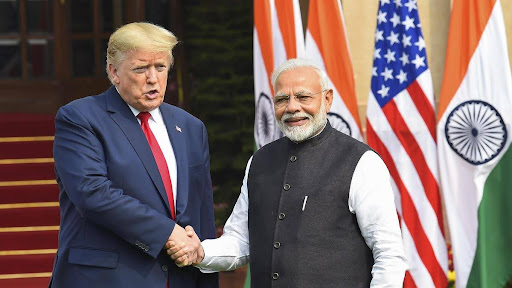
Picture Courtesy: The Hindu
Context:
The recent trade initiatives by the United States under President Donald Trump indicate a shift in the global trade architecture, creating a new category called Agreements on Reciprocal Trade (ARTs). These agreements differ significantly from traditional Free Trade Agreements (FTAs) and raise concerns about their compatibility with the World Trade Organization (WTO) framework.
|
Must Read: INDIA NEGOTIATING TRADE AGREEMENTS ON ITS OWN TERMS | INDIA – EU FTA | FREE TRADE AGREEMENT | |
Evolution of international trade agreements in a multipolar world:
Multilateral foundation of the global trading system: Global trade governance is primarily built on a rules-based multilateral framework under the World Trade Organization, which evolved from the General Agreement on Tariffs and Trade (GATT). This system is based on the principles of non-discrimination, transparency, and predictability, particularly through the Most-Favoured-Nation (MFN) rule and national treatment obligations. The WTO expanded the scope of global trade governance beyond goods to include services and intellectual property, while also providing a dispute settlement mechanism to resolve trade conflicts. Despite its importance, the multilateral system faces challenges such as slow negotiations, rising protectionism, and the weakening of its dispute resolution mechanism.
Growth of preferential trade agreements: In response to the limitations of multilateral negotiations, countries have increasingly turned to Preferential Trade Agreements (PTAs), including Free Trade Agreements (FTAs) and Customs Unions, which are permitted under GATT Article XXIV. These agreements aim to eliminate or reduce tariffs on substantially all trade among members and often include WTO-plus provisions covering areas such as investment protection, digital trade, labour standards, environmental safeguards, and regulatory cooperation. Large regional agreements such as the Regional Comprehensive Economic Partnership (RCEP) reflect the growing importance of regional economic integration. However, the proliferation of such agreements has contributed to the fragmentation of global trade rules and concerns about unequal obligations for developing countries.
Emergence of power-based bilateral trade arrangements: Recent developments indicate a shift toward strategic and reciprocal bilateral trade arrangements that prioritise national economic and geopolitical interests over multilateral norms. These agreements often emphasise market reciprocity, involve asymmetric concessions, and may include provisions related to data flows, digital trade, technology governance, and national security cooperation. In some cases, such arrangements operate outside the WTO framework, raising concerns about their legal consistency and their potential to weaken the global rules-based trading order.
Emerging patterns in global trade governance:
Shift from multilateralism to plurilateralism and bilateralism: The global trading system is witnessing a gradual movement away from a purely multilateral framework under the World Trade Organization toward plurilateral, regional, and bilateral trade arrangements. Due to slow progress in multilateral negotiations and institutional challenges within the WTO, countries increasingly prefer smaller group agreements that allow faster and more flexible rule-making.
Rise of strategic trade policies: Trade agreements are no longer driven solely by economic efficiency but are increasingly shaped by geopolitical and strategic considerations. Countries are using trade tools to secure supply chains, critical minerals, technology access, and economic security, reflecting the growing importance of geoeconomics in international relations.
Emergence of WTO-Plus and WTO-Extra provisions: Modern trade agreements increasingly include WTO-plus provisions (deeper commitments in existing areas) and WTO-extra provisions (new areas not covered by the WTO). These include rules on:
Fragmentation of the global trade architecture: The proliferation of overlapping trade agreements has created a complex regulatory landscape often described as a “spaghetti bowl” of rules. Different rules of origin, standards, and compliance requirements increase transaction costs and complicate participation, particularly for developing countries and small exporters.
Growing emphasis on reciprocity and power asymmetry: Recent trends indicate a shift toward reciprocity-based and power-driven agreements, where stronger economies negotiate asymmetric concessions from weaker partners. Some new trade arrangements operate outside established WTO disciplines, raising concerns about transparency, legality, and the weakening of the rules-based order.
Expansion of data governance issues: As the digital economy grows, trade governance is increasingly focused on data localisation, digital taxation, e-commerce, and platform regulation. Differences between countries on data sovereignty versus free data flows are emerging as a major area of negotiation and contestation.
Resilience, sustainability, and supply chain security: Post-pandemic disruptions and geopolitical tensions have led countries to prioritise resilient and diversified supply chains. Trade agreements increasingly incorporate provisions related to sustainability, climate commitments, and trusted trade partnerships.
Implications for India:
Conclusion:
India must navigate the evolving trade landscape with a calibrated and strategic approach that balances deeper global integration with the protection of domestic industry, policy autonomy, and digital sovereignty. By strengthening competitiveness at home while supporting a fair and rules-based global trading system under the World Trade Organization, India can maximise opportunities and minimise risks in the changing trade order.
Source: The Hindu
|
Practice Question Q. The nature of global trade agreements is undergoing a significant transformation from multilateralism to strategic and reciprocal arrangements. In this context, examine the emerging trends in global trade governance and discuss their implications for India in the light of the evolving role of the World Trade Organization. (250 words) |
Global trade governance refers to the system of rules, institutions, and agreements that regulate international trade, primarily led by the World Trade Organization, along with regional and bilateral trade arrangements.
Multilateral agreements involve many countries under common rules (e.g., WTO framework), while bilateral agreements are negotiated between two countries to provide preferential market access and address specific trade issues.
WTO-plus provisions deepen commitments in existing WTO areas such as tariffs and services, while WTO-extra provisions cover new areas like digital trade, investment protection, labour, and environmental standards.


© 2026 iasgyan. All right reserved