India leads in ABS compliance with 2.7 lakh committees, yet grassroots implementation lags. To empower indigenous communities, India must move beyond bureaucratic "box-ticking" by enforcing sector-wide benefit-sharing and ensuring that mobilized funds directly reach and benefit local biodiversity conservators.
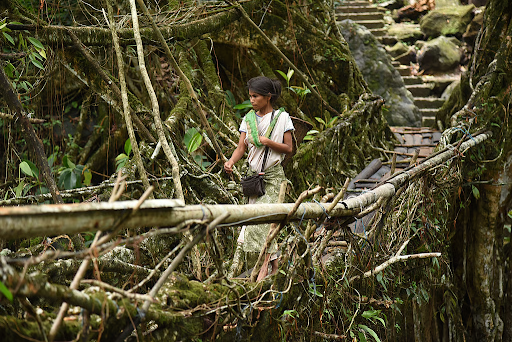
Copyright infringement not intended
Picture Courtesy: downtoearth
Context
India submitted its first national report to the Convention on Biological Diversity (CBD) on the implementation of the Nagoya Protocol.
What is Nagoya Protocol?
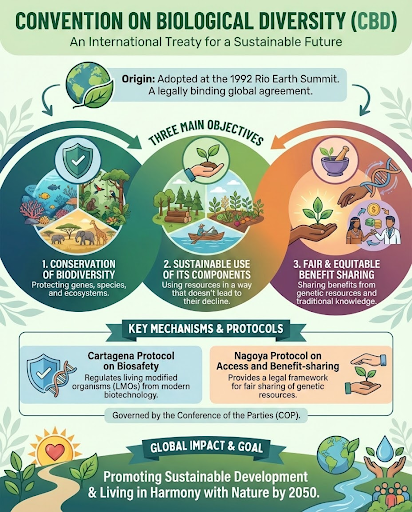
The Nagoya Protocol is a 2010 supplementary agreement to the Convention on Biological Diversity (CBD) that focuses on the fair and equitable sharing of benefits arising from the use of genetic resources.
Core Objective
The protocol creates a legal framework for the "third objective" of the CBD: ensuring that when a country’s genetic resources (plants, animals, microbes) or traditional knowledge are used for research or commercial profit, the benefits are shared with the provider country or community.
Key Mechanisms
Prior Informed Consent (PIC)
Users (like pharmaceutical companies) must get permission from the provider country before accessing biological resources.
Mutually Agreed Terms (MAT)
Both parties must sign a contract detailing how the benefits—whether monetary (royalties) or non-monetary (technology transfer)—will be shared.
Traditional Knowledge
It specifically protects the rights of Indigenous and Local Communities (ILCs) whose traditional knowledge is associated with genetic resources.
Significance of the Nagoya Protocol for India
Prevents Biopiracy
The protocol establishes a legal framework to prevent the commercial exploitation of India's rich biodiversity and associated traditional knowledge without fair compensation to its original custodians.
Protects Traditional Knowledge
As a mega-diverse nation, India has a vast repository of traditional knowledge. The protocol compels companies and researchers to share monetary or non-monetary benefits with the communities that conserve these bio-resources
Ensures Global Accountability
The mandatory national reporting creates a transparency mechanism, holding nations accountable for ensuring their industries compensate indigenous and local communities for the use of their resources and knowledge.
India's Access and Benefit Sharing (ABS) Framework
India's ABS mechanism is governed by the Biological Diversity Act (BDA), 2002, supported by the Biological Diversity Rules, 2024, and ABS Regulations, 2025. It operates through a decentralized, three-tier institutional structure.
|
Tier |
Body |
Key Functions & Responsibilities |
|
National Level |
National Biodiversity Authority (NBA) |
Regulates access to bio-resources for foreign entities, multinational companies, and international research collaborations. Grants approvals and issues compliance certificates. |
|
State Level |
State Biodiversity Boards (SBBs) / UT Biodiversity Councils (UTBCs) |
Regulate access for domestic Indian companies for commercial use of bio-resources. |
|
Local Level |
Biodiversity Management Committees (BMCs) |
Constituted at the village level. Responsible for creating the Peoples’ Biodiversity Register (PBR) and facilitating benefit-sharing agreements on the ground. |
Key Achievements Highlighted in the 2026 Report
Institutional Expansion: India established over 276,653 BMCs by the end of 2025, creating a widespread grassroots network for biodiversity governance.
Robust Regulatory Approvals: A total of 12,830 ABS approvals were issued between 2017-2025. This includes 5,913 by the NBA (for foreign entities) and 6,917 by SBBs (for domestic entities).
Global Leadership in Compliance: India published 3,556 Internationally Recognised Certificates of Compliance (IRCC), accounting for over 60% of all IRCCs issued globally.
Financial Mobilization: The NBA mobilized Rs 216.31 crore and disbursed Rs 139.69 crore to beneficiaries. SBBs generated an additional Rs 51.96 crore from domestic companies.
Conclusion
While India leads in Access and Benefit Sharing (ABS) frameworks, it must bridge implementation gaps to ensure traditional custodians become direct economic stakeholders for true conservation and socio-economic empowerment
Source: downtoearth
|
PRACTICE QUESTION Q. What is the primary objective of the Nagoya Protocol? A) Reducing global carbon emissions to combat climate change. B) The fair and equitable sharing of benefits arising from the utilization of genetic resources. C) Prohibiting the trade of endangered species across international borders. D) Establishing a global network of marine protected areas. Answer: B Explanation: The Nagoya Protocol is a supplementary agreement to the Convention on Biological Diversity (CBD) specifically designed to implement its third objective: ensuring that the benefits of using genetic resources (like plants or microbes) are shared fairly with the countries or communities that provide them. |
Adopted in 2010 under the Convention on Biological Diversity (CBD), the Nagoya Protocol is an international agreement aimed at preventing biopiracy. It provides a transparent legal framework for the effective implementation of fair and equitable sharing of benefits arising from the utilization of genetic resources and traditional knowledge.
India regulates its biological wealth through the Biological Diversity Act, 2002. This act functions through a decentralized, three-tier institutional structure: the National Biodiversity Authority (NBA) at the central level, State Biodiversity Boards (SBBs) at the state level, and Biodiversity Management Committees (BMCs) at the local village level.
BMCs are local-level statutory bodies that oversee biodiversity conservation and facilitate benefit-sharing agreements. They are responsible for creating and maintaining PBRs, which are comprehensive documents recording detailed information on local biological resources and associated traditional knowledge.



© 2026 iasgyan. All right reserved