The SACHET Cell Broadcast System, developed by C-DOT and NDMA, is India's indigenous disaster alert technology. Operating on cellular networks without internet, it provides instant, geo-targeted warnings to millions, shifting India towards a proactive, tech-driven disaster management framework.
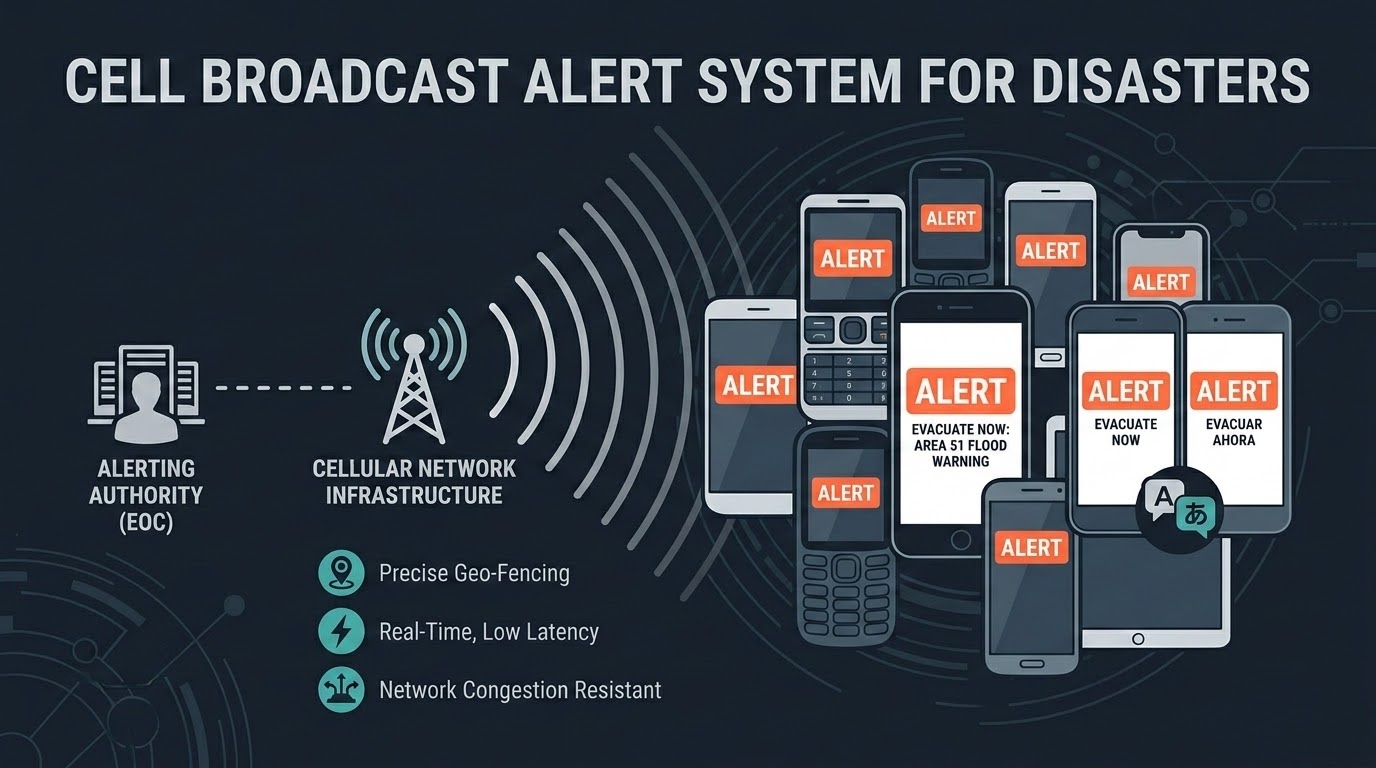
The Union Government launched the Cell Broadcast System (CBS) to deliver emergency alerts directly to mobile phones during disasters.
What is it? It is a mobile communication technology designed to send emergency messages simultaneously to all mobile devices within a defined geographical area.
Developers: It was developed by the Centre for Development of Telematics (C-DOT) under the Department of Telecommunications (DoT), in collaboration with the National Disaster Management Authority (NDMA) and the Ministry of Home Affairs (MHA).
SACHET Platform: CBS is integrated with the Alert System known as SACHET (National Disaster Alert Platform), which disseminates real-time disaster and emergency warnings.
Objective: To shift disaster management framework from a reactive (relief-centric) approach to a proactive (technology-driven preparedness) model.
How Cell Broadcast Technology Works?
Mechanism: CBS sends alerts from a central platform to designated cell towers (Base Transceiver Stations). These towers broadcast the message to every mobile handset within their signal radius.
No Internet Required: It operates via cellular network towers and works effectively without mobile data or internet connectivity.
Global Standard: The system is based on the Common Alerting Protocol (CAP) recommended by the International Telecommunication Union (ITU).
Key Features of the System
Precise Geo-Targeting: Alerts can be hyper-localized to specific vulnerable districts, neighborhoods, or expanded nationwide without causing unnecessary panic in safe zones.
Unmissable Alerts: CBS messages override silent or "Do Not Disturb" (DND) modes on smartphones. They appear as screen pop-ups with a loud siren tone and vibration.
Inclusivity & Accessibility: It supports over 19 regional Indian languages and includes a "read-aloud" capability on supported handsets for visually impaired citizens.
Privacy-Friendly: The system is network-independent; does not require personal data, phone numbers, or user registration to send the alerts.
Significance
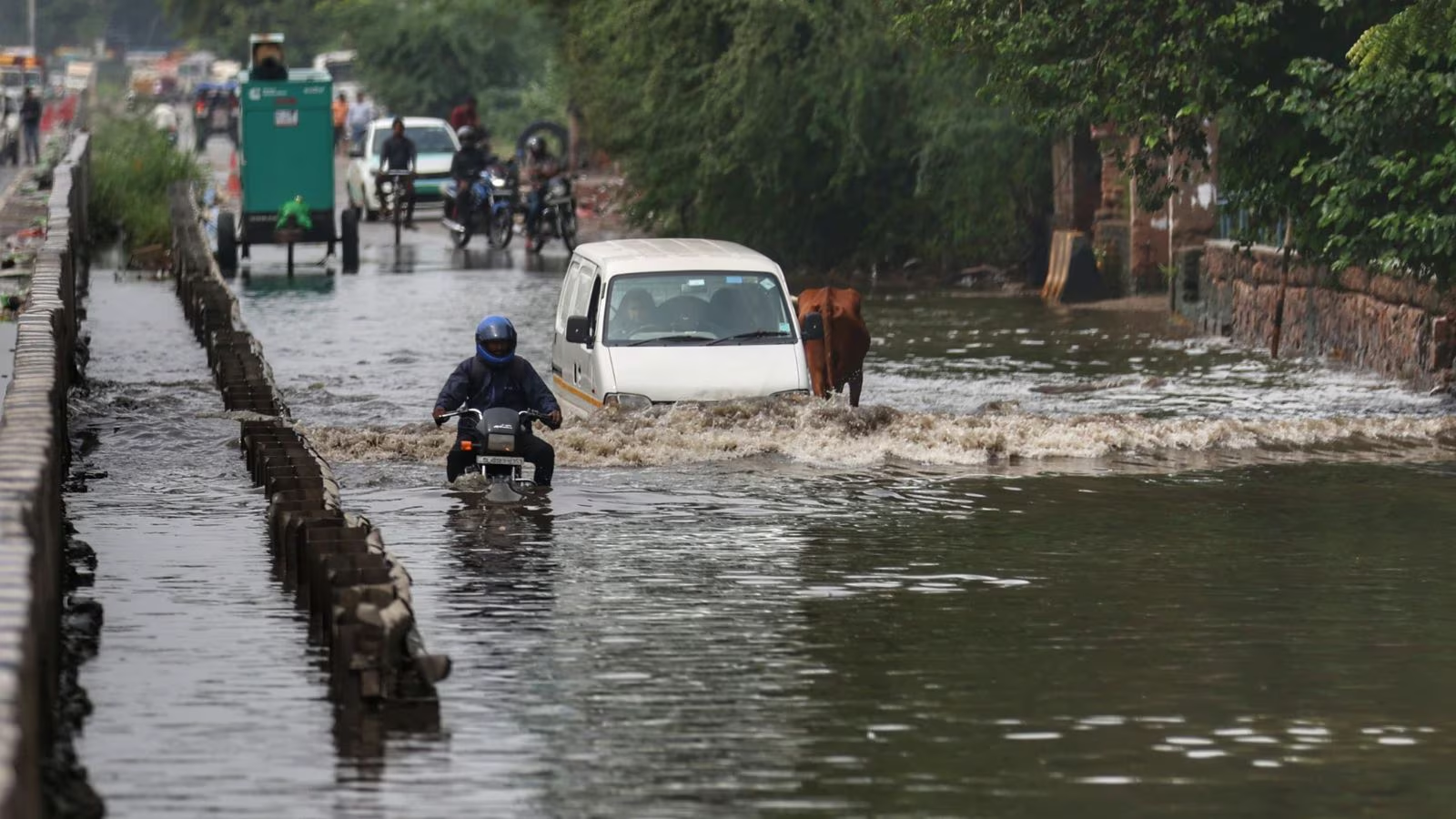
Saving Lives: Provides time for evacuations and protective actions during sudden-onset disasters like flash floods, tsunamis, earthquakes, and chemical leaks.
Global Best Practices: India joins over 30 countries utilizing this technology, aligning systems with the USA’s "Wireless Emergency Alerts" and Japan's "J-Alert" system.
International Frameworks: The system supports the UN’s "Early Warnings for All" initiative and aligns with the Sendai Framework principle of creating "people-centered early warning systems".
Source: THE HINDU
|
PRACTICE QUESTION Q. The "SACHET" platform, often seen in the news, is primarily associated with which of the following? (a) A national portal to track space debris. (b) An integrated disaster alert system for real-time emergency warnings. (c) A digital payment gateway for rural areas. (d) An online education portal for pandemic-hit regions. Answer: (b) Explanation: The SACHET platform is an integrated disaster early warning system developed by the National Disaster Management Authority (NDMA) in collaboration with the Centre for Development of Telematics (C-DOT). |
SACHET is India's National Disaster Alert Platform that integrates with Cell Broadcast technology to deliver real-time, geo-targeted emergency warnings to mobile phones without relying on individual internet connections.
CBS is a one-to-many service that delivers alerts instantly to all active devices in a specific area, successfully bypassing network congestion, whereas SMS is a one-to-one service that can be delayed by heavy network traffic.
CAP is a standardized digital format for exchanging public emergency warnings, recommended by the International Telecommunication Union (ITU), which acts as the foundational standard for the SACHET system.

© 2026 iasgyan. All right reserved