Avian Influenza (H5N1) is a highly contagious viral disease affecting birds, with occasional zoonotic transmission to humans. Known for high mortality, it threatens global health and poultry industries, requiring strict biosecurity, rapid culling, and vigilant WHO-coordinated surveillance to prevent pandemics.
Copyright infringement not intended
Picture Courtesy: THEHINDU
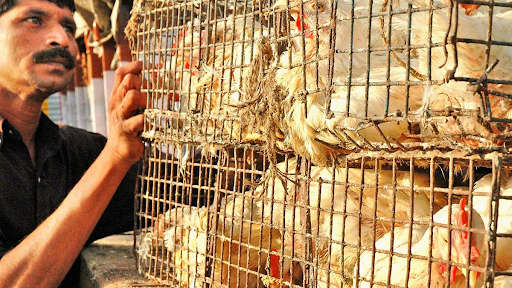
India is witnessing a resurgence of Bird Flu with confirmed outbreaks in Chhattisgarh (Bilaspur), Kerala (Alappuzha), Tamil Nadu (Chennai), and Maharashtra (Nagpur).
Avian Influenza, commonly known as Bird Flu, is a viral infection caused by Influenza Type A viruses that naturally occur in wild aquatic birds (ducks, geese) but can infect domestic poultry and other animals.
Origin: First detected in China (1996), it has since evolved into multiple clades (currently Clade 2.3.4.4b is dominant globally).
India’s History: India reported its first major outbreak in 2006 (Navapur, Maharashtra). Since then, the country has seen recurring seasonal outbreaks.
Strains: Influenza Type A viruses are classified based on two proteins on their surface: Hemagglutinin (H) and Neuraminidase (N).
The "Mammalian Spillover" Phenomenon
H5N1 is no longer just a "bird" flu; it is increasingly becoming a "multi-species" threat.
Transmission
Symptoms & Severity
The clinical presentation of H5N1 in humans is more severe than seasonal flu.
Treatment
Source: THEHINDU
|
PRACTICE QUESTION Q. "The recurring outbreaks of Avian Influenza in India expose the vulnerabilities of the livestock sector to zoonotic diseases. Discuss. 150 words |
The 'One Health' approach is a collaborative, multisectoral framework that recognizes the deep interconnection between human health, animal health, and environmental ecosystems. It emphasizes that solving public health threats like pandemics requires addressing all three domains simultaneously.
The H5N1 virus has a historically high case fatality rate (around 50-52%) in humans. Recent outbreaks (2024-2026) show the virus rapidly crossing the species barrier to infect mammals. If it mutates to transmit efficiently from human to human, it could trigger a catastrophic global pandemic.
DIVA stands for "Differentiating Infected from Vaccinated Animals." It is an advanced vaccine technology that protects poultry from the virus while allowing diagnostic tests to distinguish between a vaccinated bird and an actively infected one. This allows for disease surveillance and international trade to continue safely.



© 2026 iasgyan. All right reserved