Indian secularism in education seeks to promote equal respect for all religions while ensuring scientific temper and constitutional values. However, communal polarization, curriculum biases, and politicization challenge this vision. Strengthening constitutional literacy, inclusive curricula, teacher training, and institutional autonomy offers a sustainable way forward.
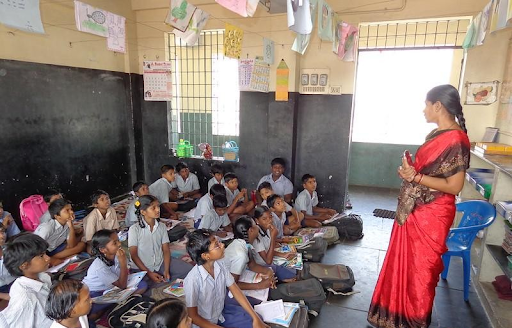
Copyright infringement not intended
Picture Courtesy: newsclick
Recent incidents highlight a concerning trend of communal tensions affecting institutions of higher learning, raising questions about academic freedom and the secular fabric of educational spaces.
|
Read all about: SECULARISM IN INDIA l FUTURE OF INDIAN SECULARISM |
King George’s Medical University (KGMU), Lucknow
Allegations of forced religious conversion against a junior doctor sparked protests and claims of a larger "conversion racket" on campus, drawing external political scrutiny to an internal university issue.
Shri Mata Vaishno Devi Institute of Medical Excellence (SMVDIME), Jammu
Cancellation of the first MBBS batch, following communal protests against the high admission of Muslim students (44/50) on NEET qualified merit, raised concerns about the influence of those protests on the institutional decision.
Secularism in India is a foundational pillar of the Constitution, essential for maintaining national unity in a diverse country.
Unlike the Western model, which implies a strict separation of church and state, Indian secularism follows a model of ‘principled distance’ or ‘Sarva Dharma Sambhava’ (equal respect for all religions).
In India, the state maintains a principled distance from all religions and can intervene, if necessary, to ensure harmony and equality.
In education, this principle is crucial for nurturing citizens who are rational, tolerant, and committed to constitutional values.
The Indian Constitution establishes a strong secular framework for education, ensuring state-funded institutions remain neutral and do not endorse any single religion.
Preamble (42nd Amendment, 1976)
The word ‘SECULAR’ establishes the core identity of the Indian state. It mandates that all state actions, including education policy, must be non-religious and impartial.
Article 25 (Freedom of Religion)
Guarantees individual freedom of conscience and religion, this means students can follow their faith, subject to public order, morality, and health.
Article 27 (Freedom from taxation for promotion of a religion)
Prohibits the use of public funds (taxes) for the promotion of any particular religion. This directly prevents state-run schools from spending money on religious indoctrination.
Article 28 (Freedom from attending religious instruction)
Article 29 (Protection of interests of minorities)
Citizens with a distinct language, script, or culture have the right to conserve it. State-maintained or state-aided educational institutions cannot deny admission based solely on religion, race, caste, or language.
Article 30 (Right of minorities to establish and administer educational institutions)
All minorities (religious or linguistic) have the right to establish and administer educational institutions of their choice, to protect their cultural and educational autonomy.
Article 51A (Fundamental Duties)
Every citizen must promote harmony and common brotherhood, and cultivate a scientific temper, humanism, and the spirit of inquiry and reform, as these are the core principles of secular education.
Rising Societal Polarisation
Increasing communal tensions in society often spill into classrooms and campuses, creating an environment of mistrust and intolerance among students from different communities.
Politicisation of Curriculum
Frequent attempts to revise curricula, especially in history, to align with political ideologies can distort facts, promote a majoritarian narrative, and undermine critical thinking and inclusivity.
Debates on Religious Symbols
The Karnataka Hijab case (2022) illustrates the tension between individual religious freedom and the requirement for uniformity in secular educational settings.
Digital Radicalisation
The unchecked spread of misinformation and hate speech on social media threatens secular ethos by radicalizing youth toward extremist ideologies.
Erosion of Institutional Autonomy
External political or social pressure often compromises the autonomy, academic freedom, and secular principles of educational institutions.
Inadequate Teacher Training
Lack of structured training for educators on religious and cultural diversity leads to unconscious biases in the classroom.
Curriculum Reform Focused on Constitutional Values
The curriculum must be designed to actively promote critical thinking, scientific temper, and an understanding of composite culture, focusing on the constitutional values of equality, justice, and fraternity.
Empowering Teachers
Invest in comprehensive and continuous training for teachers to equip them with the skills to promote an inclusive and secular classroom environment.
Promoting Digital Literacy
Integrate digital and media literacy into the curriculum to teach students how to critically evaluate online information, identify fake news, and resist online radicalisation.
Strengthening Institutional Autonomy
Government and judiciary must protect educational institutions from undue political and mob pressure, ensuring they remain safe spaces for free inquiry and learning.
Encouraging Inter-Community Dialogue
Schools and colleges should organize programs promoting interfaith dialogue and interaction to break down stereotypes and build mutual respect among students.
Secularism in education is vital for pluralistic democracy, requiring a collective commitment from all stakeholders to instill values of tolerance, empathy, and national unity in classrooms.
Source: INDIANEXPRESS
|
PRACTICE QUESTION Q. How does the "Scientific Temper" serve as a fundamental duty in countering communal disharmony in academic spaces? (150 words) |
The Indian Constitution promotes a model of Sarva Dharma Samabhava (equal respect for all religions). Key provisions like Article 28(1) prohibit religious instruction in state-funded institutions, while Articles 29 and 30 protect the rights of minorities to establish their own educational institutions, ensuring a balance between state neutrality and religious freedom.
The primary challenges include the communalisation of curriculum through politically motivated textbook revisions, conflicts over religious attire in schools (like the hijab controversy), the increasing politicisation of universities, and inadequate teacher training on secular pedagogy.
The principle of reasonable accommodation, as suggested by Justice Dhulia in the hijab case, means that educational institutions should try to accommodate students' cultural and religious practices as long as these practices do not disrupt the educational environment or violate the fundamental principles of equality and discipline.





© 2026 iasgyan. All right reserved