The Sarhul festival, celebrated by tribal communities like the Oraon and Munda, symbolizes the profound intersection of indigenous cultural identity and environmental conservation. Through rituals like worshipping the Sal tree and preserving 'Sarna' sacred groves, tribals inherently promote biodiversity.
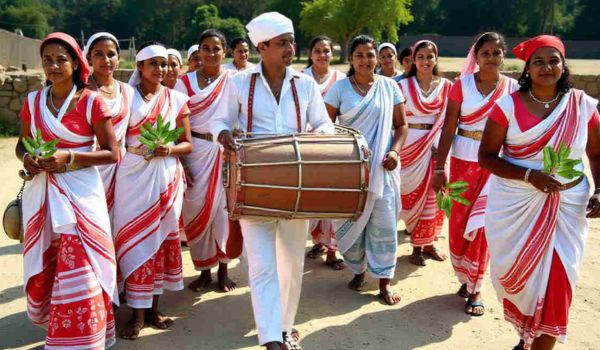
Copyright infringement not intended
Picture Courtesy: NEWSONAIR
Why In News?
The President and Vice-President extended greetings for the Sarhul festival, celebrating the tribal festival of nature worship and the arrival of spring.
What is the Sarhul Festival?
Sarhul is one of the most prominent and colorful festivals celebrated by the tribal communities of the Chota Nagpur plateau region, primarily in Jharkhand.
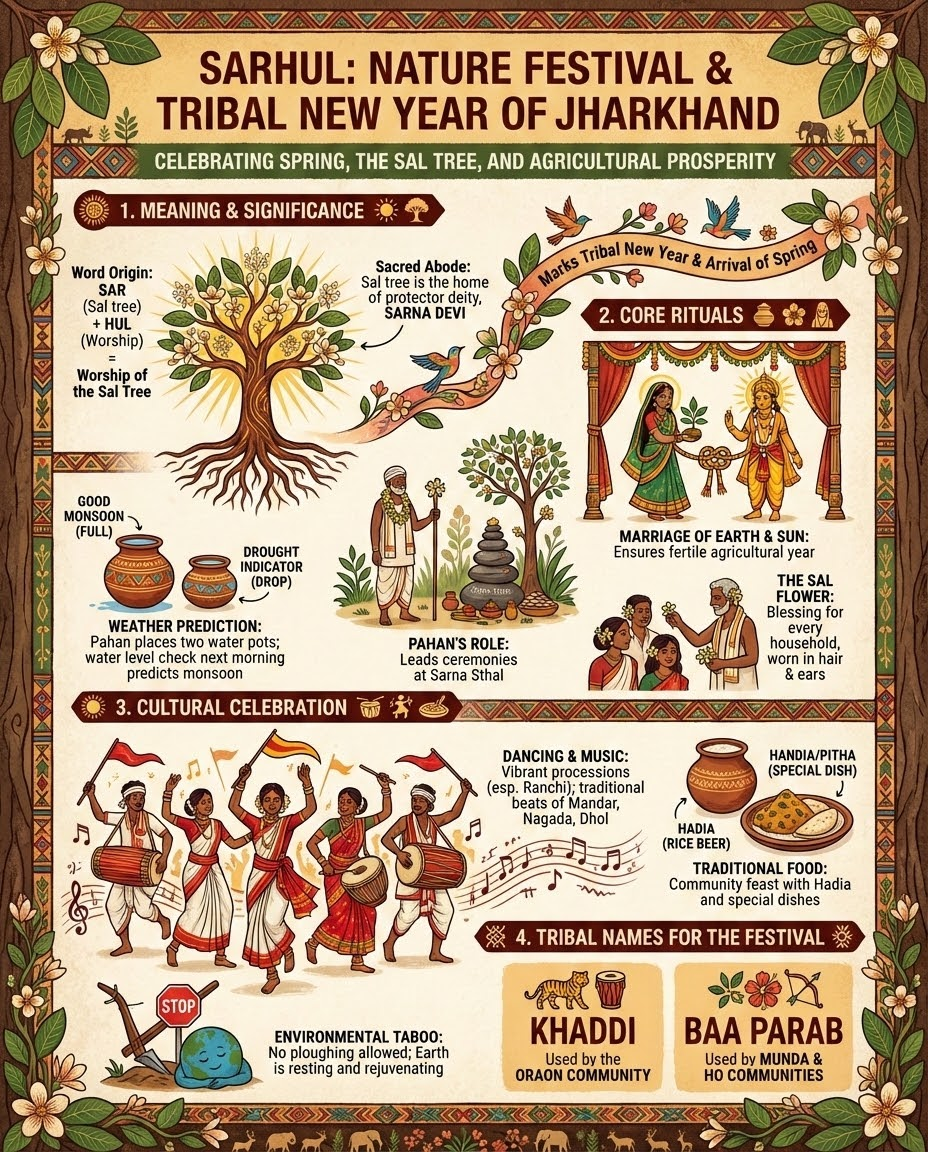
Meaning: The word 'Sarhul' is derived from two words: 'Sar' (referring to the Sal tree) and 'Hul' (meaning worship or revolution). Thus, it literally translates to the "Worship of the Sal Tree".
Sarhul Festival, often referred to as the "Tribal New Year," marks the beginning of the Hindu month of Chaitra (spring) and celebrates the marriage between Mother Earth (Dharti Mata) and the Sun (Singbonga).
Cultural and Religious Significance
For the tribal groups such as the Oraon, Munda, Ho, and Santal, Sarhul is not just a ritual but a deep expression of their ecological philosophy.
The Sal Tree: The Sal (Shorea robusta) is considered sacred. Tribals believe that their deity, Sarna Devi, resides in the Sal groves.
The Divine Marriage: Rituals symbolize the wedding of the Sun and the Earth. This union is believed to bring fertility to the soil and ensure a bountiful harvest for the coming year.
Ancestor Worship: It is also a time to remember and seek blessings from ancestors, reinforcing the bond between the past, present, and the natural environment.
Key Rituals and Traditions
The Sarna Sthal: The main prayers are conducted at the Sarna (a sacred grove). The village priest, known as the Pahan, performs the rituals.
Water Prediction (Ghara Ritual): The Pahan places two earthen pots (gharas) filled with water at the Sarna Sthal.
Flowers and Offerings: The white flowers of the Sal tree (Sarai phool) are distributed as 'Prasad.'
Hadia: A traditional rice beer called Hadia is prepared and shared among the community as part of the festivities.
Dances: Traditional dances like the Jadur are performed to the beat of instruments like the Mandar, Nagada, and Dhol.
Source: NEWSONAIR
|
PRACTICE QUESTION Q. The concept of 'Sarna' often seen in the news is best described as: a) A traditional water harvesting structure used by tribes in Rajasthan. b) A sacred grove conserved by tribal communities where the village deity is believed to reside. c) An indigenous slash-and-burn agricultural practice in Northeast India. d) A government scheme for the socio-economic upliftment of PVTGs. Answer: b Explanation: Sarna is a cluster of trees (sacred grove), usually consisting of Sal trees, where tribal communities in Central and Eastern India—such as the Munda, Oraon, Ho, and Santal—worship their village deity (Gram Devi) and the spirits of their ancestors. It represents an indigenous belief system centered on nature worship, where the deity resides in the forest rather than in a man-made idol or temple. There is an ongoing movement by tribal groups to have "Sarnaism" recognized as a distinct religious category in the National Census, separate from Hinduism, to preserve their unique cultural and ecological identity. |
The Sarhul Festival is a prominent spring festival celebrated by tribal communities like the Oraon, Munda, and Ho in states such as Jharkhand, Chhattisgarh, Odisha, and West Bengal. It marks the tribal New Year and celebrates the deep bond between the community and nature.
The 'Sarna' refers to a sacred grove of ancient trees where tribals believe their village deity ('Dharmesh' or 'Singbonga') resides. By strictly forbidding the cutting of trees in these groves, the Sarna tradition acts as a vital indigenous method for biodiversity conservation and maintaining local microclimates.
The Pradhan Mantri Janjati Adivasi Nyaya Maha Abhiyan (PM-JANMAN) is a major government initiative aimed at saturating Particularly Vulnerable Tribal Groups (PVTGs) with essential services such as basic housing, clean water, healthcare, and education.



© 2026 iasgyan. All right reserved