The Centre has introduced two Bills to raise excise duty on tobacco and impose a capacity-based cess on pan masala manufacturing, replacing the outgoing GST compensation cess. The move protects revenue, combats tax evasion, funds health and national security, and supports India’s ongoing tobacco control efforts.
Copyright infringement not intended
Picture Courtesy: The Hindu
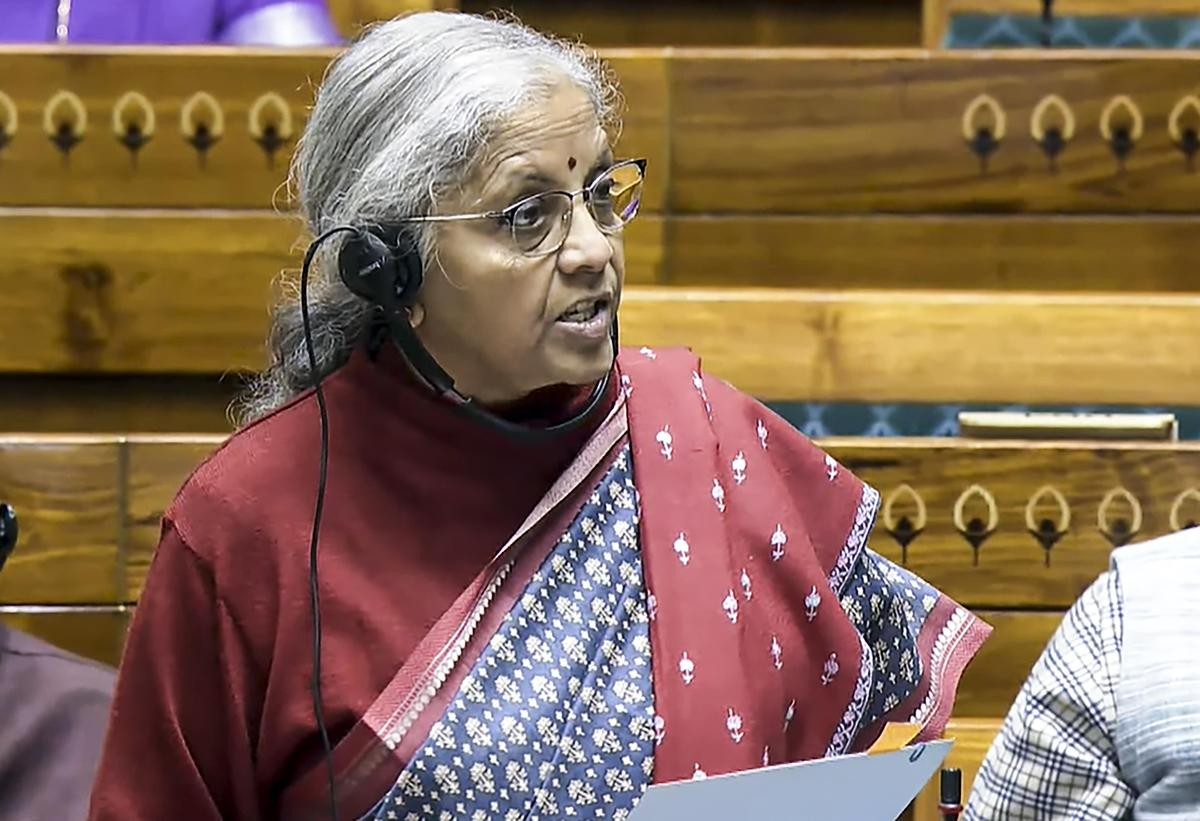
The Union Government has introduced two major Bills in Parliament on December 1, 2025, aimed at protecting tax revenues as the GST compensation cess on tobacco products is set to end.
The two Bills are The Health Security se National Security Cess Bill, 2025 and The Central Excise (Amendment) Bill, 2025
|
MUST READ: GST CESS | ISSUE OF SURCHARGE | Fiscal Federalism | FISCAL DEVOLUTION AMONG STATES | |
End of the GST Compensation Cess: The GST compensation cess, introduced in 2017 to offset States’ revenue losses after the rollout of GST, witnessed a sharp fall in collections during the COVID-19 years (2020–22), forcing the Centre to borrow funds to maintain state compensation. As the government is now nearing the completion of interest repayment on these loans, the cess on tobacco products is scheduled to end in the coming months. Once this cess is discontinued, a major and dependable revenue stream will disappear, creating a significant fiscal gap that needs to be addressed immediately.
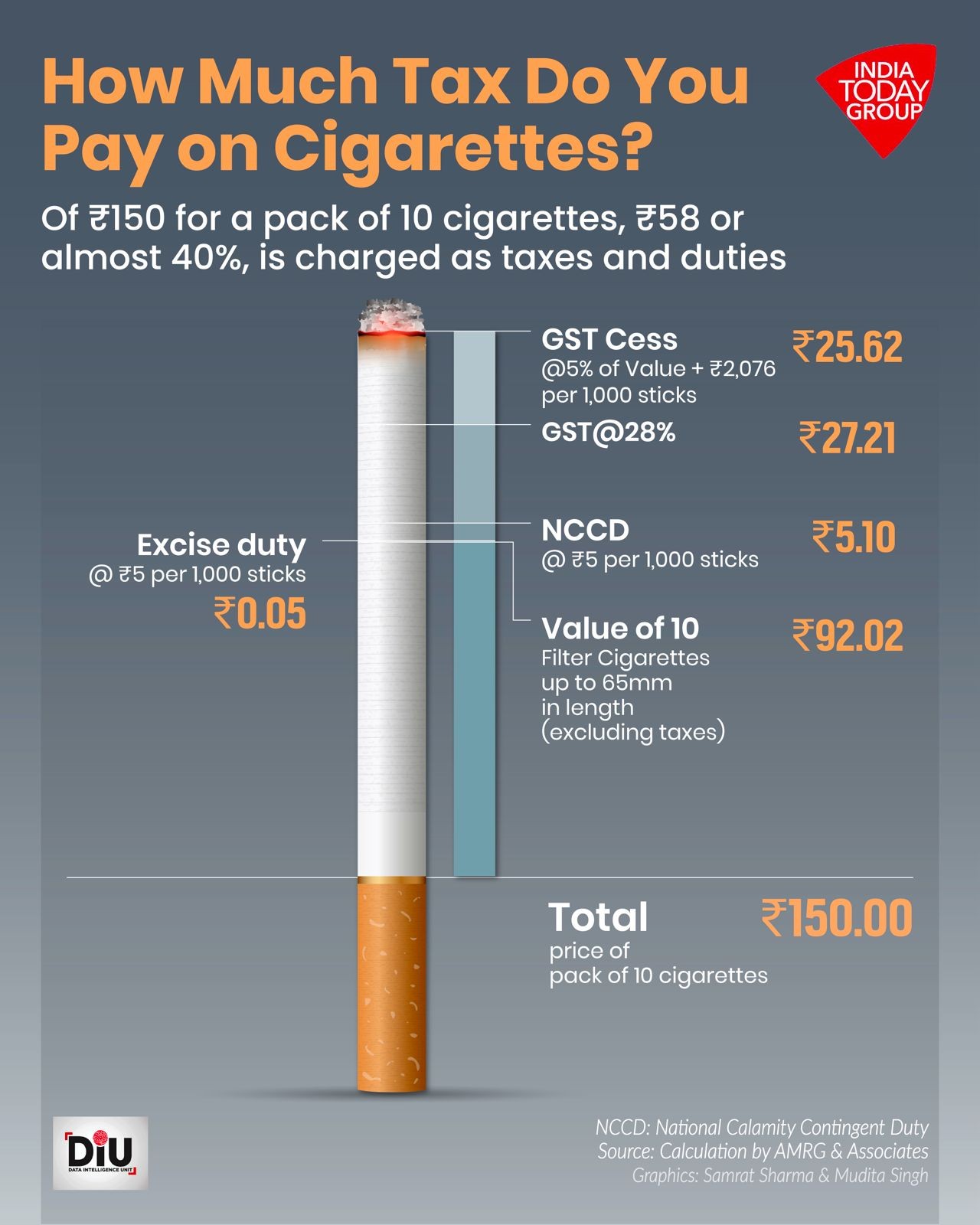
Protecting Revenue from Tobacco: With the withdrawal of the GST compensation cess, the effective tax incidence on tobacco products would fall substantially, reducing both tax revenues and the deterrence effect on consumption. Since tobacco remains a high-revenue item contributing over ₹50,000 crore annually to the exchequer, maintaining its tax burden is crucial for fiscal stability. The Central Excise (Amendment) Bill has therefore been introduced to empower the government to raise central excise duties and ensure that the overall tax incidence on tobacco remains intact even after the cess is withdrawn.
Tackling pan masala manufacturing leakages: Pan masala production has long been associated with tax leakages arising from under-reporting and opaque manufacturing practices. To close these gaps, the Health Security se National Security Cess introduces a machine-based, capacity-linked system of taxation that is detached from actual declared production. By taxing based on the number or capacity of machines installed rather than the quantity produced, the government aims to eliminate evasion opportunities, replicating the effectiveness of earlier capacity-based taxation systems once used for gutkha and chewing tobacco units.
Central Excise (Amendment) Bill, 2025
Health Security se National Security Cess Bill, 2025
Picture Courtesy: India Today
High taxation did not translate into Lower Consumption: Although India imposes some of the highest taxes on cigarettes globally—with taxes accounting for over 52–60% of retail price—the overall impact on reducing tobacco consumption has remained limited. This is because the tax burden is uneven across tobacco categories, allowing users to shift to cheaper alternatives rather than quit.
Affordability of tobacco increased despite higher taxes: India’s rapid economic growth outpaced the rate of increase in tobacco taxation.
This meant that even though taxes increased, tobacco became more affordable for a growing section of the population.
Tax evasion and informal manufacturing diluted the impact: The tobacco industry, especially in bidis, khaini, gutkha, and pan masala, is dominated by small-scale, unorganized units. These units frequently under-report production or operate without registration. A 2019 Comptroller and Auditor General (CAG) review found tax evasion of over ₹2,400 crore in smokeless tobacco and pan masala units due to under-reported machine capacity.
Industry Interference and Aggressive Marketing: India’s large tobacco companies have historically adapted to taxation measures through introducing micro-packs (₹5, ₹10 units), promoting low-priced variants, making price-sensitive users less affected by cess and lobbying against steep excise revisions. This corporate adaptability reduced the shock value of taxation measures.
|
CASE STUDY GST Compensation Cess (2017–2020): When GST was introduced in 2017, tobacco was placed in the highest tax slab and an additional compensation cess was imposed. · Cigarette taxes increased abruptly by 10–15% in 2017. · However, GATS and industry data show only marginal reduction in cigarette sales—notably because users switched to bidis and smokeless tobacco. · Smokeless tobacco demand remained largely unaffected, demonstrating taxation’s uneven impact. Conclusion: High taxes on a single product category cannot reduce total consumption in a market dominated by untaxed or lightly taxed substitutes. |
Introduce uniform and inflation-indexed taxation across all tobacco products: India must shift from product-specific taxation to a uniform, inflation-indexed regime that increases tax across cigarettes, bidis, and smokeless tobacco alike. This prevents consumers from switching to cheaper, low-taxed alternatives like bidis, which currently cost as little as ₹0.25–0.50 per stick and attract far lower taxes. An inflation-linked formula would ensure tobacco does not become more affordable as incomes rise a trend observed between 2014 and 2023
|
CASE STUDY Philippines Sin Tax Reform (2012): The Philippines introduced steep, uniform excise taxation on all tobacco products along with an annual inflation adjustment. As a result, smoking prevalence declined from 28% in 2009 to 22.7% in 2015, while government revenue from tobacco increased significantly. |
Strengthen enforcement and reduce tax evasion in the unorganized sector: Since 70–80% of India’s tobacco consumption comes from bidis and smokeless tobacco—produced largely in informal units—strict enforcement is essential. Measures such as mandatory digital registration, machine-based monitoring, and real-time excise tracking are needed to curb large-scale tax evasion.
Implement track-and trace systems to curb illicit trade: Illegal manufacturing and smuggling dilute the impact of taxation by keeping tobacco products artificially cheap. India should adopt WHO-FCTC–recommended track-and-trace systems with QR-coded packaging, supply-chain monitoring, and cross-state data integration. Brazil implemented a digital tax stamp and electronic tracking system, reducing illicit cigarette trade from 30% to 8% within a few years.
Expand public health interventions and cessation support: Taxation works best when paired with accessible healthcare support. India should strengthen cessation services through primary health centres, integrate nicotine-replacement therapy under Ayushmann Bharat-Pradhan Mantri Jan Arogya Yojana, and run mass-media campaigns targeting youth who form a large share of new users. According to GATS-2, 38.5% of smokers and 33.2% of smokeless users attempted to quit in the last 12 months, but only 4–6% succeeded due to lack of support.
India’s experience shows that taxation alone cannot significantly reduce tobacco selling because affordability, product substitution, tax evasion, and a large unorganized sector dilute policy impact. A sustainable reduction in tobacco use will require a comprehensive approach that combines uniform and inflation-indexed taxation, strict enforcement against illegal manufacturing, effective track-and-trace systems, accessible cessation services, and livelihood alternatives for workers dependent on the tobacco economy. Only an integrated strategy—supported by strong institutional coordination—can meaningfully reduce India’s high tobacco consumption and associated health and economic burdens.
Source: The Hindu
|
Practice Question Q. Critically examine how India’s new taxation framework for tobacco and pan masala aligns fiscal stability with public health and national security priorities. (250 words) |
To compensate revenue loss after the GST cess ends and maintain high tax incidence to reduce consumption.
It is linked to machine capacity, making evasion difficult.
Indirectly—higher central revenues improve transfer capacity and health security funding.


© 2026 iasgyan. All right reserved