India is emerging as a premier global hub for Medical Value Travel by integrating advanced clinical treatments with traditional AYUSH wellness systems. Supported by liberalized visas, robust accreditations, and the 'Heal in India' initiative, it offers highly affordable, quality healthcare.
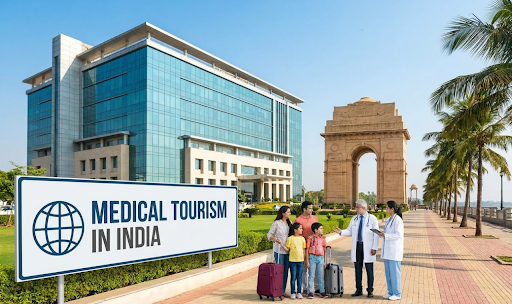
India has strategically positioned itself as a global leader in Medical Value Travel (MVT) by leveraging its "dual-track" advantage: world-class modern tertiary care and an ancient heritage of holistic wellness.
|
Read all about: What is Sustainable Tourism? l Homestay Tourism in India |
Medical tourism (also known as medical travel or health tourism) is the practice of traveling across international borders to receive medical care.
The Global Medical Value Travel market, valued at USD 115.6 billion in 2022, is projected to reach USD 286.1 billion by 2030. India's market is estimated at USD 8.7 billion in 2025, expected to hit USD 16.2 billion by 2030. (Source: PIB)
Global Ranking: India ranks 10th on the Medical Tourism Index and 5th for wellness in Asia-Pacific. (Source: PIB)
Affordability: Patients save 60% to 90% on medical costs in India compared to Western nations while maintaining clinical standards.
Extensive Healthcare Infrastructure: India possesses a vast network of 69,364 hospitals (43,486 private; 25,778 public) and 1.2 million doctors, fulfilling WHO doctor-population standards. (Source: PIB)
Global Quality Benchmarks: Indian facilities maintain global safety and clinical standards through rigorous National Accreditation Board for Hospitals and Healthcare Providers (NABH) accreditation processes.
Technological Advancements: India has emerged as a global capital for robotic surgery, offering advanced, precision treatments utilizing indigenous, cost-effective technologies.
Medical Integration: India's unique healthcare ecosystem merges modern medical science with traditional AYUSH systems to provide comprehensive holistic care.
"Heal in India" Initiative: Launched as a campaign with an "end-to-end" Medical Value Travel Portal to assist international patients in booking medical services.
AYUSH Visa Introduction: Established dedicated e-AYUSH and Attendant Visas to fast-track access for patients seeking traditional Indian treatments.
Medical Hubs: Budget 2026-27 proposed five private-sector partnerships to create integrated complexes for diagnostics, surgery, and AYUSH rehab.
Governance: The National Medical & Wellness Tourism Promotion Board (NMWTB) coordinates cross-ministry, state, and industry efforts.
Liberalized Standard Medical Visas: The e-Medical and e-Medical Attendant Visas have been extended to the nationals of 172 countries, allowing for multiple entries and a 60-day stay.
Insurance Integration for Traditional Medicine: The Insurance Regulatory and Development Authority of India (IRDAI) authorized coverage for AYUSH treatments.
Training Initiatives: The 2026-27 budget introduced programs to train staff in foreign languages and cultural sensitivity to improve service for medical tourists.
Regulatory Gaps: Absent bilateral agreements and fragmented laws create legal and accountability deficits.
Ethical Hurdles: Language barriers and power imbalances often compromise patient autonomy and informed consent.
Post-Care Deficiencies: Mechanisms for managing follow-up care and grievances after a patient returns home remain uninstitutionalized.
Geopolitical Risks: Tensions, like the early 2025 India-Bangladesh visa curbs, can stall thousands of patient journeys.
Operational Obstacles: Digital visa backlogs and administrative delays occasionally hinder care for critical patients.
Poor Counseling: Limited pre-travel guidance leaves international patients unaware of clinical risks or varying standards abroad.
Legal Gaps: Weak governance complicates enforcing ethical standards or claiming institutional accountability for medical negligence.
Align Legal Frameworks: Unify domestic laws and international norms into a rights-based structure to protect transnational patients.
Centralized Oversight: Create a dedicated body under the Ministry of Health to manage accredited registries, patient guidance, and cross-border disputes.
Digital Visa Expansion: Utilize AI-driven e-visas to eliminate administrative backlogs permanently.
Mandatory Counseling: Institutionalize pre-travel programs so patients understand treatment risks and standards.
Integrated Recovery Resort Model: India should expand NABH-accredited "Hospital-Resort Hybrids" that link complex orthopedic and cardiac surgeries with immediate, holistic AYUSH rehabilitation.
Adopt Blockchain for Medical Data: Integrate blockchain for secure, instant cross-border sharing of records and visas.
Expand Bilateral Visa Waivers: Secure healthcare agreements and on-arrival waivers to maintain patient inflows.
Ensure Administrative Transparency: Streamline intake processes to guarantee predictable, equitable care for foreign nationals.
Enhance Linguistic and Cultural Skills: Invest in training staff in foreign languages and cross-cultural sensitivity.
India is set to lead global medical and wellness travel by integrating accredited, affordable clinical care with AYUSH traditions, supported by digital visa systems and rights-based governance.
Source: PIB
|
PRACTICE QUESTION Q. "India's emergence as a leading hub for Medical Value Travel (MVT) is not solely due to cost arbitrage but also its unique integration of modern clinical care with traditional wellness systems." Discuss. (250 words) |
Medical Value Travel involves curative interventions like complex surgeries and diagnostic care provided by specialised institutions, as well as wellness tourism focusing on traditional systems like Yoga and Ayurveda.
Patients choose India because it offers savings between 60% to 90% compared to Western nations (Source: Shifam Health), robust hospital infrastructure with globally recognized NABH accreditations, and advanced technologies like robotic surgery.
It is a government campaign aiming to position India as a premier destination for holistic healthcare, supported by an end-to-end digital Medical Value Travel Portal for planning and booking services.




© 2026 iasgyan. All right reserved