The Supreme Court stayed Kuldeep Sengar’s sentence suspension, rejecting a narrow Indian Penal Code reading by the Delhi High Court that weakened POCSO Act protections. Favoring interpretation and victim safety, the ruling exposes gaps and urges unified “public servant” definitions.
Copyright infringement not intended
Picture Courtesy: THEHINDU
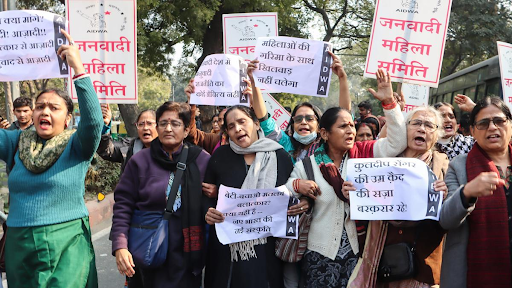
Recently, the Supreme Court stayed a Delhi High Court judgment that had suspended the life sentence of former MLA Kuldeep Singh Sengar in the 2017 Unnao rape case.
|
Read all about: POCSO Act: Misuse, SC Concern & Reform l Age Of Consent: Meaning, Challenges, Way Forward |
When an accused is convicted, the sentence begins immediately. However, the convict can appeal to a higher court.
The Supreme Court has set clear guidelines for exercising this power based on the severity of the crime:
The Delhi High Court suspended Kuldeep Sengar's life sentence, ruling that an MLA is not a "public servant"; meant the aggravated POCSO charges were inapplicable, and he served the minimum seven years for the offence.
|
Legal Provision |
Definition of "Public Servant" |
Inclusion of MLAs/MPs |
|
Section 21, Indian Penal Code (IPC) |
Provides a narrow, exhaustive list (e.g., government officers, judges, police). |
Not explicitly included. This is the definition used by the POCSO Act. |
|
Section 2(c), Prevention of Corruption Act, 1988 |
Provides a broad, inclusive definition covering persons performing a public duty. |
Explicitly included. (Source: The Prevention of Corruption Act, 1988). |
This creates a legal anomaly: a lower-level government official is considered a "public servant" for aggravated offences under POCSO, while a MLA is not.
'Purposive Interpretation' for Child Protection
The Supreme Court preferred a 'purposive interpretation' for social welfare laws like POCSO, meaning the law should achieve its objective, not be defeated by technicalities.
Strict Conditions for Suspending Life Sentences
The Supreme Court has established a high threshold for suspending life sentences in heinous crimes, which goes beyond just the time spent in jail.
Demonstrate a "Palpable Error": The convict must show a clear and obvious error in the trial court's judgment that makes their eventual acquittal highly likely.
Long Incarceration is Not the Only Factor: While a long period of incarceration is a relevant factor, it cannot be the sole reason for suspending a sentence in grave offences like rape or murder.
Consider the Context and Gravity: Courts must weigh the gravity of the crime and the context in which it was committed.
The Kuldeep Singh Sengar case serves as a critical test for the Indian justice system's ability to protect citizens from the abuse of power. The Supreme Court's stay offers an opportunity for course correction.
Legislative Action: Amend the POCSO Act to close the "public servant" loophole, either via a broad, self-contained definition or by linking it to the Prevention of Corruption Act's wider definition.
Judicial Consistency: Appellate courts must strictly follow Supreme Court standards for suspending sentences in heinous crimes, prioritizing the gravity of the offense and the survivor's safety.
Systemic Reforms: The case highlights the urgent need to strengthen witness protection and insulate the criminal justice system from powerful influences, upholding the constitutional guarantee of equality before the law (Article 14).
Source: THEHINDU
|
PRACTICE QUESTION Q. "The definition of 'public servant' across different Indian statutes lacks uniformity, leading to judicial anomalies." Discuss. 150 words |
Suspension of sentence is a discretionary power granted to appellate courts under Section 389 of the CrPC (now Section 430 of BNSS). It allows the court to temporarily halt the execution of a sentence and grant bail to a convict while their appeal is being heard.
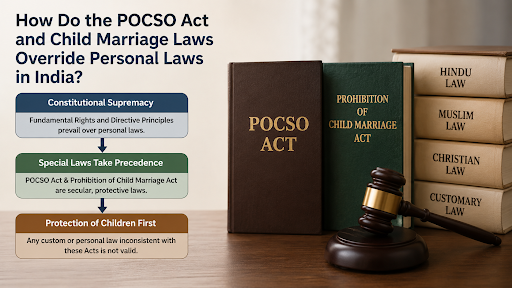
The POCSO Act does not define 'public servant' itself. It borrows the definition from Section 21 of the Indian Penal Code (IPC), which provides a specific list that does not explicitly include legislators like MLAs or MPs. This creates a loophole where an elected representative may not be considered a 'public servant' for the purpose of aggravated punishment under POCSO.
The IPC's definition in Section 21 is an exhaustive list, primarily including government officers and judges. In contrast, the Prevention of Corruption Act (PCA), 1988, has a much broader, more inclusive definition that explicitly covers MLAs and MPs, recognizing their role in performing public duties.



© 2026 iasgyan. All right reserved