The Supreme Court, led by CJI Surya Kant, criticized states for fiscally unsustainable freebies, raising concerns over revenue deficits and rising debt-to-GSDP ratios. Distinguishing welfare from non-merit goods, it warned of Capex erosion. Citing S. Subramaniam Balaji, reforms include targeted subsidies and stronger Election Commission oversight.
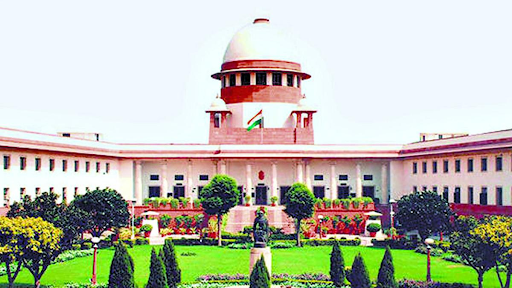
Copyright infringement not intended
Picture Courtesy: THEHINDU
Context
The Supreme Court criticized states for offering "irrational freebies" despite deficits, emphasizing the need to distinguish genuine welfare from populist giveaways and maintain fiscal discipline.
|
Read all about: Freebies vs Public Welfare Investment I Freebies and Welfare Schemes |
What is the Difference Between Welfare and Freebies?
Welfare builds human capital and equity, while freebies drive consumption without creating long-term assets.
|
Welfare (Merit Goods) |
Freebies (Non-Merit Goods) |
|
|
Nature of Expenditure |
Investment in human capital and public infrastructure. |
Distribution of private consumer goods for short-term consumption. |
|
Objective |
To enhance productivity, create opportunities, and ensure a basic standard of living. Aligns with Directive Principles of State Policy (DPSP), Article 38. |
Often aimed at securing electoral gains through immediate gratification. |
|
Examples |
Public education, healthcare facilities, subsidised food grains (PDS), and employment schemes like MGNREGA. |
Distribution of laptops, televisions, gold coins, and unconditional cash transfers to a wide population. |
|
Economic Impact |
Boosts long-term economic growth by creating a skilled and healthy workforce. |
Can distort markets, create a culture of dependency, and strain state finances. |
Concerns Highlighted by the Supreme Court
Worsening State Finances and Debt Trap
High Debt Levels: According to the RBI’s 'State Finances: A Study of Budgets of 2024-25', the debt-to-GSDP ratio for many states has crossed the 20% prudent limit recommended by the N.K. Singh Committee on FRBM.
Committed Expenditure: States like Punjab spend most of their revenue on committed expenses like salaries, pensions, and interest payments, leaving very little for development projects (Source: RBI Annual Report).
The Power Sector as a Vehicle for Freebies
DISCOM Losses: State power distribution companies (DISCOMs) are in deep financial trouble due to promises of free or heavily subsidised electricity.
Delayed Payments: States often fail to pay promised subsidies to DISCOMs on time, leading to mounting losses disguised as "regulatory assets". (Source: Power Finance Corporation Report).
Forced Discipline: The Electricity (Amendment) Act, 2024 aims to enforce fiscal discipline by mandating that the gap between a DISCOM's costs and revenues cannot exceed 3%, forcing states to pay subsidies promptly or raise tariffs.
Economic Consequences of Unchecked Freebies
Crowding Out Capital Expenditure: Money spent on populist giveaways is money that cannot be spent on building roads, schools, and hospitals.
Intergenerational Inequity: Funding current consumption through borrowing places a heavy debt burden on future generations without creating any assets for them.
Inflationary Pressure: Pumping money into the economy without increasing the supply of goods and services can lead to demand-pull inflation.
|
Case Study |
Key Issue / Mechanism |
Outcome / Lesson |
|
Domestic: Punjab Power Crisis |
Provides free electricity to agricultural and domestic consumers, leading to a subsidy bill of over ₹20,000 crore in FY 2023-24. |
The state has the highest debt-to-GSDP ratio (approx. 48%) and struggles to fund essential services, validating the SC's concerns. |
|
International: Sri Lanka (2022) |
Populist tax cuts and unbudgeted welfare spending depleted state revenues. |
Led to a sovereign default and economic collapse, serving as a stark warning against fiscal imprudence. |
|
Global Best Practice: Brazil’s Bolsa Família |
A Conditional Cash Transfer (CCT) program where families receive cash only if children attend school and get vaccinated. |
Proves that welfare can be designed to build human capital and reduce poverty effectively, unlike unconditional freebies. |
Judicial Intervention
Subramaniam Balaji Case (2013)
The SC ruled that pre-election promises (like laptops or TVs) are not "corrupt practices" under the Representation of the People Act, 1951, as they align with Directive Principles of State Policy (DPSP).
Recent Stance (February 2026)
The Chief Justice slammed the "freebie culture," warning that indiscriminate cash transfers and subsidies (like universal free electricity) discourage work and could lead to fiscal disaster.
Proposed Expert Committee
The Court has suggested forming a high-level committee—including members from the NITI Aayog, Reserve Bank of India (RBI), and Finance Commission—to study the economic impact and recommend regulatory measures.
Mandatory Disclosure
The Court and Election Commission of India (ECI) have pushed for political parties to disclose how they intend to fund their promises to ensure voter transparency.
Core Judicial Concerns
Fiscal Stability: Courts are questioning how revenue-deficient states can justify blanket subsidies that benefit even the affluent, while basic infrastructure like schools and hospitals suffers.
Distortion of Elections: Ongoing debate whether excessive promises "vitiate the purity of elections" by exerting undue influence on voters.
Welfare vs Freebies: The judiciary distinguishes between essential welfare (PDS, education, healthcare) and irrational freebies (luxury items or cash transfers with no developmental link).
Way Forward
Targeted Subsidies
Use the Jan Dhan-Aadhaar-Mobile (JAM) Trinity to identify and support only the genuinely needy, by excluding affluent sections from welfare benefits.
Empower the Election Commission (ECI)
The ECI should be empowered to mandate that political parties publish a "Fiscal Impact Statement" with their manifestos, explaining how promises will be funded without violating FRBM limits.
Role of the Finance Commission
The Finance Commission should use fiscal prudence and discipline as key criteria for allocating funds to states.
Adherence to FRBM Norms
States must strictly follow the roadmap suggested by the N.K. Singh Committee to reduce the combined public debt (Union+State) to 60% of GDP.
Conclusion
Fiscal responsibility and welfare must be balanced for long-term prosperity, prioritizing an "empowerment model" (education, health, infrastructure) over a fiscally unsustainable "freebie culture."
Source: THEHINDU
|
PRACTICE QUESTION Q. To what extent should the Election Commission of India regulate election manifestos to ensure fiscal responsibility? Discuss. 150 words |
Welfare (Merit Goods) refers to spending on education, health, and nutrition that builds human capital and increases productivity (e.g., Mid-Day Meal). Freebies (Non-Merit Goods) are private goods given for consumption (e.g., free TVs, gold) often for political gain, without adding to long-term asset creation.
It is a 2013 Supreme Court judgment which ruled that promises made in election manifestos do not amount to "corrupt practices" under the Representation of People Act, 1951, and that the distribution of freebies is a state policy decision. The SC is currently revisiting the implications of this stance.
Unchecked freebies lead to a higher fiscal deficit, divert funds away from Capital Expenditure (infrastructure), increase the debt burden on future generations, and can cause inflationary pressure due to demand without supply-side growth.

© 2026 iasgyan. All right reserved